




Language Is Power: Finding Our Voice Again
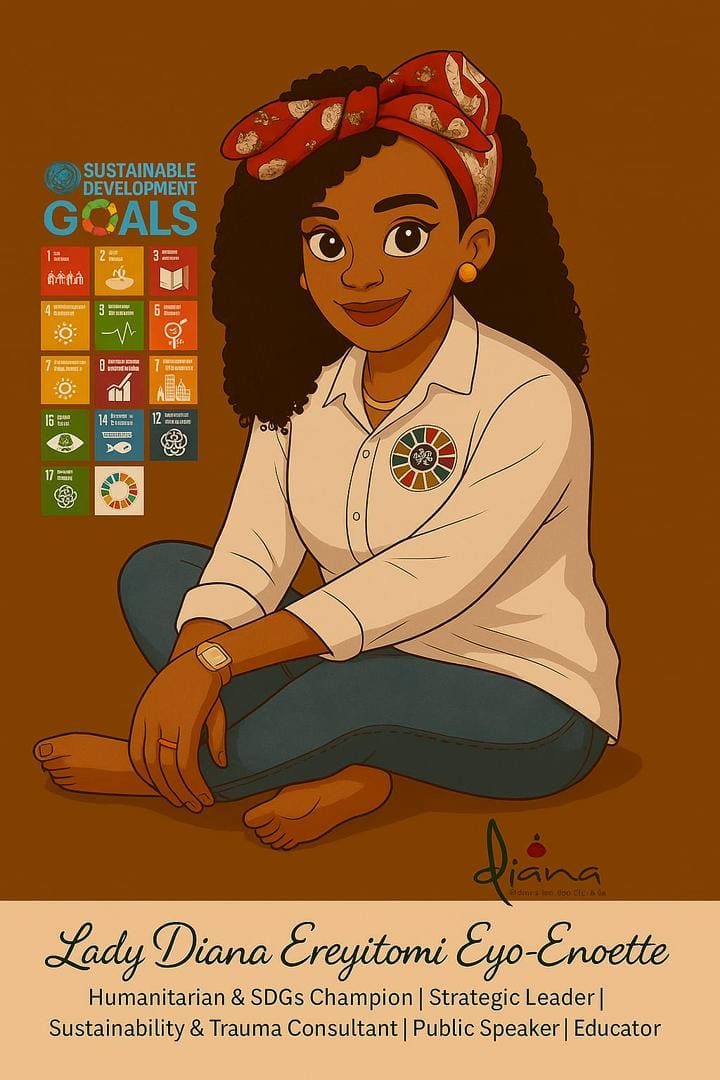

Language Is Power: Finding Our Voice Again
The sound of home is never outdated, it’s the sound of power.
Not all diplomats wear suit, some wear purpose Good morning, Africa or should I say: Ẹ Káàrọ – Yoruba; Ụtụtụ ọma – Igbo; Mesiere –Efik/Ibibio. Oh yes, Beautiful, isn’t it? The sound of home. But here’s the thing, how many African children today still greet the morning in the language of their ancestors?
The Day We Started Forgetting
Let me tell you a quiet story, one that crept into our homes, our schools, our hearts.
Once upon a time, we spoke the languages of our forefathers. Our stories, songs, and even our discipline were wrapped in the words of our mother tongue.
Then came the missionaries, the teachers, the classrooms — with blackboards, chalk, and English or French or Portuguese. They came with education, with opportunities.
But hidden in that gift was a message, whispered but loud:
“Your language is hard enough.”
“Your tongue is not civilized.”
“If you want to succeed, speak like us.”
So, we learned. We passed exams. We earned certificates. But somewhere along the line, we started forgetting ourselves, letting our own stories end, limiting our voices and stopping the beauty of the African development.
The Danger of Forgetting
A man’s voice is his greatest asset. Silence him, and you’ve limited him. But take away his language, his identity and you’ve completely stopped him. This is not a fight against English or education far from it. Education came wrapped in their language, just like ours once came wrapped in stories by the fireside where we were educated of our history, our victory and our tomorrow, but in our quest to belong, to succeed, we started to unlearn ourselves to trade our mother tongue for acceptance. The sad part? We believed the lie that our languages made us primitive, backwards and underdeveloped.
The Truth, They Didn’t Tell Us
Languages carry power.
Languages carry memory.
Languages carry development.
Ngũgĩ wa Thiong’o, a wise Kenyan writer, once said:
“The language of your education is the language of your mind. If that language is foreign, so are your thoughts.”
When we abandon our languages, we abandon:
• Our history
• Our wisdom hidden in proverbs and folktales
• Our way of seeing the world
We silence the very tools that could help us solve African problems whether it’s in health, agriculture, peacebuilding, or governance.
So, What’s the Big Deal?
Imagine a continent where:
• Our children speak their mother tongue at home and school
• Our leaders address the nation in the languages of their people
• Our innovations are shared in words that everyone understands
Research shows that when children learn in their mother tongue first, they perform better in school. When communities use their language, development reaches them faster — health campaigns, civic education, even technology adoption improve. Yet today, over
2000 African languages are at risk of disappearing and with them, the solutions buried in their words.
It’s Time to Find Our Voice Again
This isn’t about choosing between English and Itsekiri between French and Yoruba. It’s about embracing both proudly, it’s about knowing the strength it gives you without losing your strength. It’s about teaching our children to say Good Morning in the language of their ancestors to remind them that civilization didn’t start with English, and success doesn’t mean forgetting your roots.
Take This with You
Language is power.
When we drop our languages, we drop pieces of Africa’s future.
When we speak them — teach them — we rise again, with pride, with identity, with strength.
So, greet your child in your mother tongue today.
Sing them an old song.
Tell them a proverb from your village.
Remember, not all diplomats wear suits, some wear purpose.