






Manny Ita –
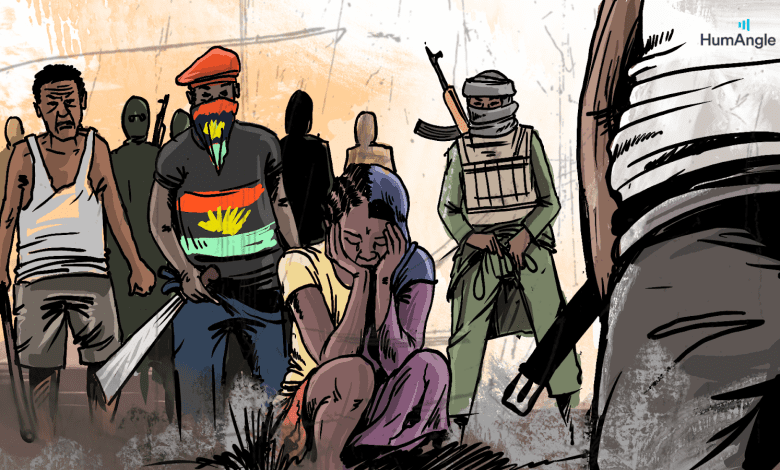
There is a point where the euphemisms of clashes, banditry, and resource-based conflict lose their descriptive power and become instruments of state-sponsored denial. In the wake of the International Committee of the Red Cross (ICRC) report confirming the execution of 162 souls in Kwara—a state traditionally viewed as a gateway of peace—Nigeria has officially crossed a threshold. We are no longer merely a nation battling insurgency; we are a country presiding over a systematic, slow-motion erasure of its own people.
As the United States House Subcommittee on Africa convenes today to deliberate on the alleged Nigerian genocide, the reflex of the Nigerian state will predictably be one of wounded sovereignty. Our diplomats will point to complex communal dynamics and climate change-induced migration. But sovereignty is not a shield for the dead; it is a contract to protect the living. When 162 people are slaughtered in a single night in the North-Central, and when 26 out of 36 states are flagged by international observers like Australia as no-go zones, the state’s claim to selective liberalization of the truth becomes a mockery of the victims.
The tragedy of the Nigerian condition is not the existence of violence, but the perceived institutional laxity—and in darker corners, the connivance—that allows it to fester. How does a column of attackers mobilize, execute a massacre for hours, and vanish into the Kainji forests without a single radar blip or kinetic response? The silence of our early-warning systems is deafening. It suggests a security architecture that is either hopelessly broken or tactically indifferent. When the state fails to prosecute high-profile bandits and instead treats them as misguided brothers to be rehabilitated, it signals to the perpetrators that the price of Nigerian blood is zero.
This institutional malaise extends to our cultural and traditional leadership. While the Emir of Kano, Muhammadu Sanusi II, rightly asserts that traditional rulers need no constitution to advise the government, one must ask: to what end is this advice being given? If the moral authority of our monarchs cannot bridge the ethnic and religious fault lines that are now being used to justify cleansing operations in the Middle Belt, then our traditional institutions risk becoming ornamental relics in a burning house.
The international spotlight currently shining on Nigeria is not an interference; it is a mirror. What the U.S. lawmakers see is a nation where silent genocide is the currency of rural life, and where the government’s primary concern appears to be reputation management rather than body-count reduction. We see the harrowing reports from Vine Heritage Home, where infants are saved from infanticide rituals only to enter a country that treats their adult lives with equal disregard.
If Nigeria is to avoid the ultimate ignominy of being formally labeled a genocidal state, the Renewed Hope agenda must move beyond economic rhetoric and address the sanctity of life. This requires the immediate and transparent prosecution of those fueling ethnic militias, an end to the rehabilitation of unrepentant killers, and a security overhaul that prioritizes the hinterlands over the comfort of the capital. We must turn our cultural passion into a collective intolerance for bloodletting.
The world is watching, not because they hate Nigeria, but because they are tired of counting our dead. Sovereignty is earned through protection, not claimed through press releases. Until every Nigerian in every village—from the forests of Kwara to the plains of Borno—can sleep without the fear of the blade, the label of genocide will continue to haunt our name, and rightfully so.


