

Manny Ita –
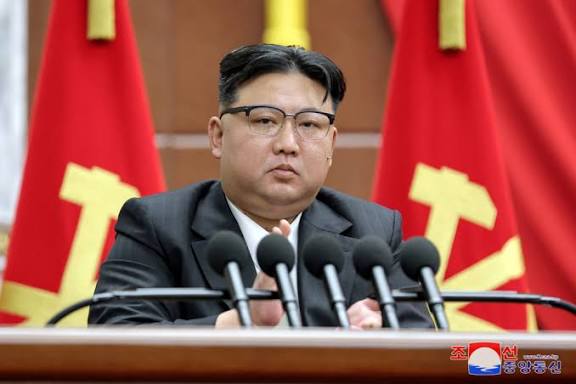
North Korean leader Kim Jong Un has been re-elected to the top position of the country’s ruling Workers’ Party, with state media crediting him for expanding the nation’s nuclear arsenal and strengthening its strategic position. The decision was announced following a major party congress in Pyongyang, where delegates endorsed his continued leadership for another term.
According to official reports, Kim was re-elected as general secretary with the “unshakable will and unanimous desire” of thousands of delegates attending the congress. The gathering, held every five years, serves as the ruling party’s highest decision-making forum and outlines political, economic and military priorities for the coming period.
State media said Kim’s leadership had produced a military capable of confronting “any threat of aggression” and “any form of war,” asserting that the nuclear buildup has “reliably guaranteed” the country’s future while boosting national “pride and self-esteem.” Analysts believe the congress signals that Pyongyang will continue accelerating both its nuclear programme and conventional military capabilities.
The meeting comes amid heightened regional tensions following North Korea’s rapid expansion of its missile forces, some of which are assessed to be capable of striking U.S. allies in Asia as well as the American mainland. Observers say Kim is expected to pursue deeper integration of nuclear and conventional forces while emphasizing economic “self-reliance” through mass mobilisation policies.
North Korea’s official Korean Central News Agency reported that revisions to party rules were adopted during the congress, though details were not immediately disclosed. Experts had anticipated potential changes that would formalise Pyongyang’s increasingly hostile stance toward South Korea, including framing inter-Korean relations as those between two opposing states.
Diplomatic relations with Washington and Seoul remain effectively frozen. Talks collapsed after the 2019 summit between Kim and former U.S. President Donald Trump ended without agreement on sanctions relief in exchange for steps toward denuclearisation. Since then, North Korea has rejected subsequent dialogue proposals while continuing weapons development.
Relations between the two Koreas have deteriorated further in recent years, particularly after Pyongyang abandoned its long-standing goal of peaceful reunification and labelled the South a permanent adversary. Analysts say the latest developments reinforce expectations that North Korea will maintain a confrontational posture while seeking greater leverage through military strength and strategic alliances.
