

Dangote, NNPC Unite On Strategic Gas Agreements
Elegbede Abiodun
Bird declares that the signing demonstrates the refinery’s bold steps to expand its capacity.
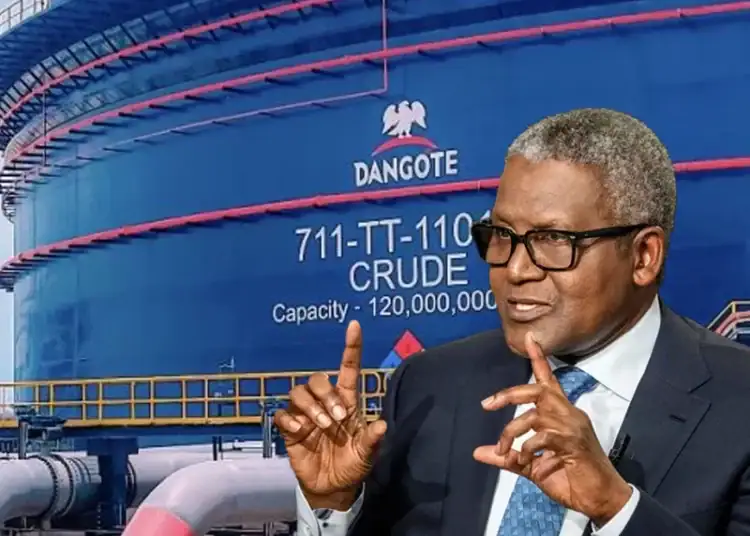
Towards meeting the energy demands of their ongoing expansion projects, three subsidiaries of Dangote Industries Limited, Dangote Petroleum Refinery, Dangote Fertiliser Plant and Dangote Cement Plc have scaled up their Gas Sales and Purchase Agreements (GSPA) with subsidiaries of the Nigerian National Petroleum Company Limited (NNPC), Nigerian Gas Marketing Limited and NNPC Gas Infrastructure Company Limited (NGIC).
The upscaled Supply Agreements will help drive the conglomerate’s Vision 2030, resulting in increased output, a better and cleaner energy supply, and support for ongoing expansion projects. The Agreements were signed at the unveiling of the NNPC Gas Master Plan (GMP) 2026, tagged NGMP 2026 held in Abuja.
CEO of Dangote Petroleum Refinery, David Bird, speaking at the signing ceremony, said that the agreement demonstrates the refinery’s bold steps to expand its capacity. According to him, the agreements mark a critical milestone in the expansion drive and a proactive measure to secure vast energy requirements for the anticipated increase in its production capacity.
According to Pathak, the signing of the agreement serves as an enabler of DCP’s strategic objectives. The agreement guarantees the gas required to support the drive towards CNG adoption as Autogas and to meet the increasing gas demand as production capacities in Nigeria are expanded. It also promotes the adoption of cleaner fuels, including Autogas (CNG) and gas, to support increased production output.
“For Dangote Fertiliser FZE, it is anticipated that the agreement will support the company’s fertiliser capacity expansion projects, given that fertiliser is a product of natural gas.”
The Minister of State for Petroleum Resources (Gas), Ekperikpe Ekpo, described the Gas Master Plan as a deliberate pivot from policy articulation to disciplined execution, anchored on commercial viability and integrated sector-wide coordination.
He said, “Today’s launch is not merely the unveiling of a document; it represents a deliberate shift towards a more integrated, commercially driven, and execution-focused gas sector, aligned with Nigeria’s development aspirations.
“Nigeria is fundamentally a gas Nation. With one of the largest proven gas reserves in Africa, our challenge has never been potential, but translation: translating resources into a reliable supply, infrastructure into value, and policy into measurable outcomes for our economy and our people. The Gas Master Plan speaks directly to this challenge.”
Ekpo noted that the Plan’s strong focus on supply reliability, infrastructure expansion, domestic and export market flexibility, and strategic partnerships aligns seamlessly with the federal government’s Decade of Gas Initiative, positioning natural gas as the backbone of Nigeria’s energy security, industrialisation, and just energy transition.
The Group chief executive officer, NNPC, Engr. Bashir Ojulari, described the NNPC Gas Master Plan 2026 as a bold, effective execution-anchored roadmap designed to unlock Nigeria’s immense gas potential and elevate the country into a globally competitive gas hub.
Ojulari noted that with about 210 trillion cubic feet (Tcf) of proven gas reserves and an upside potential of up to 600 Tcf, Nigeria possesses one of the most consequential hydrocarbon basins in the world, one reinforced by the Petroleum Industry Act (PIA) and the Federal Government’s gas-centric energy transition agenda.
“The Plan is structured not just to deliver – but to exceed- the Presidential mandate of increasing national gas production to 10 billion cubic feet per day by 2027 and 12 billion cubic feet per day by 2030, while catalysing over 60 billion dollars in new investments across the oil and gas value chain by 2030,” he stated.
He explained that the Plan prioritises cost optimisation, operational excellence, and systematic advancement of resources from 3P to bankable 2P reserves, while strengthening gas supply to power generation, CNG, LPG, Mini-LNG, and critical industrial off-takers.
