

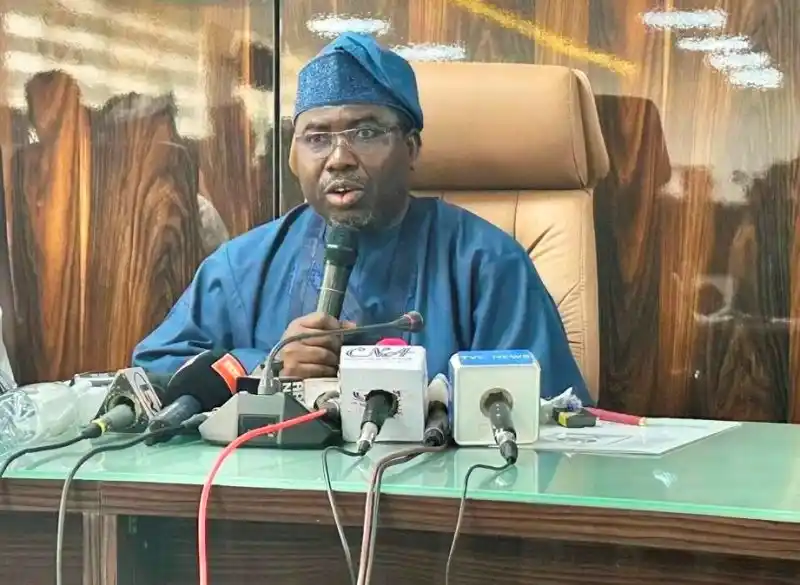
… INEC was working with major technology and social media platforms to handle election-related matters.
Ahead of the elections, the Independent National Electoral Commission (INEC) has acknowledged the growing threat posed by AI-generated misinformation and disinformation, saying it has monitoring mechanisms, an AI division and a rapid-response team to detect and respond to fabricated electoral content.
The commission also urged Nigerians to rely only on information and results released through its verified communication channels.
Speaking on measures being taken by INEC to detect and respond to AI-generated fake results, videos, audio and documents, Deputy Director, Voter Education and Publicity at INEC, Wilfred Ifogah, said the commission was closely monitoring such content.
“You know we have constantly maintained that Nigerians should only rely on results from INEC through our official communication channels. However, we have our monitoring mechanism and our AI division, and we will constantly put disclaimers on such fake content,” he told LEADERSHIP Weekend.
Ifogah also disclosed that the commission had a dedicated rapid-response team and a media monitoring unit to address false information once it was detected.
“That is the reason why we have a rapid response team and a vibrant media monitoring unit. We respond as soon as the content is flagged,” he said.
He confirmed that INEC was also working with major technology and social media platforms, including Meta, X, TikTok, Google and WhatsApp, to tackle election-related misinformation and disinformation.
The commission’s approach comes against the backdrop of the extensive circulation of false claims, manipulated materials and misleading election-related content during the 2023 general elections.
Ahead of the 2023 polls, the Nigerian Fact-Checkers’ Coalition (NFC) established election situation rooms in Abuja, Lagos and the United Kingdom to monitor misinformation and disinformation capable of inciting violence, promoting voter apathy, undermining trust in the electoral process and influencing the outcome of the elections.
Opeyemi Kehinde, editor at FactCheckHub and coordinator of the NFC, said at the time that coalition members would monitor and debunk false information from election day until INEC announced the final results.
“The role of the coalition in ensuring the election integrity is very significant because we understand the dangers that lurk around when misinformation is allowed to have its way in the electoral process,” Kehinde said.
FactCheckHub’s review of the 2023 election fact-checking exercise showed the scale of the challenge, with 127 claims fact-checked during the presidential/National Assembly and governorship/State Assembly elections.
Videos accounted for a significant proportion of the materials subjected to verification, while fabricated media graphics and old videos presented as though they were connected to the ongoing elections also circulated widely.
However, experts say generative AI has introduced a more sophisticated dimension to the problem.
Abuja-based cybersecurity and AI expert, Salami Daniel, said AI had significantly reduced the barrier to producing convincing fake audio, videos, images and documents.
“Artificial Intelligence has significantly lowered the barrier to producing convincing fake audio, videos, images and documents. Ahead of the 2027 elections, this creates a serious verification challenge because a fabricated video or audio recording can be produced within minutes and circulated widely before the affected person or institution has an opportunity to respond,” he said.
According to him, AI tools can clone voices and imitate the appearance and mannerisms of public officials, potentially making fabricated messages attributed to INEC or political figures appear credible.
He urged INEC and other election stakeholders to move beyond simply debunking false content after it had gone viral.
He said mechanisms should be developed to rapidly authenticate official results, statements, videos, and other electoral materials, alongside continuous monitoring of social media platforms.
Kehinde also urged journalists to exercise caution before publishing or amplifying unusual election-related audio, videos, screenshots or documents.
“Journalists also have an important role to play. Before publishing or amplifying unusual election-related audio, videos, screenshots or documents, they should verify the material from the original source and cross-check it with the relevant authority,” he said.
He added that although technology could assist in detecting AI-generated content, no single detection tool was completely reliable.
“The most effective approach is likely to combine technical detection, human verification, source authentication and rapid communication from trusted institutions,” he said.
A fact-checker, Kamaru Danlami, who spoke to our correspondent in Kaduna, said the experience of the 2023 elections demonstrated how quickly misinformation and disinformation could spread during voting, result collation and the announcement of results.
“What has changed is that Artificial Intelligence now gives those producing false information more sophisticated tools to make fabricated content appear authentic,” he said.
Danlami said a fake result, a manipulated video, or a cloned voice attributed to an electoral official could circulate widely before fact-checkers, journalists, or the affected institution had established that it was false.
He noted that the danger extended beyond fabricated election results to false claims about voting procedures, polling units, candidates, electoral officials and incidents at polling stations.
“This makes media literacy and rapid verification extremely important ahead of 2027,” he said.
He urged voters to question the source of election-related information, particularly sensational materials circulated without a clear source.
According to him, INEC, political parties, the media, technology platforms and fact-checking organisations would also need stronger coordination to ensure that false information was identified, verified and countered quickly.
“The lesson from 2023 is that information can become part of the electoral contest itself. With generative AI becoming more accessible, stakeholders should prepare for the possibility that fabricated content will become more sophisticated and harder for ordinary users to identify,” he said.
For INEC, the challenge will therefore not only be detecting fake results, videos and audio, but ensuring that verified information reaches voters quickly enough to prevent false narratives from gaining ground.
The commission has said its AI, rapid-response and media-monitoring mechanisms are being deployed to address the challenge, while urging Nigerians to verify election-related information through its official channels.
With the 2027 elections approaching, the ability of INEC, technology platforms, fact-checkers, and the media to promptly authenticate and communicate electoral information is likely to be central to efforts to maintain public confidence in the electoral process.
