

Tax Reform Bills, boosting revenue for tiers of govt
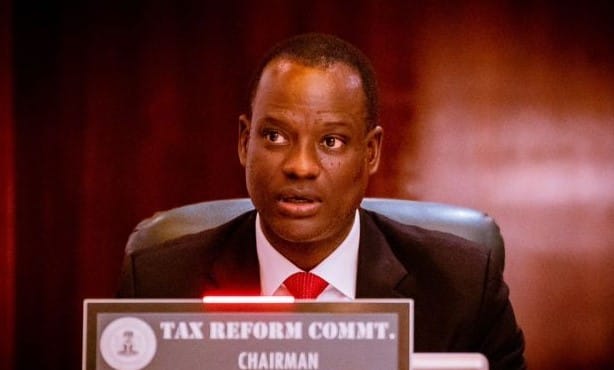
Mr. Taiwo Oyedele
Tax Reform Bills can boost revenue for tiers of govt.
The prospects of the tax reform proposed by the President Bola Ahmed Tinubu’s administration were brought to the fore at the weekend by the panel.
Chairman, Presidential Fiscal Policy and Tax Reform Committee, Mr. Taiwo Oyedele, whose recommendations gave birth to the four bills before the National Assembly, gave an insight into the advantages of the proposals.
President Tinubu last month forwarded the Executive Tax Reform Bills for legislative consideration.
However, governors and traditional rulers from the North requested for its withdrawal, claiming that a portion of it is not in their region’s interest.
The National Economic Council (NEC) supported the North’s position asking for wider consultation.
But the president rejected the advice, saying the National Assembly is the place for those who have misgivings to ventilate their feelings.
At the weekend, Oyedele said Nigeria’s tax laws are obsolete and irrelevant to modern governance.
He said some of the laws dated back to 1939.
Oyedele insisted that if passed, only the rich will pay more while the consolidation would create ease of payment, adding that more money will be made available to all tiers of government.
He insisted that the reform is not discriminating but inclusive.
Oyedele said the tax reform promises a significant boost in revenue, particularly for states outside Lagos, where many large corporations have historically been headquartered.
Oyedele pointed out that some of the opposition to the bill stemmed from a misunderstanding of the bill’s provisions.
He clarified that the VAT law resides within the Nigerian tax bill, while the adjustments to derivation are contained in the tax administration bill.
“Somebody picked one leg of it, didn’t find the second one, and then concluded that this was going to be against the law. This is to benefit everybody, he explained.”
According to him, the VAT reform, for instance, aims to shift the focus of tax revenue to reflect economic activities occurring across all states, rather than centralising it around states where companies are headquartered.
He explained that under the new model, the allocation of VAT will be based on where goods and services are consumed, rather than solely where they are produced.
“Rather than saying that because the company producing the beverages is headquartered in Lagos, that’s where we derive all the VAT revenue from Nigeria, we’ll say, where did you send them to? The ones you sent to Ekiti, to Zamfara, to Kebbi, to Abia—let them take credit for their economic activities,” Oyedele said.
“Everyone should be excited about that apart from Lagos State. We believe it’s a fairer approach,” he added.
The proposal to decentralise VAT allocation addresses long-standing concerns about revenue fairness among states, which has led to calls from regions across Nigeria for reform.
The current VAT sharing formula distributes 20 per cent of VAT revenue based on derivation, 50 per cent based on equality, and 30 per cent based on population.
Under the proposed model, however, the Bill recommends a formula that would attribute 60 per cent based on derivation, 20 per cent based on population, and 20 per cent based on equality.
This adjustment aims to ensure that states that prioritise economic activities and consumption directly benefit from these contributions.
To further incentivise states, the Bill proposes that the Federal Government reduce its share of VAT from 15 per cent to 10 per cent, allowing for an additional five per cent to be used as a fiscal equalisation buffers for states.
“This guarantees every state that as a result of our reform, they will not collect less than they would have under the old formula,” Oyedele assured.
“The upside is significant—your VAT revenue could double in less than two years if this reform is implemented, he stressed.”
Oyedele noted that the redistribution would also encourage state governments to take a vested interest in their economic growth.
He said with higher potential revenue based on local economic activities, states are expected to have a stronger incentive to support small businesses, promote investment, and reduce informal trading to broaden their tax base.
Oyedele spoke extensively on the vision and strategic direction behind Nigeria’s tax reform efforts.
According to him, these reforms aim to streamline Nigeria’s tax framework, making it more efficient, equitable, and capable of driving sustainable economic growth.
Oyedele explained the essence of these reforms, saying: “So, there are four bills, but in fact, one of that, the Nigeria tax bill, is also a bill that has now harmonised about seven, eight different tax laws. Seven, eight different tax laws? Companies’ Income Tax Act; Petroleum Profit Tax Act; Personal Income Tax Act; Capital Gains Tax Act; Stamp Duties Act; Excise Duty Tax, and VAT.”
The decision to unify these tax laws under a single legislative framework, according to Oyedele, stems from the realisation that the current fragmented structure complicates compliance.
He asked a rhetorical question that underscored the rationale for this unification: “Why should it be so complicated to find out my tax obligations? Why don’t you pull all of that together in one piece of legislation and find commonality?”
Oyedele emphasised that the objective is not merely to create a single, consolidated tax bill, but also to simplify the language of tax legislation, making it accessible for every Nigerian.
“It’s already hard to pay tax. It shouldn’t be harder than trying to find out how much you pay. So, while there are four bills, you could actually say, in principle, maybe there are about 12, 15 bills that would be compress into four,” he said.
In addressing Nigeria’s myriad “nuisance taxes”—taxes that are low revenue-yielding and administratively burdensome, Oyedele stressed the need to eliminate them.
His solution is a tax system that is “broad-based, high revenue-yielding, easy to collect, and hard to evade.”
He noted the inefficiencies in the current tax framework by pointing out how some companies manipulate returns for personal gain, avoiding full tax responsibility.
Oyedele warned that “this is something that should not happen in 2024.”
Through this reform, the committee envisions a more robust tax intelligence network that allows tax authorities to collect taxes efficiently while allowing businesses to focus on their primary roles.
Oyedele said: “Let the authorities that have been trained on tax matters collect taxes, let the rest of us focus on getting our jobs done in terms of our primary mandates, and watch the economy grow in a way that benefits everyone.”
Oyedele reflected on the inevitable resistance to these changes, noting: “When you do reforms, you’re going to step on interests. You’re going to change things. People don’t like change because it’s uncertain. They don’t know what’s going to come.”
However, he insisted that continuing with the status quo was not an option, especially in a country where inflation erodes purchasing power at alarming rates.
The overarching goal, as Oyedele noted, is to create a tax system that serves the public good. “Why don’t we have an orderly restructuring of the system so you can protect the poorest people, small businesses, and those who are not so poor can then pay a little bit more? And then we follow the money to ensure that the money is used for the purpose of the people. That’s really what these reforms are all about.”
Oyedele shed light on the historical and structural context of VAT in Nigeria and the ongoing reform efforts aimed at addressing issues of derivation and equitable revenue sharing among states.
Giving the history of VAT In 1986, he said: “The military introduced a decree on sales tax, and it was to be collected by states.
“Five years later, they weren’t making progress. So, in 1991, the military set up a committee to say, ‘Why is this sales tax not working? Maybe, we should consider VAT.’
“The committee concluded in 1993 that VAT would be a better tax to collect since it doesn’t create inflation like sales tax does, where any time you pay it, you can’t recover it, whereas VAT can be recovered as value is added.”
Oyedele explained how the decision was made to centralise VAT collection, allocating 15 percent to the Federal Government, 50 percent to states, and 35 percent to local governments.
However, when the 1999 Constitution was adopted, it replicated the 1979 Constitution without recognizing VAT, creating a loophole that led to legal disputes over who should control VAT collection—a problem at the heart of recent litigation by Rivers and Lagos States.
Oyedele added: “If we get a judgment from the Supreme Court today, saying VAT should be collected and administered by states, that would be chaotic. That would take us back to 1986. States would collect less, businesses would suffer, the economy would retrogress. We don’t want that.”
The controversy centers around where VAT should be derived—where companies file returns or where consumption occurs.
Oyedele illustrated this with the example of businesses headquartered in Lagos, such as beverage companies, that distribute their products nationwide but currently file VAT returns in Lagos, thus crediting the state with a larger share than it should proportionately receive.
He said: “That VAT that is remitted in Lagos is attributed to Lagos as being derived from Lagos. But it’s not derived from Lagos. When you make calls, it’s derived from across Nigeria. That’s why we thought we should move away from where VAT is remitted to where the consumption takes place.”
To create a more balanced system, Oyedele and his team proposed changes to how VAT is shared, with a focus on correcting distortions in derivation and increasing incentives for states to drive local economic growth.
He proposed an allocation model of 60 percent based on derivation, 20 percent on population, and 20 percent on equality.
Also, Oyedele urged the Federal Government to reduce its share from 15 percent to 10 percent, creating a five percent buffer for fiscal equalisation, guaranteeing that no state collects less than it would have under the previous model.
He attributed the opposition to the Tax Reform Bills in part to misunderstandings within the National Economic Council (NEC) and the Governors Forum, where he observed misinterpretations stemming from incomplete information.
He clarified that the reforms aimed to benefit all states, urging stakeholders to consider the comprehensive framework, which separates the tax administration bill from the Nigerian tax bill, ensuring equitable, streamlined, and growth-oriented VAT revenue for Nigeria’s states.
Oyedele said the Federal Inland Revenue Service (FIRS) should ideally serve as a revenue agency for the entire federation, rather than solely the federal government.
Thus, renaming it to the “Nigeria Revenue Service” would better reflect this unified role. Initially, options like “Federation Revenue Service” were considered, but ultimately, a simpler name was preferred.
He also noted the inefficiency of having over 60 federal agencies (and many more across states) collecting various taxes and levies, a practice uncommon in both Africa and globally.
To streamline operations, Oyedele and his team advocated for a single, centralized agency to handle all tax collection, allowing other government agencies to focus on their core mandates, such as regulation, rather than tax collection.
The Bills recommend that agencies like the Nigeria Upstream Regulatory Commission, which collects royalties from oil companies, should solely regulate the sector instead of collecting taxes. Similarly, Nigeria Customs Service could shift its focus from revenue collection to trade facilitation and border security, as seen in countries like the United Kingdom, South Africa, and Kenya, where centralized revenue authorities manage all tax collection.
This consolidated approach, Oyedele argued, would not only improve efficiency and transparency but also enhance capacity for data and intelligence gathering.
He said by centralizing tax collection, Nigeria could better track and manage revenue, reducing under-declaration and tax evasion while simplifying the process for taxpayers.
Oyedele said under the proposed reforms, tax collection in Nigeria would involve a unified and cooperative approach, with the Nigeria Revenue Service (NRS) playing a central role.
Also, while states will continue to collect their own taxes, the new bills proposes a framework for stronger cooperation among tax authorities at all levels—state-to-state, center-to-state, and even with local governments.
The collaboration would focus on sharing data, enhancing tax intelligence, and building capacity, which Oyedele believes will transform the tax system.
Currently, it’s easy for individuals to avoid proper tax payments by shifting between jurisdictions; for example, claiming residency in Lagos while primarily working in Abuja.
By establishing a unified system through the NRS, all internal revenue services across Nigeria would be connected. Whether an individual or business operates in Abuja, Kogi, or any other state, their tax activities would be reflected on the centralized system. This would also involve linking with the Nigeria Customs Service, allowing customs-administered taxes to flow seamlessly into the unified system, further ensuring accurate and efficient tax administration across the country.
Why Bill can’t be withdrawn
A key issue is the limited time available. If the bill is withdrawn, it would take at least six more months to reintroduce it to the National Assembly—a delay that could negatively impact essential provisions, such as tax exemptions for low-income earners and small businesses and reduced corporate tax rates for larger firms to encourage investment.
Oyedele emphasized the need for this bill to stimulate economic activities, including boosting exports, and argued that the stakes are too high to risk delay.
Oyedele also expressed strong reservations about the possibility of the tax reform bills failing to pass. He underscored the high stakes, noting that this unique opportunity—backed by unwavering support from the highest levels of government—might not come again.
The Nigerian tax system, he argued, has long lagged behind global standards, relying on outdated laws such as the 1939 stamp duty law, which no longer meets the country’s needs.
Oyedele said failure to enact these reforms would be a major setback, not only in updating antiquated laws but also in transforming the entire tax landscape to foster economic progress.
He voiced optimism, however, that through collaboration, remaining differences could be resolved, allowing the bills to proceed and usher in long-overdue modernization of Nigeria’s tax framework.
Pushing tax revenue to GDP
The Tinubu administration plans to increase tax-to-GDP ratio to at least 18 percent within three years. That is one of the reasons government established the Oyedele panel, which culminated in the report that brought about the Tax Reform Bills.
The reforms are intended to: digitize revenue collection; create a more competitive business environment and reduce the burden on the public by streamlining the number of taxes and levies.
Nigeria’s tax collection rate is currently one of the lowest in the world, at around 10.8 percent of its GDP. The government has identified multiple taxation as a major obstacle to the growth of small and medium-sized enterprises (MSMEs).
The tax-to-GDP ratio is a measure of how much of a country’s GDP goes toward government funding. It’s used by policymakers to compare tax receipts from year to year.
