

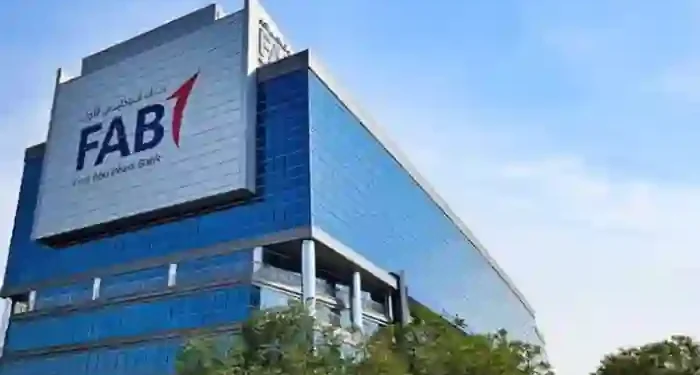
UAE’s Biggest Bank expresses readiness to Open Lagos Branch
By Elegbede Abiodun
The United Arab Emirates‘ flagship lender, is ready to set up a representative office in Nigeria within weeks, marking a strategic bet on Africa’s largest economy as it expands its sub-Saharan footprint.
The move comes as the banking heavyweight—among the world’s largest and most highly rated financial institutions—deepens its engagement with Nigerian infrastructure and energy projects. Martin Tricaud, Group Head of Wholesale Banking at First Abu Dhabi Bank, announced the plans Monday at the Investopia Africa conference in Lagos.
Nigeria will become the bank’s 22nd market globally, extending its presence beyond the Middle East, Europe, Asia, and North Africa, where it currently operates in Egypt and Libya.
The Lagos office follows the bank’s recent partnership with the African Export-Import Bank to deliver $1.126 billion in financing for Phase 1, Section 2 of the Lagos–Calabar Coastal Highway, one of Nigeria’s most ambitious infrastructure undertakings.
“Opening in Nigeria reflects extensive deliberation and thorough analysis,” Tricaud explained. “We recognized the necessity of a sub-Saharan African presence, and Lagos presents a strong opportunity.”
While First Abu Dhabi Bank has traditionally concentrated its Nigerian activities in energy—leveraging the UAE’s capabilities in both conventional and renewable power—the lender now sees broader potential in infrastructure development.
“Our initial focus aligned with Nigeria’s oil and gas strengths, which helped us establish relationships across public and private sectors,” Tricaud said. “However, we identified substantial additional opportunities, particularly in infrastructure.”
The bank collaborated closely with Nigeria’s Ministry of Finance, construction company Hitech, and the Chagoury Group to arrange financing for the coastal highway. Tricaud noted that a recent site inspection revealed impressive construction progress and significant economic potential.
Through syndication and partnerships with institutions including the Islamic Development Bank, First Abu Dhabi Bank is channeling international capital into Nigerian projects.
“We’ve mobilized considerable resources through collaboration and syndication, not independently,” Tricaud said. “This demonstrates Nigeria’s capacity to attract global infrastructure investment.”
The coastal highway financing represents an opening move, with additional investments anticipated across roads, highways, and related infrastructure.
Speaking alongside Lagos State Governor Babajide Sanwo-Olu and Nigerian Ports Authority Managing Director Abubakar Dantsoho, Tricaud highlighted Africa’s demographic and economic momentum as central to the expansion strategy.
With Africa’s population of approximately 1.4 billion expected to approach two billion in the coming decades, and economic growth projected to surpass many developed markets, the continent presents compelling long-term opportunities, he said.
