

Manny Ita –
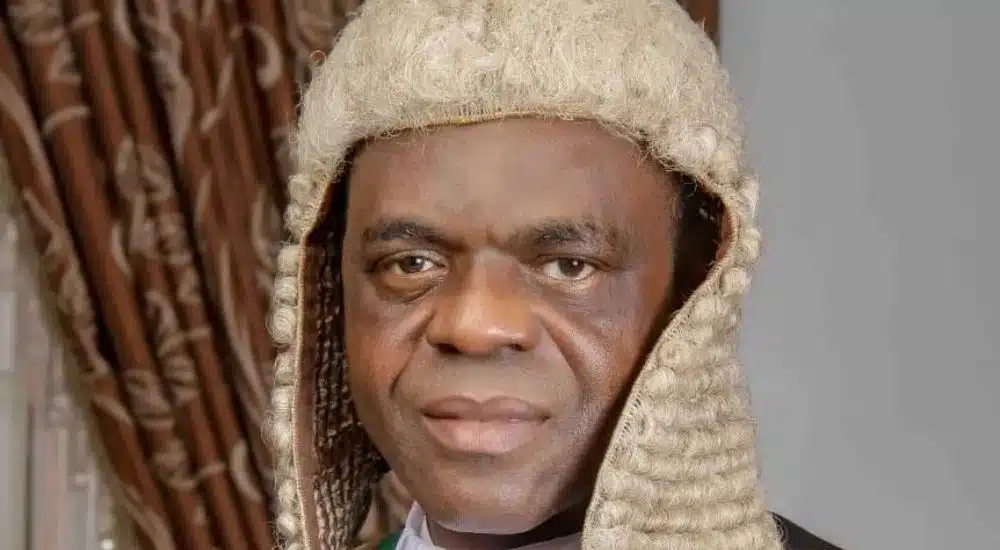
The Code of Conduct Bureau (CCB) has summoned the Chief Judge of the Federal High Court, John Tsoho, following an investigation that alleged he failed to declare several bank accounts in his asset declaration form, contrary to provisions of the Code of Conduct law.
Sources within the bureau said Justice Tsoho was invited to appear before the CCB to respond to questions concerning the undeclared accounts. He was expected to appear on Friday but did not attend. Officials indicated that he is now expected to appear on Monday.
Documents reviewed by the newspaper showed that in the asset declaration form submitted to the CCB on 29 April 2024, Justice Tsoho allegedly did not disclose multiple bank accounts, including three accounts domiciled with United Bank for Africa and one account with Access Bank. Under Nigeria’s asset declaration regime, public officers are required to fully disclose all properties, assets and liabilities, including bank accounts and the funds contained in them.
The CCB is the federal agency responsible for addressing conflicts of interest and abuse of office by public servants. Non-disclosure or false declaration of assets constitutes a breach of the law and may attract sanctions, including removal from office and forfeiture of assets.
Efforts to obtain comments from the CCB chairman, Abdullahi Usman, were unsuccessful as he did not respond to calls or messages seeking clarification. However, sources within the bureau said that if the allegations are substantiated, the matter would be referred to the Code of Conduct Tribunal for adjudication.
Section 15 of the Code of Conduct Bureau and Tribunal Act mandates every public officer to declare all properties, assets and liabilities immediately after taking office and at specified intervals thereafter. The law provides that any false statement in a declaration constitutes a breach and that assets not reasonably attributable to legitimate income may be presumed unlawfully acquired unless proven otherwise.
If found guilty by the tribunal, Justice Tsoho could face removal from office, disqualification from holding public office for up to 10 years, and forfeiture of improperly declared assets. Decisions of the tribunal are appealable to the Court of Appeal.
The development has drawn comparisons with the 2019 case involving former Chief Justice of Nigeria, Walter Onnoghen, who was convicted and removed from office by the Code of Conduct Tribunal for failing to declare certain bank accounts. His conviction was later overturned by the Court of Appeal in November 2024 following a settlement with the federal government.
Justice Tsoho has previously faced public criticism over certain administrative and judicial decisions, although those allegations remain unproven. The current development comes amid heightened scrutiny within the judiciary, with the National Judicial Council reportedly conducting investigations into petitions concerning senior judicial officers.
The council, chaired by the Chief Justice of Nigeria, Kudirat Kekere-Ekun, has in recent months sanctioned and compulsorily retired several judges over misconduct as part of efforts to strengthen transparency and accountability within the judiciary.
