

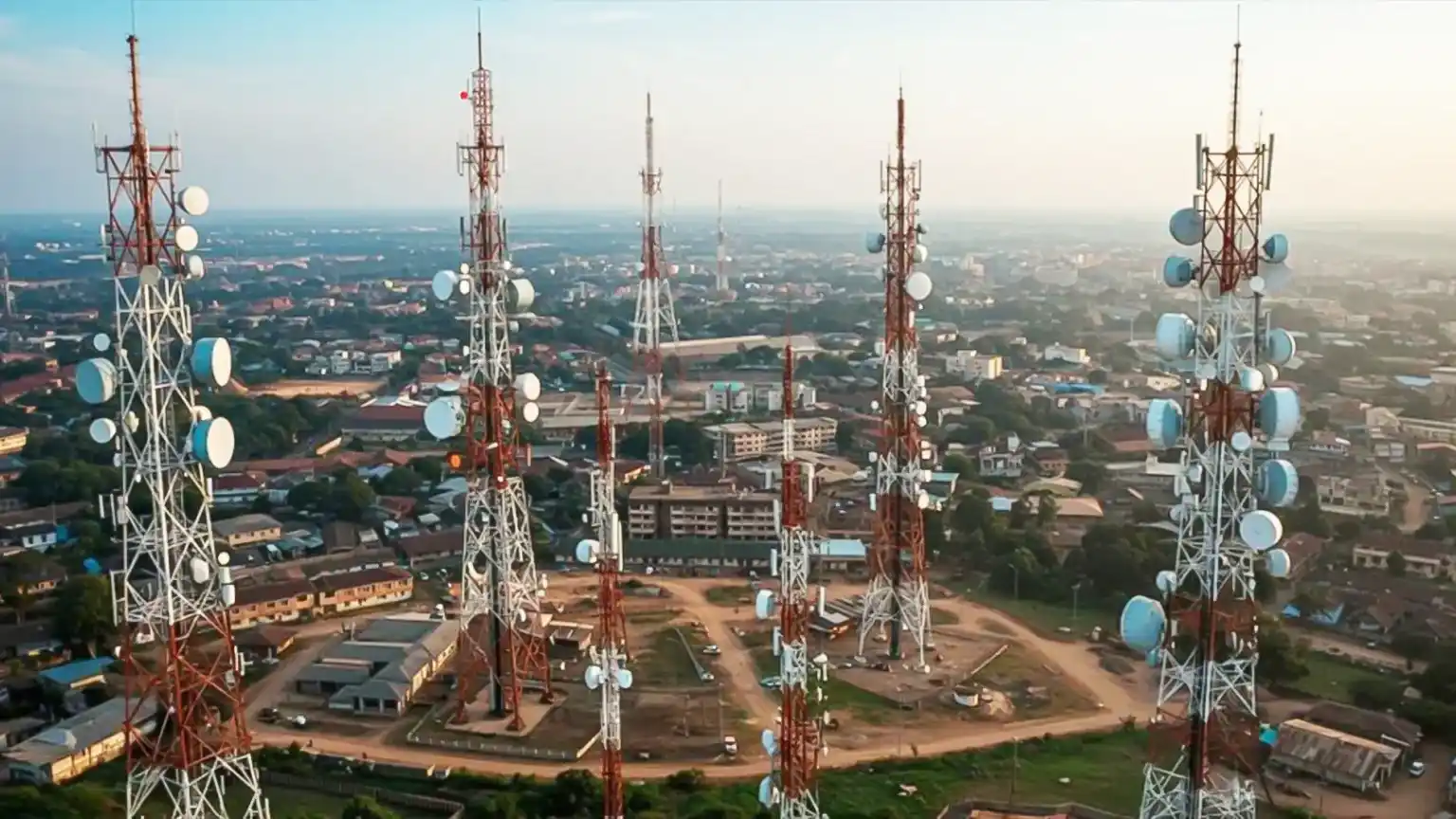
The stakeholders in Nigeria’s telecommunications sector have called for concerted efforts to tackle challenges threatening the industry’s growth, particularly persistent damage to telecom infrastructure.
They have raised the concerns against the backdrop of data from the Nigerian Communications Commission (NCC), which showed that road contractors, vandals and excavation crews severed 74,276 fibre-optic cables across the country in April 2026.
The figure rose to 79,121 in May, while the NCC had recorded more than 5,000 discrete fibre-cut incidents in the first half of the year by the time it convened a stakeholders’ workshop in August.
Executive Vice Chairman of the NCC, Dr Aminu Maida, said the impact of fibre cuts extended beyond dropped calls to the wider economy.
“To a machine operator on a construction site, it may appear to be one buried cable,” he said.
“To the nation, it can mean failed calls, stalled payments, interrupted services and missed opportunities.”
The concerns are significant given telecommunications’ growing contribution to Nigeria’s economy.
According to the National Bureau of Statistics, the sector accounted for 9.72 per cent of real GDP and contributed about N5.2 trillion in the second quarter of 2026.
The sector also grew by 10.38 per cent year-on-year during the quarter, more than twice the pace of the broader economy.
Industry stakeholders said disruptions to fibre infrastructure could affect banking, digital payments, healthcare communications, government services and other commercial activities.
Fibre infrastructure also supports Nigeria’s expanding digital payments ecosystem, which processes about N2.93 trillion in daily transactions.
Despite infrastructure challenges, telecom operators continue to invest heavily in network expansion.
The NCC’s 110th board communiqué, issued on September 9, said mobile network operators had deployed 8,526 of the 12,179 network coverage and capacity sites they committed to building in 2026.
The figure represents about 70 per cent of the target, compared with roughly 5,000 sites completed by the previous board meeting in May.
The commitments followed the NCC’s approval of a 50 per cent tariff adjustment in January 2025, the first increase in more than a decade.
MTN Nigeria, which crossed 100 million active subscribers in July, invested N620.5 billion in capital expenditure in the first half of 2026.
The company said the investment covered spectrum, fibre backhaul and network infrastructure, including more than 730 new 5G sites deployed across 27 states during the year.
Its terrestrial fibre network now extends to more than 43,000 kilometres across the country.
Airtel, which has more than 66 million subscribers, has also continued to invest in network expansion.
However, industry players have raised concerns about protecting the infrastructure after deployment.
The NCC’s board communiqué linked its infrastructure deployment update with concerns over a spike in fibre disruptions, noting that continued damage to existing backbone infrastructure could undermine network expansion.
The Federal Government has classified telecom infrastructure as Critical National Information Infrastructure and established a tripartite standing committee on fibre protection.
The NCC has also introduced Quality of Service Business Rules, with fines of up to N15 million for operators that fail to meet prescribed performance targets.
Stakeholders, however, said enforcement of infrastructure protection remained uneven, particularly in coordinating road construction, excavation and other physical infrastructure projects with telecom operators.
The NCC also reported a resurgence of call masking, a practice in which international calls are disguised as local traffic to bypass regulated termination charges.
The commission described the practice as economic sabotage, saying it distorts industry revenues and undermines legitimate operators.
Stakeholders said the combination of infrastructure damage and revenue leakage could place additional pressure on operators investing heavily in network expansion.
They called for stronger enforcement of existing regulations, improved coordination among government agencies, road contractors and telecom operators, and greater protection for infrastructure critical to Nigeria’s digital economy.
