





Manny Ita –
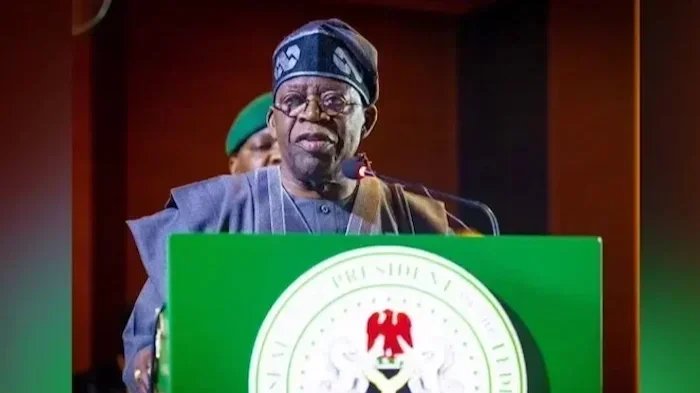
President Bola Ahmed Tinubu has blamed high borrowing costs, illicit financial flows, and restrictive global financial policies for the poor state of Africa’s manufacturing sector, warning that the continent continues to struggle under an unfair global economic system.
Speaking at the Africa Forward Summit in Nairobi, Kenya, co-hosted by Emmanuel Macron and William Ruto, Tinubu said Africa contributes less than 2% to global manufacturing largely because many countries still export raw materials while importing finished products.
The President questioned how African manufacturers could compete globally when borrowing costs across the continent are significantly higher than those in Europe, Asia, and North America. According to him, these financial pressures continue to weaken industrial growth and limit investment in infrastructure and production capacity.
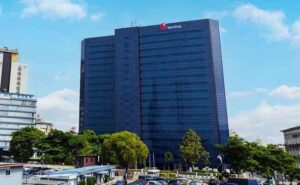
Tinubu defended Nigeria’s ongoing economic reforms, including fuel subsidy removal, exchange rate unification, and the banking recapitalisation programme valued at over $45.5 billion, saying the measures are aimed at restoring investor confidence and strengthening long-term economic stability.
Despite the reforms, he noted that Nigeria’s debt servicing burden remains heavy, with the country projected to spend about $11.6 billion on debt servicing in 2026, reducing available funds for industrialisation, infrastructure, and other critical sectors.
The President also called on African nations to focus on local value addition by processing minerals domestically, refining crude oil locally, and expanding manufacturing capacity in sectors such as pharmaceuticals and energy.
On maritime development, Tinubu promoted Nigeria’s blue economy strategy, stressing the need for interoperable systems, harmonised regulations, and stronger regional maritime security cooperation. He pledged to make Nigeria’s Deep Blue Project maritime intelligence infrastructure available as a regional data hub for Gulf of Guinea countries.
Addressing migration concerns, Tinubu said irregular migration across Africa can only be reduced through investments in jobs, agriculture, energy access, infrastructure, and digital skills development. He argued that people are less likely to embark on dangerous migration journeys when economic opportunities exist at home.
The President’s comments come amid growing concerns over illicit financial flows from Africa’s extractive industries. The United Nations Economic Commission for Africa previously estimated that the continent loses about $40 billion annually to illicit financial flows, funds experts say could have been invested in healthcare, education, infrastructure, and job creation.


