

Manny Ita –
The 39th Ordinary Session of the Assembly of Heads of State and Government of the African Union concluded Sunday in Addis Ababa with leaders adopting new commitments on sustainable water management and sanitation, while also advancing institutional reforms aimed at strengthening the bloc’s effectiveness. The summit, hosted at the AU headquarters, brought together presidents, prime ministers and senior officials from across the continent amid growing concerns over climate change, drought, urbanization and public health challenges linked to water scarcity.
Delegates endorsed a continental framework designed to expand access to safe drinking water, modern sanitation systems and climate-resilient infrastructure, particularly in vulnerable regions facing desertification and recurrent flooding. AU officials warned that hundreds of millions of Africans still lack reliable access to clean water, a situation they said threatens food security, economic development and social stability. “Water security is inseparable from human security,” an AU communiqué stated, urging member states to prioritize investment, regional cooperation and technology transfer.
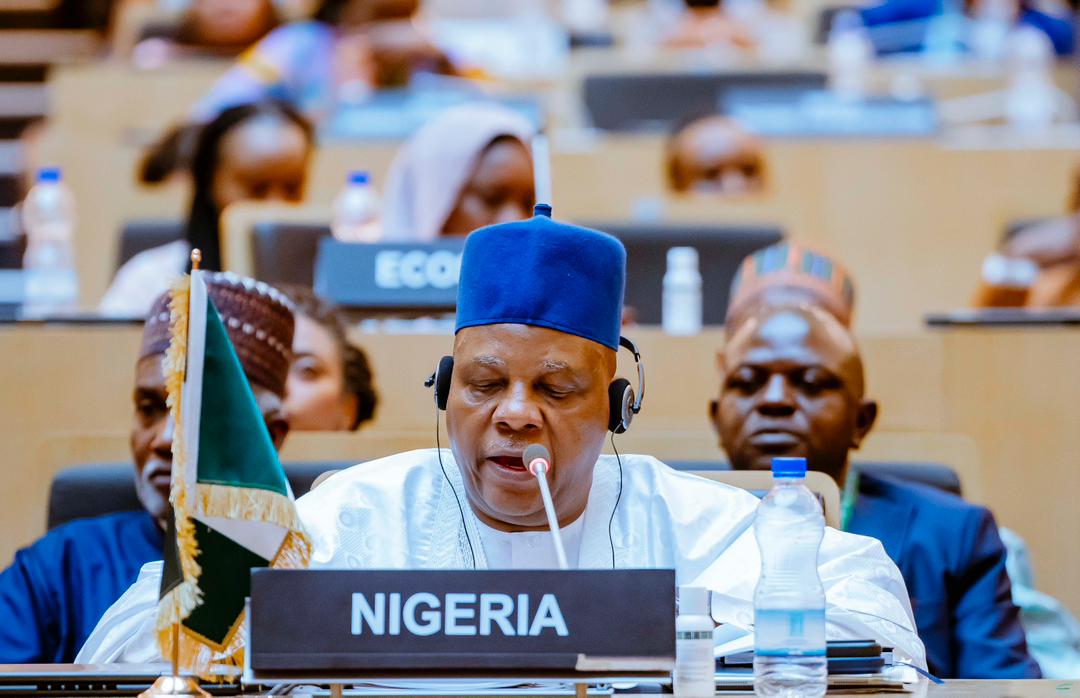
Nigeria formally backed ongoing AU institutional reforms intended to streamline decision-making, improve financial sustainability and reduce dependence on external funding. Representatives of the Federal Government of Nigeria said the reforms would “strengthen the union’s capacity to respond swiftly to continental challenges” and enhance accountability within AU organs. Nigerian officials also reaffirmed support for the African Continental Free Trade Area and other integration initiatives discussed on the summit’s sidelines.
In a significant political development, leaders welcomed the reintegration of Gabon and Guinea into the union following periods of suspension after military takeovers. AU authorities said both countries had taken steps toward transitional governance frameworks, though they emphasized that full normalization would depend on credible progress toward civilian rule. “The return of member states to constitutional order remains a core principle of the union,” the AU Peace and Security Council said.
Discussions also touched on ongoing conflicts, economic pressures and humanitarian crises across the continent, with leaders reiterating commitments to conflict resolution and development financing. Observers noted that the water and sanitation agenda reflects growing recognition that climate-related risks are increasingly shaping Africa’s political and economic landscape, from farmer-herder tensions to migration pressures.
As the summit closed, AU Chairperson officials called for swift implementation of adopted resolutions, stressing that declarations must translate into tangible improvements for citizens. “Our success will be measured not by the number of meetings we hold, but by the lives we improve,” a senior AU official said, urging member states to align national policies with continental priorities before the next summit cycle.
