

Manny Ita –
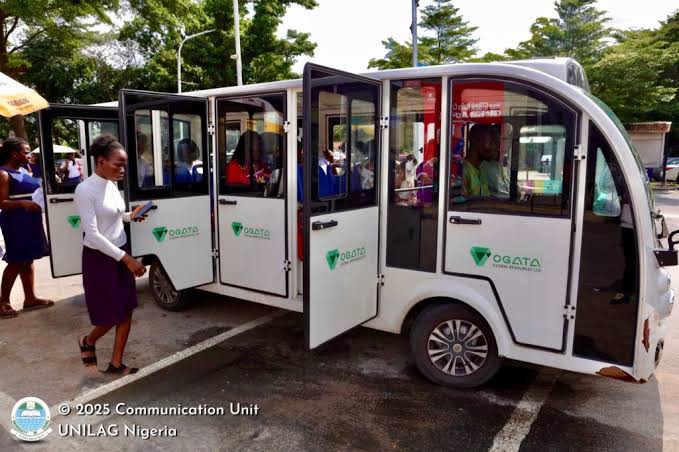
A quiet but significant shift in campus transportation has taken place at the University of Lagos (UNILAG), where electric buses have officially replaced fuel-powered shuttle vehicles in what authorities describe as a pilot initiative aimed at promoting sustainable urban mobility in Nigeria.
The transition, now operational across major routes within the university’s campus in Lagos, has been described by administrators and environmental advocates as a milestone in the push toward cleaner and more efficient transport systems within educational institutions.
University officials said the “Green Ride” initiative was designed to reduce carbon emissions, cut operating costs associated with fuel consumption and introduce students and staff to environmentally friendly transportation alternatives.
A university official familiar with the project said the adoption of electric buses aligns with global efforts to combat climate change and modernize urban transit systems. “This initiative demonstrates that institutions like UNILAG can lead by example in adopting sustainable transport solutions that benefit both the environment and the campus community,” the official said.
Under the new system, electric buses now transport students, staff and visitors across key points of the campus, replacing the petrol-powered shuttle buses that had previously served the university for years.
Students who have begun using the new buses say the experience is noticeably different from the older vehicles, pointing to reduced noise and smoother rides.
One student who commutes daily within the campus described the initiative as a welcome development. “The buses are quieter and more comfortable than the old ones. It also feels good knowing that the university is trying to reduce pollution,” the student said.
Environmental advocates have also praised the initiative, noting that transport emissions remain one of the major contributors to air pollution in large cities such as Lagos.
According to sustainability advocates, the project could provide valuable insights for broader adoption of electric mobility solutions across Nigerian cities if the pilot proves successful.
A sustainability researcher familiar with the project said the university’s initiative could serve as a model for other institutions and municipal authorities. “Universities are ideal environments to test innovative solutions like electric transport because the routes are predictable and the user base is large,” the researcher said. “If this works well at UNILAG, it could inspire similar systems in other campuses and eventually in public transport networks.”
University authorities said the project will continue to be monitored to evaluate performance, operational costs and environmental benefits, with data from the pilot expected to guide future expansion.
Officials also noted that the success of the initiative could strengthen arguments for wider adoption of electric vehicles in Nigeria’s urban transport systems, particularly in densely populated cities where traffic congestion and emissions remain significant concerns.
As the electric buses continue to operate across the UNILAG campus, many observers say the initiative represents a practical step toward cleaner transportation and could signal the beginning of a broader transition toward sustainable mobility in Nigeria.
