

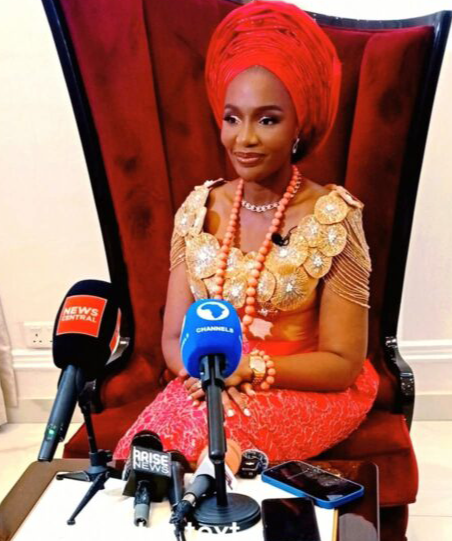
Her Royal Majesty, Queen Ashley Ogiame Atuwatse III
“But I know that we are just getting started,” Queen Ashley Ogiame Atuwatse III declared.
The Olori of Warri Kingdom, Her Royal Majesty, Queen Ashley Ogiame Atuwatse III, has said the last five years of her tenure alongside her husband, His Royal Majesty Ogiame Atuwatse III, the Olu of Warri, have been devoted to building human capacity, empowering women, preserving Itsekiri culture and creating stronger connections among Itsekiris at home and in the diaspora.
The Olori, who spoke yesterday during an exclusive interaction with selected journalists at her residence in Warri as part of activities marking the Olu’s fifth coronation anniversary, said the progress recorded in the kingdom’s women empowerment programmes had become one of the most gratifying aspects of her royal responsibilities.
According to her, the elevation of women within the Warri Kingdom has become increasingly visible, with women, particularly wives of chiefs, becoming more confident, recognised and willing to take ownership of their voices and responsibilities.
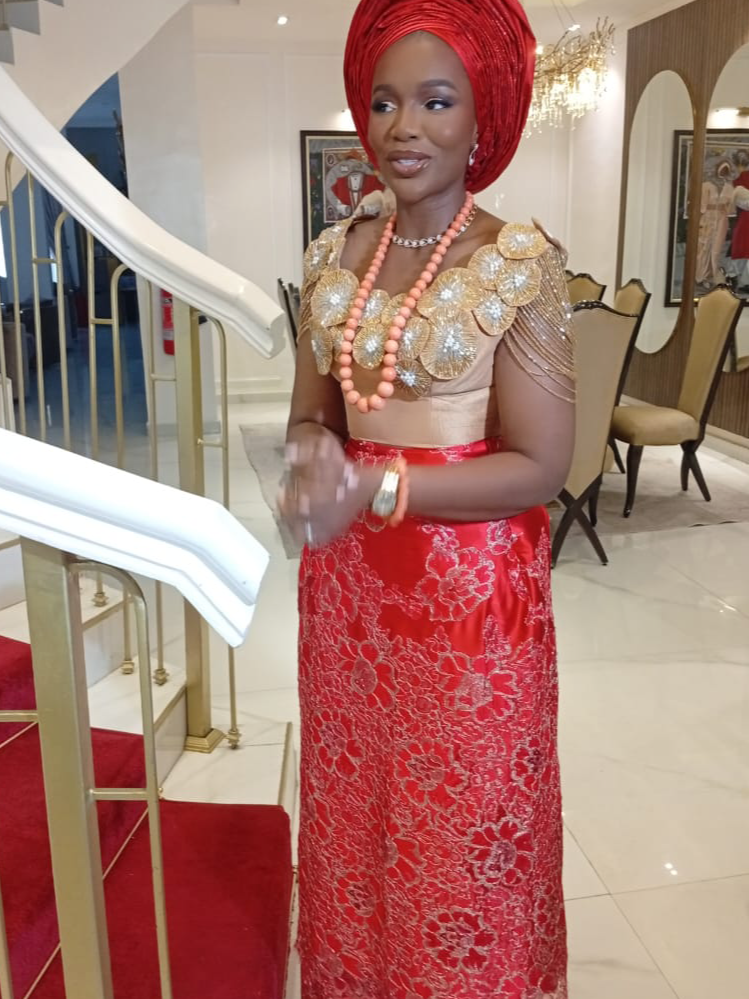
Her Royal Majesty, Queen Ashley Ogiame Atuwatse III
“Seeing how the women in the kingdom have become more naturally elevated, I always give the stories of how the chiefs’ wives have now become more esteemed in many ways and more recognised,” she said.
She added that women were increasingly moving beyond seeking permission to participate in community affairs to becoming active owners of their voices and initiatives.
“I really love the esteem of women in the kingdom, and I’m really thankful for that,” she said.
‘Leadership Has Taught Me to Enlarge My Heart’
Reflecting on the challenges and lessons of her five-year journey as Olori, Queen Ashley said she would rather describe the experience as a period of learning than as a series of challenges.
She identified understanding human nature, managing differences and learning to appreciate the strengths of different people as some of the most important lessons she had acquired.
“I think it would be what I used to learn leadership.
It is understanding the dynamics of human nature and the differences in different people and just learning how to enlarge my heart to love every person and pick out the strengths from people and discard the weaknesses,” she said.
The Olori, a lawyer and author and founder of women-focused initiatives, explained that her royal position had provided her with a platform to convert privilege into service, particularly through initiatives targeted at women, education, skills development and access to opportunities.
She said she regarded herself primarily as a mother serving the people entrusted to her care rather than simply as a queen.
“I’m a mother more than any queen,” she declared, explaining that her approach to service was built around two key principles — agency and access.
According to her, the first objective was to help people, especially women, regain control over their lives and overcome what she described as a “learned sense of helplessness.”
The second was to provide access to skills, networks, finance and other resources required to transform aspirations into sustainable livelihoods.
She said the philosophy underpins programmes such as Women Aligning Women, operated under Elevate Africa, and Establish Her, operated under the Royal Iwere Foundation.
‘Eight Out of 10 Women Are Breadwinners’
The Olori disclosed that findings from their engagement with women in the community had shown that women constituted a significant proportion of household breadwinners, particularly among women aged between 18 and 35.
She said about eight out of 10 women engaged through the initiative were breadwinners supporting several dependants.
“That meant we had to begin to see how we can establish our women by working with the whole woman, not just giving her skills or access to finance, but actually looking to raise the whole woman,” she explained.
She said the programme therefore begins with developing the mindset of participants, helping them understand leadership, identify their leadership styles and build confidence before introducing business and entrepreneurship components.
The women are subsequently supported with business skills and encouraged to register and formalise their businesses.
According to her, the impact has been remarkable, with beneficiaries not only improving their own lives but going on to empower other women.
“I can sit here and tell you stories on stories about how our women have come through the programme and then gone on to establish other women,” she said.
She noted that while empowering beneficiaries to become mentors was not initially part of the curriculum, it had become a natural consequence of the programme.
“It wasn’t in the curriculum, but it’s what happens when you empower a woman. She goes on and empowers her community naturally,” she said.
She described investment in women, particularly women of the Warri Kingdom, as “our most strategic move to advancing human capital development in our community.”
Language Revival: ‘We Must Preserve Our Itsekiri Identity’
The Olori also placed strong emphasis on the preservation of Itsekiri language and culture, describing the Itsekiri people as a “micro minority” whose cultural heritage must be deliberately protected against the pressures of modernisation and globalisation.
“We Itsekiris, we’re a micro minority. So inside the minority, we are a minority. And so it’s important to preserve our culture, to preserve our language,” she said.
According to her, the rapid erosion of indigenous languages across communities, including among larger ethnic groups, makes the preservation of Itsekiri language an urgent responsibility.
She disclosed that a language competition was introduced around the period of the Olu’s coronation anniversary to encourage children from communities across the kingdom and those in the diaspora to learn and speak Itsekiri.
The initiative, she said, had grown considerably since its launch last year.
This year’s edition was held at Ode-Itsekiri, also known as Big Warri, the ancestral home of the Itsekiri people.
The response, she said, had been particularly encouraging, with children from riverine communities who initially could not speak the language reportedly becoming fluent by the end of the competition.
“The testimony has been amazing,” she said.
The initiative will now be expanded into a year-round language programme, culminating in a celebration and competition during the Olu’s coronation anniversary.
“Our goal is to revive the language and to pass it down to our next generation,” she said.
‘We Are First Husband and Wife’
On her relationship with the Olu and how they manage the demands of royal duties, public expectations and family life, Queen Ashley said the strength of their family remains the foundation of everything they do.
She stressed that before their identities as king and queen, they were husband and wife and regarded their relationship as a partnership that required deliberate nurturing.
“That is our foundation — the strong family unit behind the closed door is our primary foundation,” she said.
“We are first husband and wife. We are first a strong unit together, and we take those duties very seriously. We take our bond and our connection very seriously.”
She said their relationship and responsibilities were also firmly anchored in their faith.
“Everything is embedded under God. God is our third cord, and then we take it from there,” she said.
According to her, whether they are performing their responsibilities as parents or as king and queen, they seek to approach their duties first in union with God and then with each other.
Fashion as Cultural Diplomacy
The Olori also spoke about her fashion choices, particularly her blend of contemporary elegance with traditional Itsekiri and wider African attire.
She said her intention was not merely to make a fashion statement but to demonstrate that African culture could be celebrated with confidence, sophistication and contemporary relevance.
Her message, she said, was directed not only at young Itsekiri women but at young African women generally.
“I hope young African women can be proud of your culture and you can wear elegantly, and culture isn’t something that is outdated,” she said.
Recalling a recent observation by the Olu, she said traditions represented what people practised, while culture was continually constructed as societies evolved.
She argued that Africans therefore had an opportunity to preserve their heritage while allowing it to remain relevant in contemporary society.
“I hope that in embodying my truest self as being an African monarch, an African queen, I’m able to let the next generation know that you should embrace the fullness of our beautiful African attire and African style without it being outdated,” she said.
‘We Are Just Getting Started’
Looking ahead after five years in the royal household, the Olori expressed gratitude for the journey but said she regarded the period as the beginning rather than the culmination of their work.
“I’m really thankful for the last five years. It’s been like five years that has felt like 50 years, but at the same time felt like five months,” she said.
Describing the period as “incredible,” she maintained that much more remained to be accomplished.
“But I know that we are just getting started,” she declared.
She identified the Royal Iwere Foundation as a critical vehicle for human capital development in the Warri Kingdom.
According to her, the foundation is expected to serve as the “engine room” through which people would be equipped to develop themselves and, ultimately, their communities.
She also highlighted the role of Elevate Africa, expressing the ambition that lessons and models developed in Warri could eventually serve as a model for human capital development across Africa.
Her vision, she said, was for Warri to demonstrate that sustainable community development was possible and that successful interventions could be replicated across the continent.
‘I Am Itsekiri’ App to Become Digital Village
One of the major initiatives she discussed was the newly launched I Am Itsekiri mobile application, which she described as a digital village designed to connect Itsekiris across the world with the palace, their communities and one another.
She disclosed that the idea for the platform began in March 2022 and took about four years to develop.
The project initially began as a website before consultations with stakeholders led to its transformation into a mobile application.
The objective, she explained, was to build a digital meeting point for sons and daughters of Itsekiri descent living in Nigeria and across the globe.
She noted that Itsekiris could now be found in countries including the United Kingdom, United States, Germany, Japan and Australia, creating a need for a platform through which members of the community could remain connected regardless of geographical location.
“We want them to connect to the palace, so they know when the palace is coming to their city; they know what’s happening, also, to connect to their communities,” she said.
The application will also provide information on development activities across communities and create opportunities for people in the diaspora to participate in projects in their ancestral communities.
But beyond palace-to-community communication, she said one of the most important purposes of the application was to enable Itsekiris to find and connect with one another wherever they may be.
“Sometimes we lose each other when we travel. When you’re abroad, you don’t know if there’s any Itsekiri anywhere else. So once you are on that app, ‘Oh, there’s an Itsekiri down the road, let’s connect,’” she explained.
The application will also be used for cultural preservation, including teaching younger generations Itsekiri language, dances and other aspects of the people’s cultural heritage.
She described it as “a digital village” created to restore identity, strengthen connections and support cultural renaissance.
A Royal Agenda Built Around People
Across her various initiatives, the Olori said the central objective remained the same — building people who could, in turn, build stronger families and communities.
From women empowerment and entrepreneurship to language preservation, cultural promotion, digital connectivity and human capital development, she said the ultimate ambition was to ensure that the people of Warri Kingdom were equipped to take ownership of their future.
As the Olu of Warri marks five years on the throne, the Olori’s reflections present a royal agenda that extends beyond ceremony and symbolism, placing human development, women’s agency, cultural preservation and global connectivity at the heart of the next phase of the Atuwatse III reign.
