




Manny Ita –
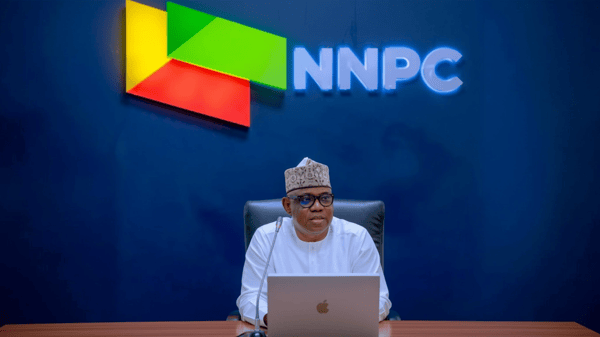
The Nigerian National Petroleum Company Limited (NNPC) is facing a fresh wave of public and political backlash following a candid admission by its leadership that the country’s state-owned refineries have become “monuments to waste,” operating at monumental losses despite trillions of naira in investment. Speaking at the Nigeria International Energy Summit (NIES 2026) in Abuja, NNPC Group Chief Executive Officer Bayo Ojulari revealed that the decision to recently halt operations at the facilities was driven by a grim reality: the refineries were “leaking value” and destroying national wealth. Ojulari disclosed that even when crude oil was supplied regularly, utilization levels struggled to exceed 55%, producing mid-grade outputs whose market value fell far below the cost of the raw input. “After a detailed review, it became clear that we were simply wasting money,” Ojulari stated during a fireside chat. “When we looked at the net outcome, we were leaking value with no clear line of sight to profitability. I can say that confidently now.”
The admission has ignited a political firestorm, with former Vice President Atiku Abubakar asserting that the $1.5 billion recently spent on the Port Harcourt refinery rehabilitation was “down the drain.” In a statement released yesterday, Abubakar argued that the government’s belated acknowledgment validates his decade-long advocacy for the sale of the assets. “Today, the facts have caught up with the rhetoric,” he remarked, adding that “pouring public funds into moribund refineries makes no economic sense.” Economic analysts have corroborated the scale of the crisis, with data indicating that the idle refineries and their associated “turnaround maintenance” costs gulped an estimated ₦13.2 trillion between 2023 and 2024 alone. The failure of the state-run plants stands in sharp contrast to the private sector, where the Dangote Refinery has begun to reshape the landscape, leading many to question why the federal government continues to pay thousands of staff for facilities that do not produce a single liter of petrol.
In response to the mounting pressure, the NNPC has signaled a radical shift in strategy, moving away from contractor-led maintenance toward an “equity partnership model.” Under this proposed framework, the national oil company seeks to bring in private operators with “skin in the game” to manage the plants. “We are not looking for money,” Ojulari clarified. “We are looking for people who know how to run refineries.” However, many stakeholders, including the Nigerian Economic Summit Group, argue that anything short of full privatization will only prolong the cycle of waste. As the Senate prepares to probe the $18 billion spent on rehabilitation over the last few years, the administration is under extreme pressure to decide whether to finally sell the moribund assets or continue seeking partners for a system that many believe is fundamentally unequipped for commercial success.