
Close Menu

    Subscribe to Updates

    Get the latest news as they happen

    What's Hot

    Tinubu Unveils New Customs Office, Training Facility In Ogun

    April 4, 2026

    Argungu Fishing Festival Draws Record Crowd as 59kg Catch Steals the Show

    April 4, 2026

    Wema Bank Wins Double at Global SME Banking Innovation Awards

    April 4, 2026
    Facebook X (Twitter) Instagram
    Megastar Magazine
    • Politics

      INEC Derecognises ADC Leadership, Sparks Political Storm as Atiku, Obi Raise Concerns

      April 2, 2026

      Kwankwaso Gets Warm Welcome Into ADC Assembly, Calls Others To Unite

      March 31, 2026

      Tuggar Resigns as Foreign Affairs Minister, Signals Bauchi Governorship Ambition

      March 31, 2026

      Full List As APC Elects New National Working Committee During Convention

      March 28, 2026

      APC Reshuffles Leadership as Tinubu Defends Electoral Act 2026 at Abuja ConventionAPC

      March 28, 2026
    • Entertainment
      1. People
      2. Events
      3. Fashion
      Featured
      Entertainment April 4, 2026

      Port Harcourt Gears Up for “Heineken Experience” as Easter Celebrations Peak

      Recent

      Port Harcourt Gears Up for “Heineken Experience” as Easter Celebrations Peak

      April 4, 2026

      Wura Season 4 Premieres as Showmax Originals Shift to DStv Stream Platform

      March 31, 2026

      Warner Music Group Faces Legal Threat in Nigeria Over Burna Boy’s Early Albums

      March 31, 2026
    • Business

      NCAA Grants Enugu Air License to Begin Domestic Operations

      April 4, 2026

      Amid BUA Stocks Rally, Rabiu’s Wealth Surges by $2.2bn

      March 30, 2026

      Lagos State Tops Nigeria’s Business Rankings — New Report Reveals Why

      March 28, 2026

      MFB Partners CreditCorp, Platform To Enhance Travel Accessibility

      March 25, 2026

      Unilever Posts N32bn Gain After Tax In 2025

      March 24, 2026
    • Health

      GTCO Inaugurates “Take on Squad” Hackathon 3.0, Applications Open

      April 2, 2026

      Kate Henshaw Champions Nationwide Menopause Awareness Drive in Nigeria

      March 31, 2026

      Federal Government Sets Up Committee to Address Critical Shortage of Therapists in Nigeria

      March 27, 2026

      Federal Government Begins Rollout of HIV Prevention Injection as 52,000 Doses Arrive in Nigeria

      March 27, 2026

      Lagos Joins Stakeholders to Declare ‘Yes! We Can End TB’ During 2026 Commemoration

      March 24, 2026
    • Culture

      Argungu Fishing Festival Draws Record Crowd as 59kg Catch Steals the Show

      April 4, 2026

      Ebonyi Carnival Showcases Renewed Drive to Preserve Igbo Heritage

      March 31, 2026

      Adron Homes Elevates Cultural Pride as Dignitaries Grace 39th Lisabi Festival in Abeokuta

      March 29, 2026

      Zurich Returns Benin Bronzes to Nigeria in Major March 2026 Cultural Restitution Breakthrough

      March 28, 2026

      Adron Homes Deepens Commitment To Cultural Heritage, Sponsors 39th Lisabi Festival

      March 22, 2026
    • Lifestyle

      Lagos Hosts “Homecoming Live Music Show” as Alternative Scene Takes Center Stage

      April 4, 2026

      QR Menus and Aesthetic-Driven Dining Redefine Restaurant Experience for Gen Z

      March 27, 2026

      How My Gold Jewelry Ended In Lagoon ~ Adeboye

      March 19, 2026

      Temitope Mayegun Urges Celebration of Women’s Power and Achievements

      March 15, 2026

      On Glo-Sponsored African Voices,  South African Actress, Nomzamo Mbatha, Relates Success Story

      March 7, 2026
    • Sports

      Turkey’s Footballer of The Year Award, Osimhen Emerges Winner. 

      April 4, 2026

      First Lady Oluremi Tinubu to Attend Closing Ceremony of National Para Games in Abuja

      April 3, 2026

      FIFA Men’s Ratings: Eagles Takes 26th  Position, France Tops Globally

      April 2, 2026

      FirstBank Supports Samuel Okwaraji U-16 Championship, Aiming At Grassroots Talent Development Through School Sports

      April 2, 2026

      Observe Fixtures For 2026 FIFA World Cup Competitions

      April 1, 2026
    • Contact
    YouTube Facebook Instagram WhatsApp
    Megastar Magazine
    Home » Fortified Banks, Limited Credit: Who Gains from Nigeria’s Recapitalization Drive?
    Opinion

    Fortified Banks, Limited Credit: Who Gains from Nigeria’s Recapitalization Drive?

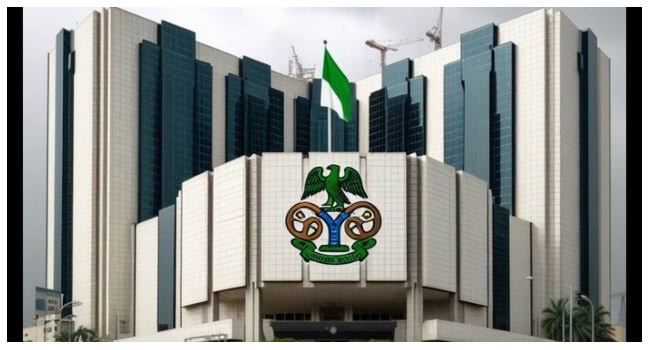
    Credit - Tribune newspaper
    Ifetayo AdeniyiBy Ifetayo AdeniyiApril 4, 20264 Mins Read
    Facebook Twitter Pinterest LinkedIn WhatsApp Reddit Tumblr Email Telegram
    Share
    Facebook Twitter WhatsApp Telegram Email

    By Manny Ita –

    The recent announcement by the Central Bank of Nigeria that 33 banks have met the new capital requirements, collectively injecting about ₦4.65 trillion into the financial system, marks one of the most significant regulatory milestones in Nigeria’s banking history in recent years. On the surface, the exercise signals strength: a more resilient banking sector capable of absorbing shocks, financing large-scale investments, and supporting macroeconomic stability. Yet beneath this structural upgrade lies a persistent and uncomfortable question—why has a “stronger” banking system not translated into easier access to credit for small businesses or relief from inflationary pressures for ordinary Nigerians?
    At its core, the recapitalization policy led by the Central Bank of Nigeria is designed to ensure that banks hold sufficient capital buffers to withstand economic volatility, currency fluctuations, and credit defaults. In theory, well-capitalized banks should be more confident in lending, more capable of financing long-term projects, and less vulnerable to systemic crises. However, the lived reality of Nigeria’s credit environment tells a different story. Interest rates remain high, lending to small and medium-sized enterprises (SMEs) is still constrained, and a large portion of economic activity—especially within the informal sector—remains outside the formal credit ecosystem.
    One reason for this disconnect lies in the structure of risk within Nigeria’s economy. Banks, even when well-capitalized, are fundamentally risk-sensitive institutions. In an environment characterized by exchange rate volatility, inconsistent policy signals, weak contract enforcement, and limited credit information infrastructure, lending to SMEs is often perceived as high risk relative to returns. As a result, banks tend to prioritize lending to government securities or large corporates with stronger balance sheets, collateral, and predictable cash flows. This creates a paradox: while banks are “fortified,” their lending behavior remains conservative, limiting the transmission of capital into productive sectors that drive inclusive growth.
    Another factor is the nature of recapitalization itself. Injecting capital into banks strengthens their balance sheets, but it does not automatically address structural inefficiencies in the broader economy. Inflation in Nigeria is driven by multiple factors including supply chain constraints, exchange rate depreciation, energy costs, and fiscal pressures. Even if banks were more willing to lend, the impact on inflation would depend on how productively that credit is deployed. If credit expansion is not matched by corresponding increases in domestic production—particularly in agriculture, manufacturing, and logistics—then additional liquidity can exacerbate demand-side pressures rather than ease them.
    The informal sector, which accounts for a significant share of Nigeria’s economic activity, further complicates the narrative. Many SMEs operate without formal documentation, audited financials, or collateral assets that meet bank requirements. This creates an access gap that recapitalization alone cannot bridge. Without parallel reforms in credit scoring systems, digital identity infrastructure, movable collateral registries, and financial literacy, the “fortress” of the banking sector remains structurally disconnected from the realities of informal enterprises that form the backbone of employment in the country.
    There is also the question of incentives. Banks operate within a regulatory and profit-driven framework. In a high-yield environment where government securities offer relatively low-risk returns, the incentive to aggressively expand SME lending diminishes. Unless regulatory nudges or risk-sharing mechanisms—such as credit guarantees or blended finance structures—are introduced, banks may continue to favor safer asset classes over developmental lending, regardless of their capital strength.
    On the macroeconomic front, recapitalization contributes to financial stability, which is not insignificant. A well-capitalized banking system reduces the likelihood of bank failures, protects depositors, and enhances investor confidence. These are foundational elements for long-term economic growth. However, stability is not synonymous with inclusivity. A banking sector can be stable yet still fail to distribute credit in a way that meaningfully impacts grassroots economic activity.
    So, is recapitalization a shield for the economy or a bigger vault for a financial class? The answer lies somewhere in between. It is undeniably a stabilizing force, strengthening the architecture of Nigeria’s financial system and preparing it for greater integration into global finance. However, without complementary policies that address structural barriers to credit access, it risks reinforcing a system where capital accumulation at the top does not translate into economic empowerment at the base.
    For recapitalization to deliver its full promise, it must be accompanied by reforms that deepen financial inclusion, reduce lending risks, and expand the capacity of SMEs to participate in formal finance. This includes strengthening credit registries, improving judicial efficiency for contract enforcement, supporting fintech-driven lending models, and incentivizing banks to allocate more credit toward productive sectors. Only then can the “fortress” banks become not just resilient institutions, but active engines of broad-based economic growth.
    Until such alignment is achieved, the Nigerian banking sector may continue to grow in size and strength without a proportional transformation in the economic realities of the average citizen—leaving the question of “growth for whom?” still largely unanswered.

    Featured Major opinion Tech
    Share. Facebook Twitter Pinterest LinkedIn WhatsApp Reddit Tumblr Email
    Previous ArticleAare Adetola Emmanuelking Welcomes President Tinubu to Gateway International Airport Commissioning in Iperu-Remo
    Next Article Nigeria Pushes EV Transition as Local Assemblers Scale Production
    Ifetayo Adeniyi
    • Website

    Adeniyi Ifetayo Moses is an Entrepreneur, Award winning Celebrity journalist, Luxury and Lifestyle Reporter with Ben tv London and Publisher, Megastar Magazine. He has carved a niche for himself with over 15 years of experience in celebrity Journalism and Media PR.

    Related Posts

    Tech April 3, 2026

    FG Considers Establishment of National Cybersecurity Council to Tackle Rising Digital Threats

    Tech March 31, 2026

    Federal Government Approves Acquisition of NIGCOMSAT-2A and 2B Satellites to Revolutionize National Security and Economy

    Editorial March 29, 2026

    Oil Rich, Cash Poor: Nigeria’s Pain in a Booming Energy Market

    Spotlight March 27, 2026

    Reforms, Tensions and Global Spotlight: Nigeria at the Crossroads

    Tech March 20, 2026

    Nigeria’s 5G Coverage Reaches 12% as NCC Targets 20% by End of 2026

    Fashion March 19, 2026

    Tokyo Fashion Week: The Bow Reclaimed as an Architectural Anchor

    Leave A Reply Cancel Reply

    Don't Miss
    News April 4, 2026

    Tinubu Unveils New Customs Office, Training Facility In Ogun

    President Bola Tinubu has commissioned the newly built office of the Federal Operations Unit (FOU),…

    Argungu Fishing Festival Draws Record Crowd as 59kg Catch Steals the Show

    April 4, 2026

    Wema Bank Wins Double at Global SME Banking Innovation Awards

    April 4, 2026

    Lily Afe Issues AMVCA Apology While Iyabo Ojo Halts Peace Talks Between Funke Akindele and Toyin Abraham

    April 4, 2026

    Subscribe to Updates

    Get the latest news as they happen

    Stay In Touch
    • Facebook
    • Twitter
    • Pinterest
    • Instagram
    Our Picks

    Ochacho’s Midas Touch As Otukpo Wears New Look

    November 16, 2021

    [Watch] Thanksgiving Ceremony – 30 years of Lee Engineering Construction & Company Limited

    December 17, 2021

    Mars E&P secures $274 million facility from AFREXIM Bank

    November 25, 2021
    New Comments
    • Anozie okolo on Supreme Court Affirms President Tinubu’s Victory As Atiku, Peter Obi Lose
    • Mc richman on Nigeria and South African Music histories
    • Moses Ibrahim on Olu of Warri: Pictorial @ The Ogiame Atuwatse III Economic Summit.
    • Sen Rich Kay on MALARIA ERADICATION: Prince Ned Nwoko & NMEP Meet for joint action.
    Megastar Magazine
    YouTube Facebook WhatsApp Instagram
    • Privacy Policy
    • Terms of Use
    • Contact Us
    © 2026 Megastar Magazine. Designed by MANNDI

    Type above and press Enter to search. Press Esc to cancel.