

Manny Ita –
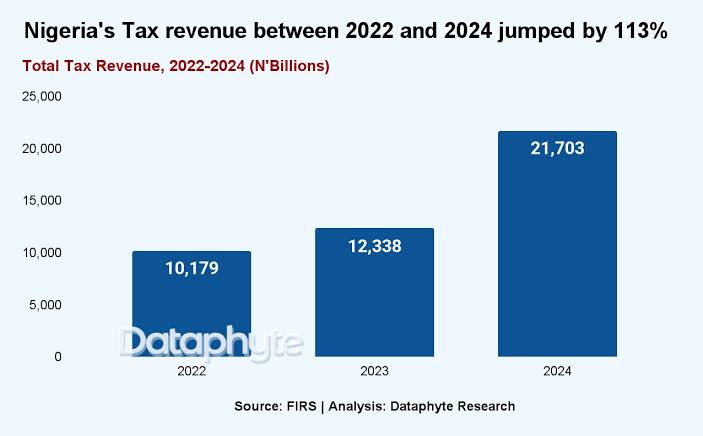
Nigeria’s tax revenue rose to ₦7.44 trillion in the first quarter of 2026, but the figure still fell short of the government’s target by ₦2.24 trillion, achieving about 76.87% of the expected performance.
According to data from the Nigeria Revenue Service (NRS), the shortfall was largely driven by weaker-than-expected collections from non-oil tax sources. Companies Income Tax, Capital Gains Tax, and Stamp Duties all performed below target, contributing significantly to the revenue gap. Petroleum royalties also underperformed, falling well below projections.
However, not all revenue streams declined. Oil-related taxes, particularly Petroleum Profits Tax and Hydrocarbon Tax, exceeded expectations and helped cushion overall performance for the quarter. Value Added Tax (VAT) remained relatively stable, recording only a small shortfall compared to its target.
Despite the year-on-year increase in total collections compared to the same period in 2025, the strong growth was not enough to meet the ambitious revenue projection set for 2026, leaving the country with a notable fiscal gap in Q1.
