

Manny Ita –
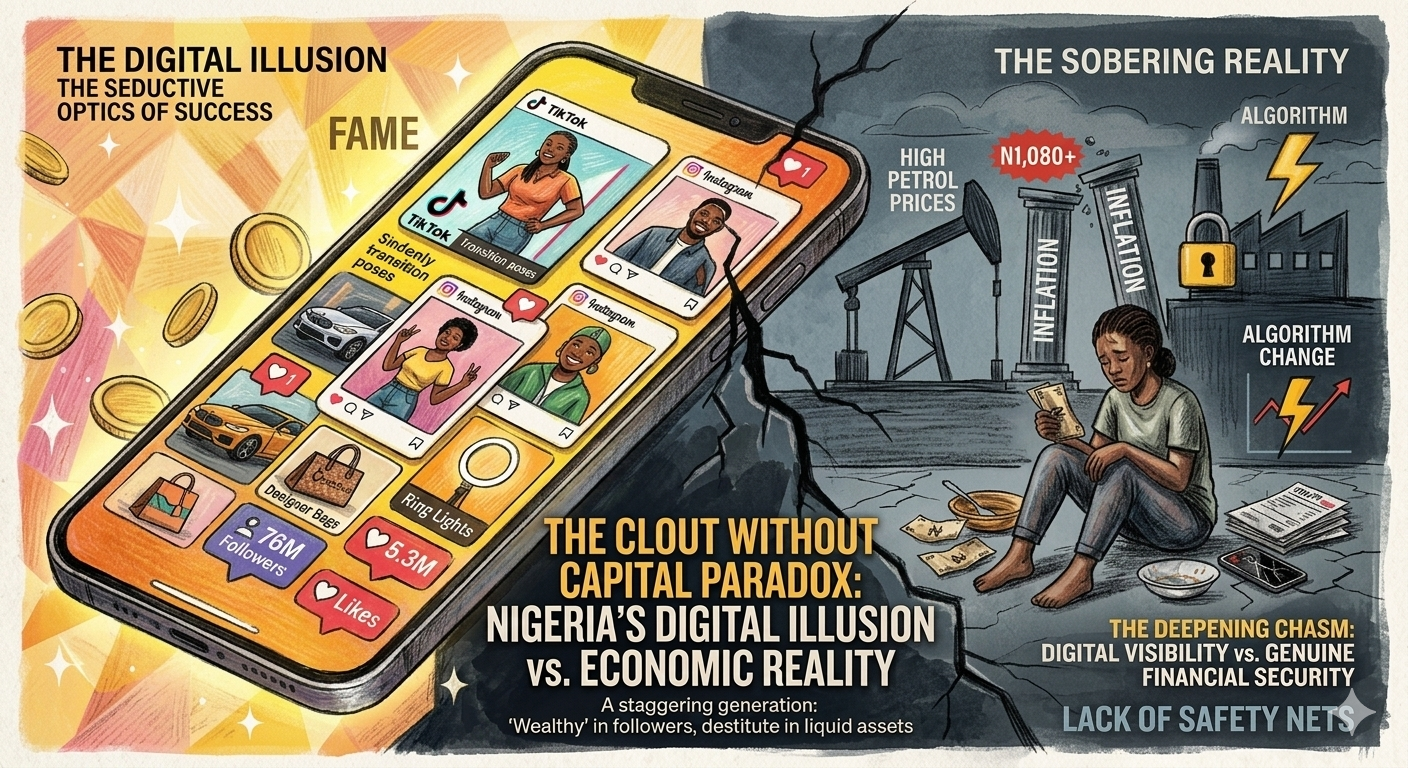
In the glittering, high-octane world of Nigeria’s digital ecosystem, the optics of success have rarely been more seductive. From the slick transition videos on TikTok to the curated luxury lifestyles displayed on Instagram, a new generation of Nigerians appears, at least on the surface, to have discovered a pathway to prosperity that bypasses the familiar constraints of a sluggish economy. Smartphones, ring lights and viral content now project an image of effortless wealth, suggesting that economic opportunity lies literally in the palm of one’s hand.
Yet behind the choreography of viral dances and the glow of carefully staged visuals lies a less glamorous reality. Beneath the aesthetics of influence is a widening gulf between digital visibility and real financial security. In many cases, the currency of the social media economy—likes, shares, views and followers—does not easily translate into sustainable income. What appears to be prosperity is often little more than a performance.
This paradox of “clout” without capital has become a defining feature of Nigeria’s rapidly expanding digital culture. Headlines tend to celebrate the exceptional cases: the handful of content creators who transform online popularity into lucrative brand endorsements, acting opportunities or ambassadorial deals. But the focus on these success stories obscures a much larger, quieter population of digital hopefuls who remain trapped in the costly pursuit of relevance.
For many aspiring influencers, the economics of the trade are deeply precarious. Maintaining a “bankable” online persona requires continuous investment in expensive smartphones, reliable internet subscriptions, fashionable wardrobes and visually appealing locations. These costs are often borne long before any commercial reward materialises. In effect, countless creators are financing their own illusions of success while waiting for the algorithmic breakthrough that may never arrive.
Nigeria’s wider economic environment only deepens this fragility. As inflation continues to erode household incomes and fuel prices place additional pressure on businesses, corporate marketing budgets are increasingly constrained. Brands that once enthusiastically partnered with influencers are becoming more selective and cost-conscious. The result is an overcrowded marketplace in which thousands of creators compete for a shrinking pool of sponsorship opportunities.
This oversupply has inevitably fuelled a culture of exaggerated lifestyles and performative affluence. The pressure to project success—even in its absence—has become an unwritten rule of the digital economy. But sustaining that façade can be financially draining and psychologically exhausting. What appears online as glamour frequently masks a far more uncertain existence offline.
Compounding the problem is the absence of institutional protections for those who depend on digital platforms for their livelihood. Unlike employees in the formal economy, social media creators operate without pensions, health insurance or any meaningful form of labour protection. Their careers are often at the mercy of opaque platform algorithms and sudden policy changes. A single account suspension or reduction in content visibility can abruptly dismantle months, or even years, of effort.
The vulnerability is particularly pronounced among young Nigerians who increasingly view digital fame as a viable alternative to traditional career paths. Some abandon education or vocational training in pursuit of online popularity, only to discover that followers do not necessarily translate into financial stability. The result is a generation that may be rich in visibility but poor in economic security.
Beyond individual hardship, this disconnect between digital imagery and economic reality carries broader social implications. In a society already grappling with high unemployment and widening inequality, the relentless display of luxury lifestyles online can create unrealistic expectations and intensify feelings of inadequacy. When the promise of digital prosperity fails to materialise, frustration and disillusionment often follow.
In extreme cases, the pressure to sustain a public image of success can encourage ethically questionable behaviour. Controversy becomes monetisable, scandal becomes strategy, and in some instances individuals drift toward illicit online activities in a desperate attempt to convert visibility into income. What should be a platform for creativity and entrepreneurship risks degenerating into a stage for performative excess.
None of this suggests that Nigeria’s digital economy lacks promise. On the contrary, the country’s youthful population, cultural dynamism and technological adaptability position it as a potential leader in Africa’s creative and digital industries. Social media platforms have undeniably opened new avenues for storytelling, marketing, entertainment and civic engagement.
However, for this promise to translate into genuine prosperity, the conversation must move beyond the seductive metrics of virality. Sustainable digital livelihoods require a supportive ecosystem that includes stronger digital rights, financial literacy for creators, fairer platform policies and, above all, a resilient domestic economy capable of absorbing and rewarding creative talent.
Nigeria’s social media success stories should not exist merely as pixelated spectacles of aspiration. They must ultimately be anchored in real economic structures that allow creativity to generate durable value. Until that shift occurs, the dazzling imagery of the digital world will remain something of a mirage—an alluring vision of abundance that too often dissolves upon closer inspection.
