

By Manny Ita –
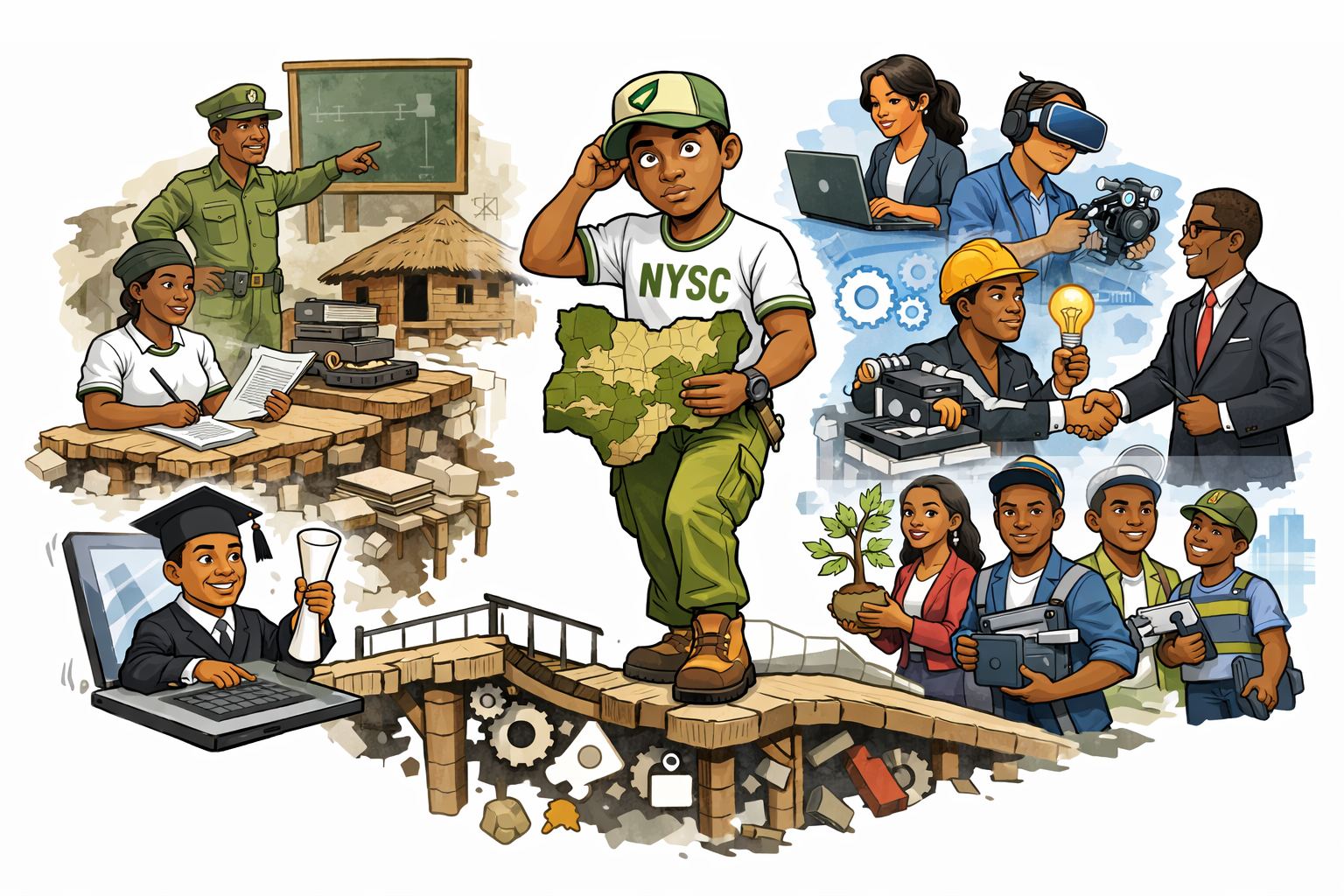
Nigeria’s National Youth Service Corps (NYSC) has been a defining part of the country’s education-to-work transition for decades. Created to promote unity after the civil war and help young graduates contribute to national development, the scheme has remained largely unchanged for years. But Nigeria itself has changed—and so has the profile of its graduates.
This raises an important question: is NYSC still fit for purpose in its current form? A Changing Generation of Graduates Today’s graduates are no longer a uniform group entering the system at the same age or with the same educational pathway. Institutions like open and distance learning universities are producing graduates who are younger, more digitally skilled, and often already engaged in work or entrepreneurship.
At the same time, Nigeria’s job market has become more competitive and technology-driven. Many graduates are seeking practical skills, not just traditional service postings. This shift creates a mismatch between what NYSC currently offers and what modern graduates actually need. The Original Purpose vs Modern Reality NYSC was built on two main ideas: national unity and skill development. While the unity aspect still matters, the skill development component has become less effective over time.
Many corps members are posted to areas where their academic training is underutilized, or they spend most of their service year doing routine administrative tasks with limited learning value. In a fast-changing economy, this raises concerns about whether the scheme is still delivering meaningful national development outcomes. Why Reform Is Necessary Reforming NYSC does not mean abandoning it—it means updating it. A reformed NYSC could: Align postings with graduates’ fields of study and modern industry needs Integrate digital and entrepreneurial skills training as a core requirement Partner more deeply with private sector organizations for real-world experience Offer flexible service pathways for different categories of graduates, including remote or hybrid service options where appropriate.
Such changes would make the scheme more relevant, more productive, and more appealing to today’s youth. Skill-Based National Service: A Better Direction? One of the strongest arguments for reform is the idea of shifting toward a skill-based national service model. Instead of focusing mainly on physical relocation and basic placements, NYSC could become a structured development year focused on: Technology and digital literacy Vocational and technical skills Entrepreneurship and innovation Community impact projects tied to measurable outcomes.
This would turn the service year into a bridge between education and real economic participation, rather than a waiting period for employment. The Question of Inclusion and Fairness Recent debates around including graduates from institutions like the National Open University of Nigeria (NOUN) highlight another reality: the education system is expanding and diversifying. Any reform of NYSC must reflect this diversity fairly, ensuring that all eligible graduates are treated consistently regardless of how they studied.
Conclusion NYSC remains one of Nigeria’s most important national institutions, but institutions must evolve or risk losing relevance. A reformed NYSC should not just serve as a tradition—it should become a strategic tool for preparing young Nigerians for the realities of today’s economy. If Nigeria truly wants to empower its next generation, then the conversation is no longer whether NYSC should change, but how quickly it can adapt.
