

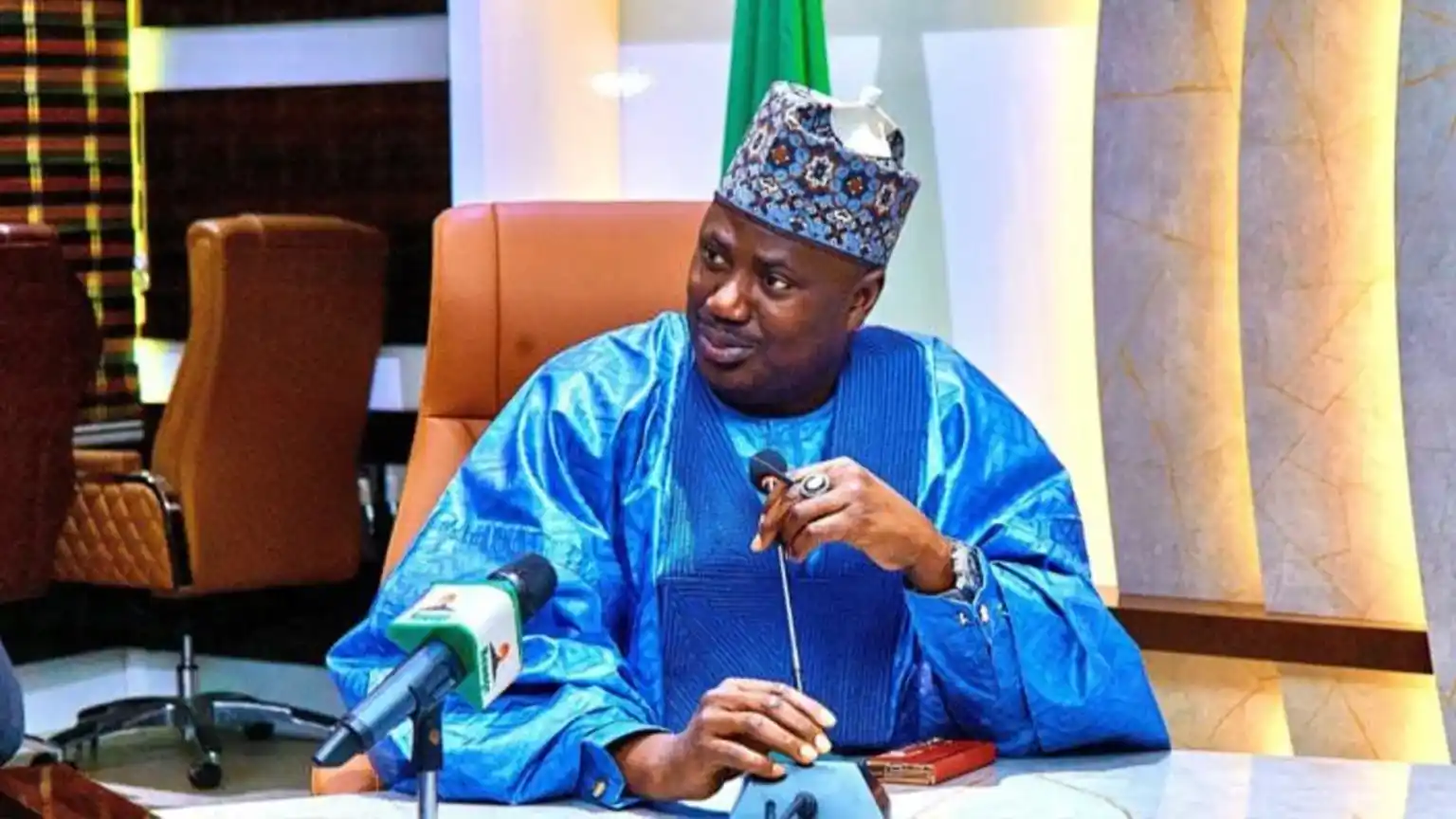
Minister of State for Agriculture and Food Security and Supervising Minister for Cooperative Services, Aliyu Sabi Abdullahi,
Elegbede Abiodun
… for grassroots economic transformation, financial inclusion, and commercial agriculture.
The Federal Government on Monday formally launched the Renewed Hope Cooperative Reform and Revamp Programme (RH-CRRP), unveiling plans to establish a member-owned Cooperative Bank of Nigeria and a nationwide digital identity architecture for cooperative societies and their members.
Speaking during the ministerial advocacy tour on cooperative bank share capital mobilisation and cooperative sector digitalisation, flagged off in Lagos State, the Minister of State for Agriculture and Food Security and Supervising Minister for Cooperative Services, Aliyu Sabi Abdullahi, said the reforms were designed to reposition cooperatives as engines of grassroots economic transformation, financial inclusion, and commercial agriculture.
The minister said the initiative was anchored on the Renewed Hope Agenda of President Bola Ahmed Tinubu and aimed at modernising a sector long plagued by weak governance, analogue operations, and financial malpractice.
“We are dealing with a reform of the cooperative sector. We have named it the Renewed Hope Cooperative Reform and Revamp Programme,” Abdullahi said, adding that the government had spent over a year consulting stakeholders to ensure the framework was properly structured before implementation.
At the heart of the reforms is a comprehensive digitalisation programme that will assign every cooperative society a Cooperative Verification Number (CVN) and every cooperator a digital Cooperative ID linked to Nigeria’s national identity database.
According to the minister, the digital architecture will improve transparency, eliminate fraud, and make it easier to track members’ credit history across cooperative societies nationwide.
He disclosed that the government was also working with credit registry institutions to prevent multiple loan defaults within the cooperative ecosystem.
“If you take credit from one cooperative society and want to run to another, it’s no longer going to work because your credit history will already be visible,” he said.
Abdullahi also announced plans to establish the Cooperative Bank of Nigeria, which he said would be fully owned and funded by cooperators rather than the government.
He explained that the model was inspired by Kenya’s cooperative banking structure, where ownership is vested entirely in cooperative societies and members.
“This is not going to be government-owned. Government will not put a penny there, but we will facilitate and support the process,” the minister stated.
He added that the reform programme would also professionalise the sector through the certification of practitioners by the Institute of Cooperative Professionals of Nigeria and introduce new governance and compliance standards aligned with global cooperative principles.
The minister further revealed that the Federal Government was reviewing Nigeria’s cooperative legislation with a view to enacting a new Cooperative Societies Act that would align with standards set by the International Cooperative Alliance.
He noted that the reforms would ultimately place cooperative institutions under stricter financial regulatory oversight, including licensing and compliance requirements supervised by the Central Bank of Nigeria.
Linking the reform agenda to broader economic and security concerns, Abdullahi argued that viable cooperative structures could significantly reduce poverty, unemployment, and post-harvest losses in agriculture.
“Most of the time, where you see insecurity, it’s as a result of poverty. If the cooperative sector works and people can see avenues through which they can make their livelihood, would they want to go into crime?” he asked.
In her address, the Lagos State Commissioner for Commerce, Cooperatives, Trade and Investment, Folashade Ambrose-Medebem, described cooperatives as strategic institutions capable of driving Nigeria’s ambition of building a $1 trillion economy.
She said the cooperative movement must evolve beyond traditional thrift and credit administration into a “digitally enabled, professionally managed, and investment-ready ecosystem”.
According to the commissioner, Lagos had already intensified the digitisation of cooperative administration through electronic registration systems, digital documentation platforms, and technology-driven monitoring frameworks aimed at improving efficiency and transparency.
Ambrose-Medebem also disclosed that Lagos State was preparing to scale up financing support for cooperative-based MSMEs through the Lagos State Bank of Industry Access to Finance Scheme for MSMEs, popularly known as LASMECO.
Under the scheme, qualified MSMEs will be eligible for loans of up to N10 million at a single-digit interest rate of nine per cent, with a six-month moratorium and a repayment tenure of up to two years without collateral requirements.
She said the financing structure leveraged the inherent strengths of cooperatives, including peer accountability and collective responsibility, to improve loan repayment performance and expand access to credit for grassroots entrepreneurs.
The commissioner further stressed the need for a nationally coordinated cooperative data architecture to support planning, financing, and performance monitoring across the federation.
“We firmly believe the future of cooperatives lies in smart governance systems powered by innovation, automation, and digital inclusion,” she said.
Also speaking at the event, the Executive Secretary of the Lagos State Cooperative Federation, Mrs Ebun Akinfalaye, who represented the federation’s president, urged cooperators to embrace the proposed cooperative bank initiative.
She recalled the collapse of the former Cooperative Bank and described the new initiative as a major step towards rebuilding confidence in cooperative finance.
“We are giants of Africa without a cooperative bank,” she said. “It is going to be our bank, manned by us, managed by us, and interest rates will be determined by us.”
