

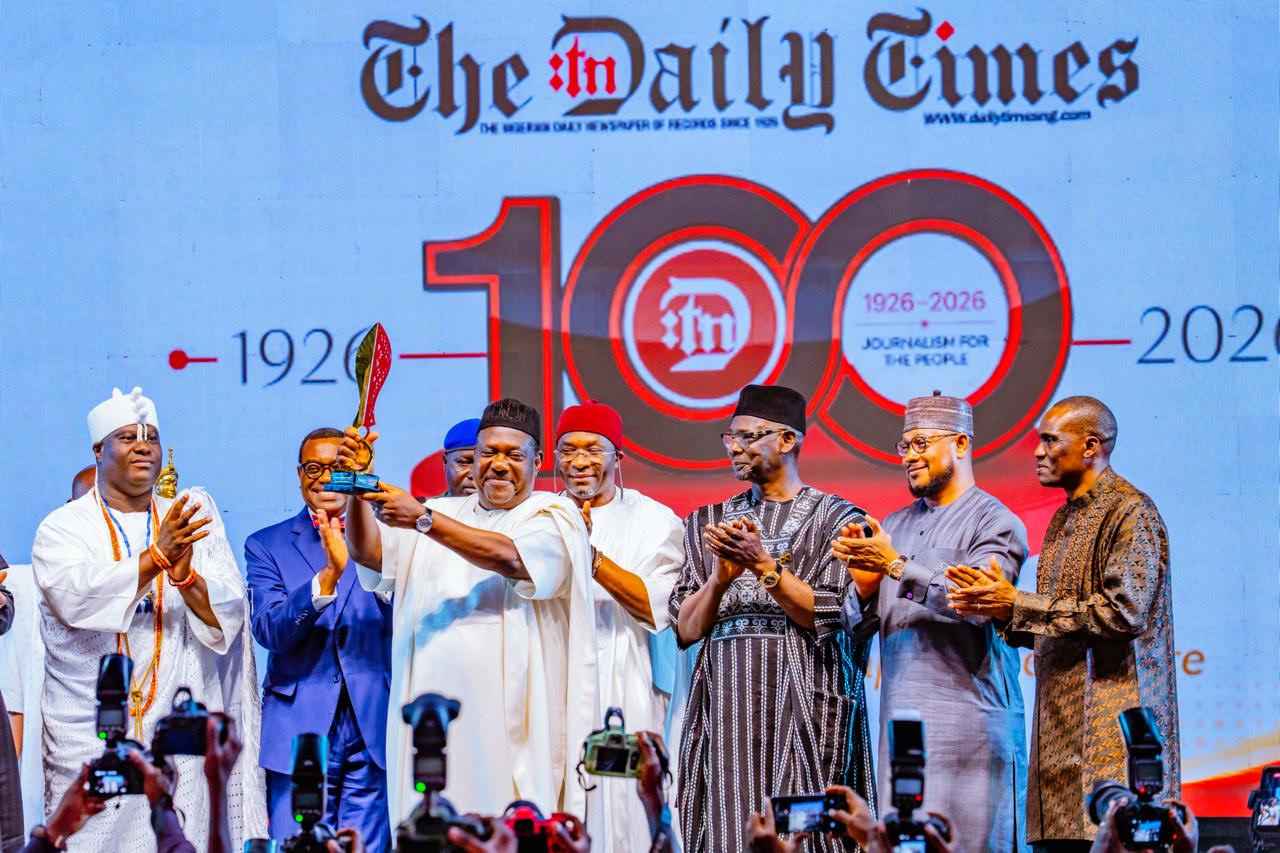
‘A Birthday Without The Birthday Child’
On June 1, 2026, “Daily Times” (of Nigeria) turned 100 years. In April, 2025, Radio Nigeria turned 75 years. This tribute is about two institutions that taught Nigeria how to read and hear itself. How did we mark it? With awards dinners in Abuja on Thursday this week. Marked with speeches in Abuja in April 2025. Yes, with a newspaper that no longer prints giving awards to citizens who should weep about dancing on the grave of Adeyemo Alakija’s “Daily Times”. With a radio station that has more than 30 stations but speaks in 30 whispers. That is not celebration. That is a funeral with cake.
This is a time of reflection, not celebration. The only way to celebrate “Daily Times” at 100 and “Radio Nigeria” at 75 is to recover them, restructure them, and restore them. Anything else is meretricious. Reason? “You don’t celebrate a library by burning the books and giving awards in the ashes.”
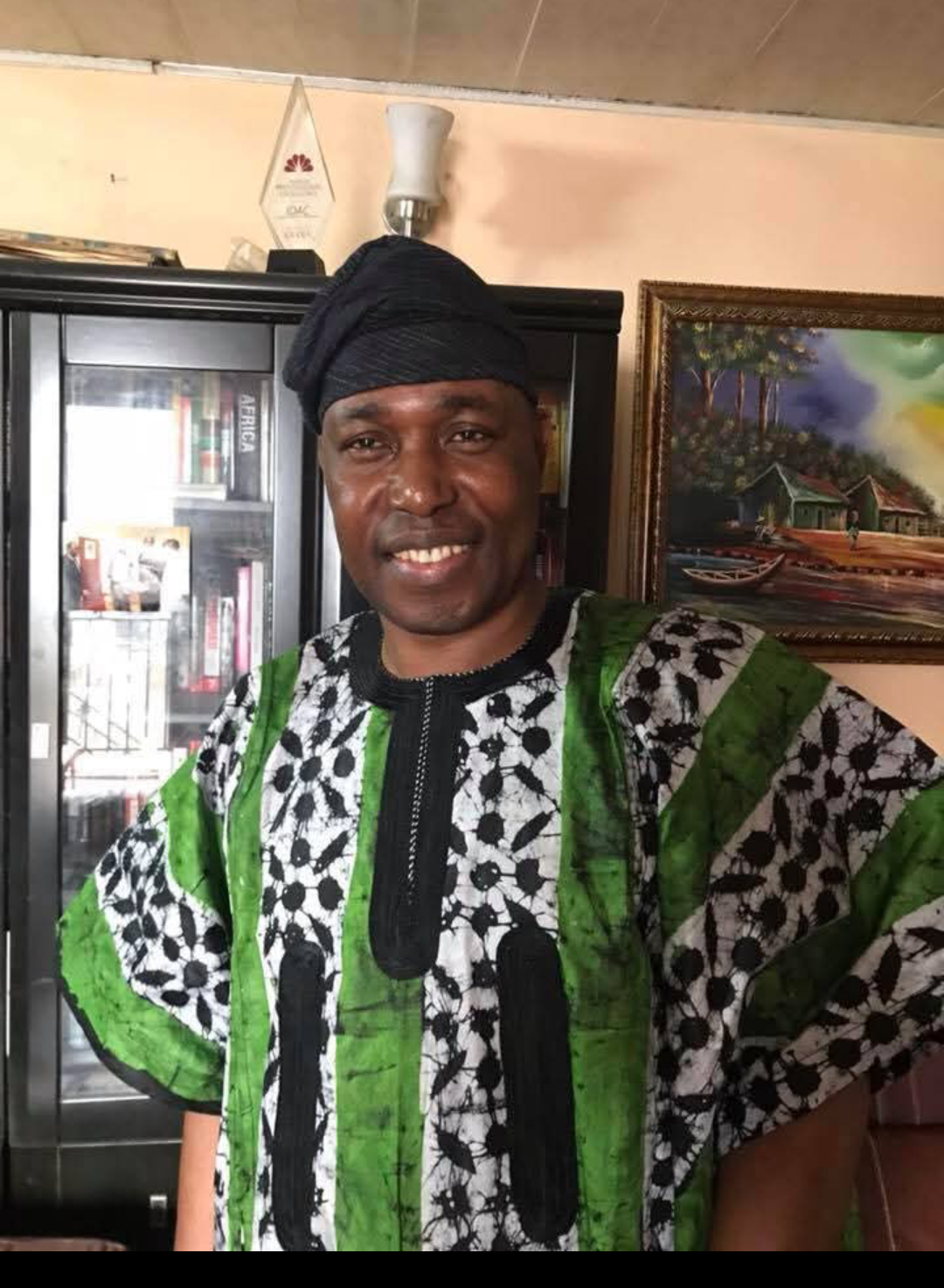
Photo credit: Facebook / Inside Stuff With MARTINS OLOJA
“DAILY TIMES” @ 100 – From “The Times” To “The Timid”.
June 1, 1926, Lagos: The “Daily Times” was born. Founded by Adeyemo Alakija, Richard Akinwande Savage, Ernest Ikoli and others. It was not just a newspaper. It was Nigeria’s first draft of itself. In the 1950s and 60s, “Daily Times” was the biggest newspaper in Africa. Circulation: over 400,000. Later, “Sunday Times” under the famous Gbolabo Ogunsanwo doubled the data. Correspondents in London, New York, Accra, Harare etc. “The New York Times” once sent a delegation to study it. That is how big we were. Even Cecil King, the British press baron, once bought a stake. Not to colonise it, but because he saw the commercial and editorial power of a black nation learning to document and talk to itself.
By the 1980s, “Daily Times” had buildings, (real estate) in Lagos, Kaduna, Kano, Port Harcourt. It had a printing press that could print 100,000 copies per hour. It had a photo library that documented independence, civil war, coups, democracy, politics, policy, education, etc. Then came military intervention in politics. And later, civilian intervention in business.
The 2004 sale: The Obasanjo administration sold “Daily Times” to Folio Communications, a private company. The argument: government should not run business. Fair enough. But what happened next was beyond privatisation. It was liquidation of a critical national asset by neglect.
Today, “Daily Times” does not print. It does not have newsboys. It does not have a functional newsroom. Nor does it have a boardroom. It has a carcass of not-fit-for purpose warehouses in Lagos. It has a website. It gives awards that trigger a bumper publication for awardees only. Let that sink in: Africa’s once largest newspaper is now giving awards without publishing the news it was born to publish. Meanwhile, “The Punch” founded in 1970 — still printing. “The Guardian” founded 1983 — still printing. “Vanguard” founded in 1984 — still printing. So the question is not “why did others survive?” The question is: Why did we sell the crown jewel to people who had no interest in the crown? That is how not to celebrate 100 years.
RADIO NIGERIA @ 75 – From The Voice of The People To 30 Fragments.
Similarly, in April, 1950, the Nigerian Broadcasting Service began. In 1957, it became “Radio Nigeria”. In 1978, it became FRCN. For 75 years, it has been in every village, every market, every barracks via Hausa, Yoruba, Igbo, Pidgin, English. During war, during peace, during Ebola, during COVID. Radio Nigeria is the reason a farmer in Sokoto and a student in Enugu heard the same national anthem at 6am.
But today, FRCN operates about 30 stations, with 30 budgets, 30 DGs in practice, and one (1) federal headache. Meanwhile we also have: “NTA”: over 75 stations and channels. “Voice of Nigeria”: 1 shortwave station talking to the world. Three public broadcasters. Three boards. Three DGs. Three salaries. One mandate: serve the public.
Early this week in Lagos, Bimbo Oloyede, the first female presenter of Network News on NTA, launched a legacy book, “Communication and Media in Nigeria: Celebrating Bimbo Oloyede’s Contribution to Five Decades of Theory, Practice and Transformation” to mark her arrival on the 7th Floor two years ago. The hall was full. Engr. Vincent Maduka, 90 years old, first Director General of NTA, inherited from Western Nigeria Television (WNTV), which was seized by the military in 1977, was there.
Almost all the living broadcasters who grew up when there was one public broadcaster were there. That gathering was the real celebration. Because it remembered when we had one voice, one vision, one BBC-style institution.
What we have now is fragmentation. That is how not to celebrate 75 years.
The crime of selling institutional memory: Here is what we lost when we sold “Daily Times” carelessly:
1. The Library: “Daily Times” had the richest photo and newspaper archive in West Africa: 1926 to 2004. Independence speeches. Azikiwe’s editorials. Civil war photos. Fela’s court cases, colonial footprints, etc. That archive should have been digitised and should have been competing with the “Library of Congress” for research grants. Instead, it is in a warehouse, that may have decayed.
2. The Brand Equity: “Daily Times” is a brand older than 90% of Nigerian companies. You cannot build that in 10 years. We sold it for quick cash.
3. The Training Ground: Every major editor at a time in Nigeria passed through “Daily Times”: Tony Momoh. Sam Amuka-Pemu. Segun Osoba. Tola Adeniyi. Haroun Adamu. Ray Ekpu. Dele Giwa. Stanley Macebuh. Lade Bonuola. Femi Kusa. Onyema Ugochukwu, etc. We sold the academy, recklessly.
Selling “Daily Times” to investors who had no plan to run a newspaper is like selling Aso Presidential Villa to a hotelier and calling it reform. The new owners are not evil. They are businessmen. But they bought assets, not mission. And the mission died. What do we then celebrate?
Again, the curiosity of three public broadcasters Let’s do the math.
FRCN: 30 stations + HQ Abuja. NTA: 75 stations + HQ. Abuja. VON: 1 station + HQ Abuja. Three HR departments. Three engineering departments. Three newsrooms covering the same federation.
What does “BBC” do? One corporation. TV + Radio + Online. What does “SABC, Africa” do? One corporation. What does “Ghana Broadcasting Corporation” do? One corporation. What do we do? We have “Nigeria Broadcasting Corporation” in theory, but three “Broadcasting Corporations” in practice. The result: 1. Diluted budget. NTA gets capital vote, FRCN gets overhead, VON gets nothing. 2. Duplicated coverage. 3 crews at Aso Villa.
No global voice. VON is weak because it has no TV like “VoA” and no domestic base.
I have argued for years: Merge FRCN + NTA + VON into NIGERIA BROADCASTING CORPORATION, NBC. One Board of Trustees, (not Directors). One CEO. One budget. One mandate: serve the federation, not just the federal government.
That is how BBC serves Britain. That is how SABC serves South Africa. That is how we can celebrate 75 years of “Radio Nigeria”. Not by cutting anniversary cake while transmitters are down.
What a real celebration looks like: If we are serious, here is what June 1, 2026 and Dec 1, 2025 should have looked like:
For “Daily Times” @ 100:
1. Recovery or resale to living legends/ successful newspaper barons: The Federal Government should use right of first refusal to buy back the “Daily Times” brand and assets from the current holders. Or force a resale to a consortium of media veterans: Segun Osoba, Sam Amuka, Tola Adeniyi, Yemi Ogunbiyi, Lade Bonuola, Ajibola Ogunshola, Tokunbo Awolowo, Nduka Obaigbena, Frank Aigbogun, etc. People who understand that a newspaper is not real estate. 2. Digitise the archive: Partner with Google, Library of Congress, and five Nigerian universities. Put 100 years of “Daily Times” online. Charge subscriptions. That archive alone can make $2-5m a year. 3. Re-launch as “Daily Times” digital + Weekend Print. If you can’t afford daily print in 2026, you need a “Sunday Times” with analysis, with history, with the weight of 100 years before you can recapitalise for daily print. 4. Build the “Daily Times” Museum: At the old Lagos HQ. Charge tourists. Show kids what journalism looked like.
For Radio Nigeria @ 75:
1. Pass a Nigeria Broadcasting Corporation Bill: Merge FRCN + NTA +VON. One law. One board. One purse. 2. Build NBC Digital: One app. Radio + TV + Podcast. For diaspora. Monetize it. 3. Celebrate the people: Honour George Bako, Vincent Maduka, Christopher Kolade, James Audu, Tony Iredia, Bimbo Oloyede, Bisi Olatinlo, Soni Irabor, John Momoh, and others who built the organic broadcasting industry. Give them equity in the new NBC, not just plaques. That is celebration. Not awards without newspapers and quality audiences.
The philosophy behind this piece: You can’t celebrate decline and mediocrity. We have a culture problem in Nigeria: We celebrate anniversaries of institutions we have killed. We celebrate 60 years of independence with ‘Electricity Distribution Companies still failing. We celebrate 100 years of “Daily Times” without a single copy on the newsstand. We celebrate 75 years of “Radio Nigeria” while youth listen to podcasts. This is a culture of low expectations. Digital technology in 2026 does not reward nostalgia. It rewards relevance. If the organic “Daily Times” were alive today, it would be Substack + YouTube + Data journalism. If the classic “Radio Nigeria” were customer-centric today, it would be BBC Sounds + TikTok news. But you cannot innovate what you have abandoned. And here is the thing, we can’t celebrate a bundle of mediocrity and call it legacy. Legacy is what you hand over, not what you hand out as awards.
The economic case: Let’s talk money, because that is the only language that moves government. “Daily Times” Archive: “The New York Times” archive earns $15m annually from licensing. If we digitise “Daily Times” and sell access to universities globally, we can earn $2-5m per year. For 100 years. That is better than selling the building. Merged NBC: Three broadcasters = 3x overhead. Merge them, save N30bn annually. Use it to buy content, pay staff, and build NBC Studios in Lagos and Abuja to compete with Netflix Naija. This is not expenditure. This is investment.
What the Lagos gathering for Bimbo Oloyede taught us: Bimbo Oloyede’s book launch was not just a book. It was a rebuke. 90-year-old Vincent Maduka, an engineer inherited from FG-seized WNTV, who ran NTA when it was one, when the idea was “one Nigeria, one television, was there. Today, we have undone that idea. We have three TVs called one. The elders from Radio and Television in that room were saying without words: “Bring back the institution. Not the party.” That is the template for celebrating. Gather the living, apologise to the dead institutions, and rebuild.
Here is the denouement our leaders should reflect on: June 1, 1926 gave us “Daily Times” April, 1950 gave us “Radio Nigeria”. They are not just media houses. They are Nigeria’s institutional memory. To celebrate them with dinners while the newspaper does not print and the radio does not lead is to insult our ancestors. The only way to celebrate is to recover and restructure them. Recover “Daily Times”. Buy it back. Digitise it. Relaunch it. Let it compete with NYT, not just with blogs. Restructure “Radio Nigeria”: Merge FRCN, NTA, VON into “Nigeria Broadcasting Corporation”. One voice, global reach. Fund Memory: Budget for archives, not just for awards. If we do not do this, in 10 years our children will ask: “Daddy, what was “Daily Times”?
And we will show them a website and an award plaque. That will be the real tragedy. We cannot celebrate decline. We cannot celebrate a culture of low expectation in a 21st century that digital technologies shape every minute. We must celebrate by rebuilding. Reason: a nation that forgets how to document and speak to itself through digital journalism has already begun to die.
Inside Stuff With MARTINS OLOJA, “The Guardian”, September 5, 2026, Back Page.
