

As at now, 16 banks comply with CBN’s recapitalisation landmark — Cardoso
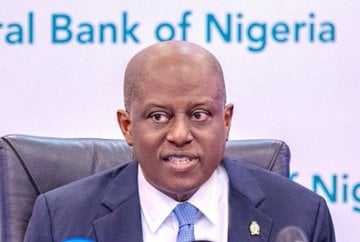
As at now, 16 banks comply with CBN’s recapitalisation landmark.
By the end of the latest meeting of the Monetary Policy Committee (MPC), CBN Governor Olayemi Cardoso announced that 16 Nigerian banks have now met the apex bank’s revised recapitalisation requirements a sign of growing compliance ahead of the March 2026 deadline.
The 16-bank figure represents an improvement from earlier in 2025, when only 8 banks had met the threshold.
The recapitalisation drive requires banks to raise their minimum paid-up capital depending on their licence type: for example, internationally-authorised commercial banks must meet ₦500 billion, while nationally-authorised banks are expected to reach ₦200 billion, and regional/merchant banks have lower thresholds.
The policy excludes retained earnings as part of the capital banks must raise fresh equity or restructure via mergers, acquisitions, or license adjustments (upgrade/downgrade).
According to Cardoso, the recapitalisation programme is intended to strengthen the resilience of Nigeria’s banking sector ensuring banks have sufficient buffers to weather economic shocks, absorb risks, and expand lending capacity to support economic growth.
Why recapitalisation matters
The current recapitalisation exercise echoes a similar push in 2004 when the CBN raised its minimum capital requirements, triggering significant consolidation in the sector (shrinking the number of banks drastically).
But this time, the approach is more differentiated: banks are grouped by license type, with varying capital thresholds. A design meant to reflect their scale, scope, and risk profile.
By forcing banks to hold stronger capital bases, excluding retained earnings the CBN is encouraging fresh equity infusion, mergers, or restructuring.
The goal is not only to make banks more stable, but also more capable of supporting credit growth, financing commerce, and absorbing external economic fluctuations.
The MPC said the banking system remains resilient: most financial-soundness indicators are within regulatory bounds, reinforcing confidence that the recapitalisation process is helping maintain sector stability.
With the March 2026 deadline approaching, the pace of compliance will matter. Banks falling behind may likely need to merge, raise fresh capital, or even reconsider their license category.
If successful, a fully recapitalised banking sector could enhance lenders’ ability to support increased credit demand, underwrite larger corporate or infrastructure loans, and withstand economic shocks thereby boosting overall financial stability in Nigeria.
On the flip side, banks unable to comply may face pressure to restructure, merge, or possibly exit, which could reshape the banking landscape though the CBN has indicated that license downgrades, mergers, and acquisitions are among the possible remedies.
