

Africa’s currency: Naira rated among the weakest – Forbes
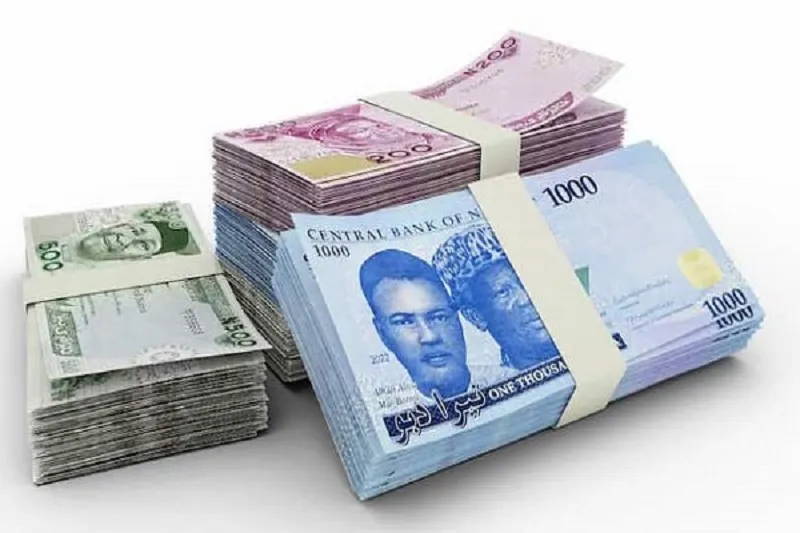
Naira notes
The Nigerian Naira has been rated as the ninth weakest currency in Africa, according to a Forbes report released in September 2025.
This ranking shows the challenges still facing Nigeria’s economy, even though inflation has started to ease.
Forbes used a currency calculator that tracks real-time data from the foreign exchange market through the Open Exchange Rates API.
The system updates every five minutes to show live values based on demand, supply, market mood, and broader economic conditions.
At the top of the weakest currencies list is the São Tomé & Príncipe Dobra (22,282 per $1). This is followed by the Sierra Leonean Leone (20,970), Guinean Franc (8,680), Ugandan Shilling (3,503),
Burundian Franc (2,968), Congolese Franc (2,811), Tanzanian Shilling (2,465), Malawian Kwacha (1,737), Nigerian Naira (₦1,490 per $1), and the Rwandan Franc (1,448).
On the other hand, the strongest African currencies are the Tunisian Dinar (2.90 per $1), Libyan Dinar (5.40), Moroccan Dirham (9.91), Ghanaian Cedi (12.31), and Botswanan Pula (14.15).
Africa has 54 recognized countries, according to the United Nations.
Meanwhile, Nigeria has recorded progress in tackling inflation. Data from the National Bureau of Statistics (NBS) shows that inflation dropped from 24.5% in January to 20.12% in August 2025 the fifth month in a row of decline.
Experts say the drop was helped by steady inflows of foreign exchange from oil sales and remittances, better farm output, and tighter monetary policies by the Central Bank of Nigeria, which kept the lending rate at 27.5%.
The Independent Media and Policy Initiative (IMPI) also reported earlier in September that Nigeria experienced a “rare disinflation” this year, the sharpest mid-year slowdown in inflation in more than 10 years. IMPI chairman, Dr. Omoniyi Akinsiju, predicted that inflation might fall further to 17% by December 2025, giving consumers some relief.
The Minister of Women Affairs, Hajiya Imaan Sulaiman-Ibrahim, has launched the Olowu Hope Initiative (OHI) Women Empowerment Fund, a flagship programme designed to transform the Owu Kingdom and serve as a model for community development across Nigeria.
The initiative, founded by His Royal Majesty, Oba (Prof.) Saka Matemilola, Olowu of Owu Kingdom, builds on a successful pilot scheme and is targeted at reaching more than 50,000 women in its first decade, as part of an ambitious plan to impact one million lives through four interconnected pillars of empowerment.
At the launch, the minister commended Oba Matemilola for what she described as a deep and practical commitment to grassroots development. She assured that the Federal Government would stand firmly in support of the programme.
“It represents exactly the kind of grassroots empowerment that transforms societies. We will ensure this initiative touches the lives of every woman in Owu Kingdom and beyond,” she said.
For Oba Matemilola, the vision is one of legacy and transformation. He explained that the OHI was designed to move beyond traditional charity by providing women not only with rights but also the resources and respect to shape their own futures.
“The Olowu Hope Initiative is not merely a programme; it is a legacy-defining movement. True empowerment does not just entail giving women rights but also the resources to shape their destinies. A world that empowers women is a world that moves forward, more just, more prosperous, and more humane,” he said.
The governance structure of the initiative is designed to ensure transparency and sustainability. The Board of Trustees is led by former President Olusegun Obasanjo, Balogun of Owu Kingdom, serving as Grand Patron. Other members include Oba Matemilola, Dr. Mutiu Sunmonu, Aare Tony Attah and Aare Chike Nwosu. The Advisory Board, chaired by Dr Sunmonu, draws membership from top professionals across sectors including energy, business, education and community leadership, tasked with translating the vision into concrete, long-term impact.
Sunmonu said the board’s role was to ensure that each pillar thrives sustainably. “This is about creating lasting legacies, not short-term solutions,” he stressed. The four pillars cover microcredit and economic empowerment, vocational training, education, and health, each supported by trustees and management teams working under the board’s direction.
