

Burkina Faso Let Go Of Nigeria Air Force Crew After Diplomatic Talk
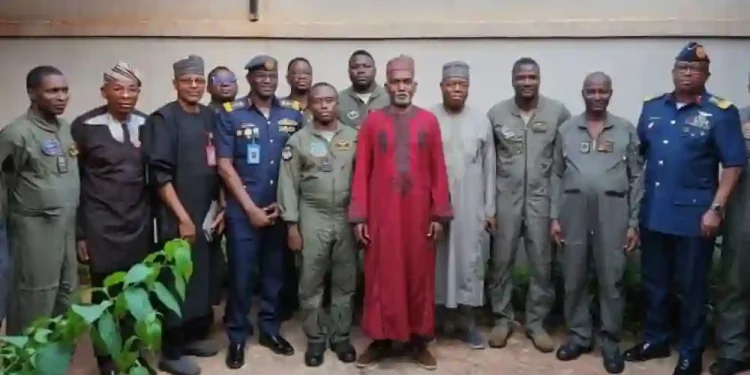
Burkina Faso has let go of Nigerian Air Force aircraft and 11 detained military personnel after nine days of captivity, following successful high-level diplomatic negotiations in Ouagadougou led by Nigeria’s Foreign Affairs Minister, Ambassador Yusuf Tuggar.
The resolution came after intense engagement between a Nigerian delegation and Burkina Faso’s military government, including discussions with junta leader President Ibrahim Traoré. The delegation, acting on President Bola Tinubu’s directive, included senior representatives from the Foreign Affairs Ministry, Defence Ministry, and NAF Headquarters.
Security analyst Zagazola Makama, citing an official briefed on the mission, reported that talks focused on de-escalation, building confidence between the two nations, and securing the release of detained personnel while reaffirming Nigeria’s adherence to international aviation standards, military protocols, and regional partnership.
The crisis began when a Nigerian Air Force C-130 aircraft made an unscheduled landing in Bobo-Dioulasso due to technical difficulties. Burkinabé authorities initially characterized the incident as a sovereignty breach, claiming the aircraft lacked proper airspace authorization, and subsequently detained the crew.
Nigerian military officials insisted the emergency landing followed standard safety procedures consistent with international aviation regulations and was necessitated by technical problems aboard the aircraft.
Following the negotiations, Minister Tuggar emphasized the historically strong relationship between Nigeria and Burkina Faso, noting their shared security challenges across the Sahel region. He described the diplomatic engagement as crucial for maintaining mutual trust and good-neighbourly relations.
“We held productive discussions covering cooperation across multiple sectors, including the matter of the Nigerian aircraft’s emergency landing,” Tuggar stated.
The minister acknowledged administrative shortcomings in the flight authorization process and conveyed Nigeria’s apologies while underscoring the government’s respect for Burkina Faso’s sovereignty and compliance with international aviation law.
Tuggar also distanced the federal government from remarks made by a Nigerian political party representative who had alleged mistreatment of the detained crew members, stating, “We categorically dissociate ourselves from those statements and extend our sincere apologies to Burkina Faso’s government.”
The incident unfolded against a complex regional backdrop marked by military coups, governance instability, and the recent departure of Burkina Faso, Mali, and Niger from the Economic Community of West African States to establish the Alliance of Sahel States—developments that have complicated diplomatic ties with ECOWAS member countries like Nigeria.
