

Nigeria’s Role in Thwarting Benin Republic Coup Attempt
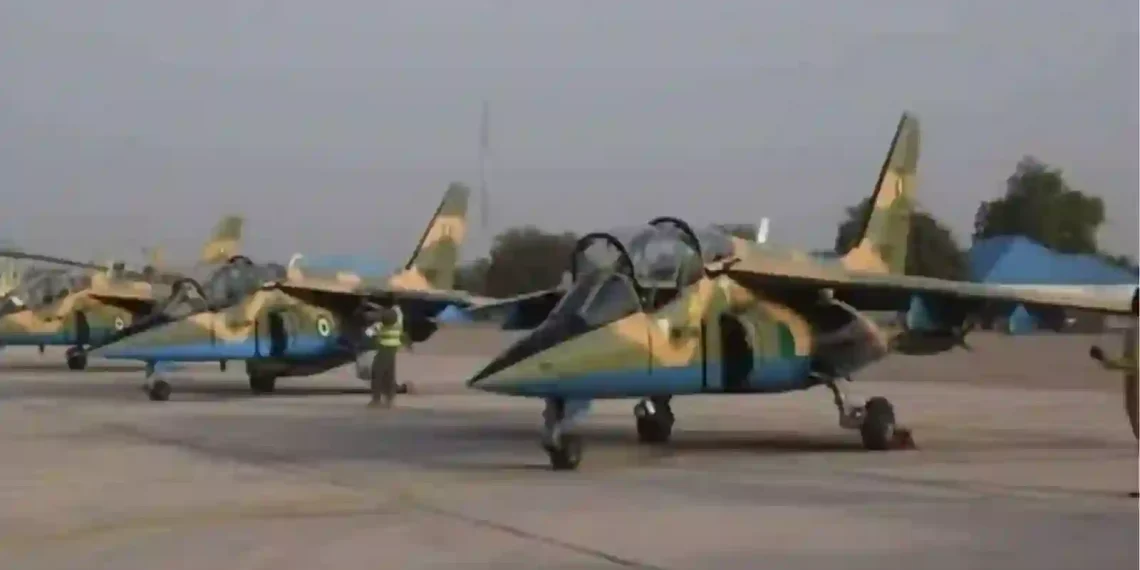
Nigeria has confirmed that its fighter jets and ground forces intervened to help the Benin Republic’s military thwart a coup attempt in Cotonou on Sunday, marking the latest flashpoint in a region increasingly destabilised by military uprisings.
According to a statement by presidential spokesperson Bayo Onanuga, the Benin government formally requested Nigerian military assistance through a diplomatic note after soldiers led by Colonel Pascal Tigri seized the national television station and announced the suspension of democratic institutions.
President Bola Tinubu authorised the Nigerian Air Force to deploy fighter jets into Benin’s airspace to help dislodge the coup plotters from the national broadcaster and a military camp where they had regrouped. A second request followed, seeking surveillance operations and rapid intervention assets under Beninese coordination as loyalist forces struggled to regain control.
Nigeria’s Chief of Defence Staff, General Olufemi Oluyede, confirmed that all requests were executed, with Nigerian ground forces now operating in Benin strictly under missions approved by Beninese authorities.
Within hours, loyal troops backed by Nigerian forces recaptured the national broadcaster and neutralised the coup attempt, ensuring President Patrice Talon’s government remained intact.
President Tinubu commended the military’s swift action, stating that the intervention was carried out within the framework of the ECOWAS Protocol on Democracy and Good Governance.
“Our armed forces acted as defenders of constitutional order in the Republic of Benin,” Tinubu said. “They have helped stabilise a neighbouring country and have made us proud.”
Regional Instability Deepens
The attempted coup in Benin adds to growing instability across West Africa, where successful and attempted military takeovers in Mali, Guinea, Burkina Faso, Niger, and now Benin have shaken the region over the past four years.
The rise of the Alliance of Sahel States, comprising military-led Mali, Burkina Faso, and Niger, has deepened regional divisions, weakened ECOWAS cohesion, and emboldened anti-democratic actors.
Analysts argue that worsening poverty, shrinking state authority, and geopolitical competition between global powers have created fertile ground for military takeovers.
The intervention reinforces Nigeria’s role as a key stabilising force in West Africa and highlights the strategic importance of stopping instability before it reaches Nigerian borders—a calculation made urgent by Nigeria’s own growing insecurity from insurgent groups, armed bandits, and organised criminal networks.
With attacks escalating across northern and central Nigeria, the government faces the dual challenge of securing its territory while helping to uphold regional stability.
Nigeria shares an extensive border with the Benin Republic, making political instability in the neighbouring country a direct security concern for Abuja.
