
Close Menu

    Subscribe to Updates

    Get the latest news as they happen

    What's Hot

    Ex-Power Minister Saleh Mamman Handed 75-Year Jail Term For ₦33.8bn Fraud

    May 13, 2026

    Union Bank Recognised by ASBON at Nigeria National SME Business Awards

    May 13, 2026

    See Key Facts About Late Alex Ekubo

    May 13, 2026
    Facebook X (Twitter) Instagram
    Megastar Magazine
    • Politics

      Peter Obi, Kwankwaso: Political Allies Who Agreed To Work Together

      May 12, 2026

      APC Screening: Hamzat Clears For Lagos Governorship Primary

      May 10, 2026

      NDC Zones 2027 Presidential Ticket to South, Reserves 2031 for North

      May 9, 2026

      VP Shettima Presents Tinubu’s Forms to APC Officers for Presidential Race

      May 8, 2026

      Ekiti Council Donate N100M For Re-election Campaign Of Oyebanji

      May 7, 2026
    • Entertainment
      1. People
      2. Events
      3. Fashion
      Featured
      Entertainment May 13, 2026

      See Key Facts About Late Alex Ekubo

      Recent

      See Key Facts About Late Alex Ekubo

      May 13, 2026

      Full List of Winners at AMVCA 2026 Ceremony in Lagos

      May 10, 2026

      Seyi Vibez Sparks Online Drama After Calling Out Adekunle Gold Over “Fuji Moto” Lyrics

      May 9, 2026
    • Business

      LG Electronics Partners AXA Mansard Health to Offer Free Health Insurance with Selected Air Conditioners

      May 11, 2026

      MTN’s Record Profits Stir Debate as Nigerians Face Renewed Xenophobic Threats in South Africa

      May 9, 2026

      MTN, UBA, Others Seal Payments Alliance On Cardless Financial Access

      May 6, 2026

      GTCO Plc Reports Profit Before Tax Of ₦302.9Billion, As It Releases 2026 Q1 Unaudited Results

      April 30, 2026

      Uber has introduced a new hotel booking feature within its app as part of its strategy to evolve into a comprehensive “everything app.” The service, developed in partnership with Expedia, allows users to search and reserve hotel rooms from a selection of more than 700,000 properties. The feature integrates travel tools such as maps, filters, and pricing options, while enabling payments through saved card details already stored in the Uber platform. According to Uber CEO Dara Khosrowshahi, the company is expanding beyond ride-hailing and food delivery to become a unified platform for a wide range of everyday services. Expedia CEO Ariane Gorin said the collaboration is aimed at simplifying travel planning and reducing the steps required to complete bookings. Uber also plans to extend the partnership to include short-term rental listings through Vrbo in the future. The move reflects a broader global trend toward multifunctional apps that combine services like transport, shopping, and payments in a single ecosystem, similar to platforms such as WeChat and Alipay in China. Other tech companies are also pursuing similar “super app” models, including Airbnb, which has added experiences and personal services, and X, which is exploring financial services integration. Uber further revealed plans to incorporate AI-powered tools, including meal planning, shopping list creation, delivery coordination, and a voice assistant for navigating the app.

      April 29, 2026
    • Health

      NPHCDA Report Reveals Over 3,700 Non-Functional Primary Healthcare Centres Across Nigeria

      May 11, 2026

      Governor Dauda Lawal Approves N3.2 Billion to Renovate School of Nursing in Zurmi

      May 10, 2026

      Nigeria’s Malaria Prevalence Falls to 15%, From 20% ~ FG

      April 29, 2026

      Cross River Dismisses Report of New COVID-19 Cases

      April 23, 2026

      Cross River Activates Emergency Response As It Confirms First COVID-19 Case Since 2022

      April 23, 2026
    • Culture

      Eko Africa Legacy Summit to Explore African Culture in Global Tourism and Hospitality

      May 11, 2026

      Excitement Builds in Ijebu-Ode as Ojude Oba Festival Preparations Gather Momentum

      May 2, 2026

      Olu of Warri, Asantehene Seal Historic Royal Bond, Ogiamẹ Atuwatse III Receives Peace Artifact

      April 27, 2026

      Adron Homes Strengthens Cultural Influence During Ibadan Cultural Festival

      April 20, 2026

      Ogun State to Showcase “The Rock That Remembers” at Milan Design Week

      April 19, 2026
    • Lifestyle

      World Bank Highlights Early Childhood Development as Key to Nigeria’s Economic Future

      April 19, 2026

      Hilda Baci Secures Third Guinness World Record, Extends Culinary Milestone

      April 6, 2026

      Lagos Hosts “Homecoming Live Music Show” as Alternative Scene Takes Center Stage

      April 4, 2026

      QR Menus and Aesthetic-Driven Dining Redefine Restaurant Experience for Gen Z

      March 27, 2026

      How My Gold Jewelry Ended In Lagoon ~ Adeboye

      March 19, 2026
    • Sports

      2026 African Cycling Champs: Nigeria Clinch 16 Medals 

      May 13, 2026

      Nigeria Plans to Host 48th CAF General Assembly, CAF Awards ceremony

      May 13, 2026

      2026 World Cup: FIFA Announces  11-Member Panel for  Analysis, Awards

      May 11, 2026

      Flamingos Arrive In Ikenne For Guinea Clash, Prepare For World Cup Qualifier

      May 11, 2026

      Rema Confirmed for 2026 FIFA World Cup Opening Ceremony

      May 11, 2026
    • Contact
    YouTube Facebook Instagram WhatsApp
    Megastar Magazine
    Home » FG eliminates revenue collection, deductions, promises fiscal transparency
    News

    FG eliminates revenue collection, deductions, promises fiscal transparency

    Ifetayo AdeniyiBy Ifetayo AdeniyiOctober 9, 20257 Mins Read
    Facebook Twitter Pinterest LinkedIn WhatsApp Reddit Tumblr Email Telegram
    Share
    Facebook Twitter WhatsApp Telegram Email

    FG eliminates revenue collection, deductions, promises fiscal transparency

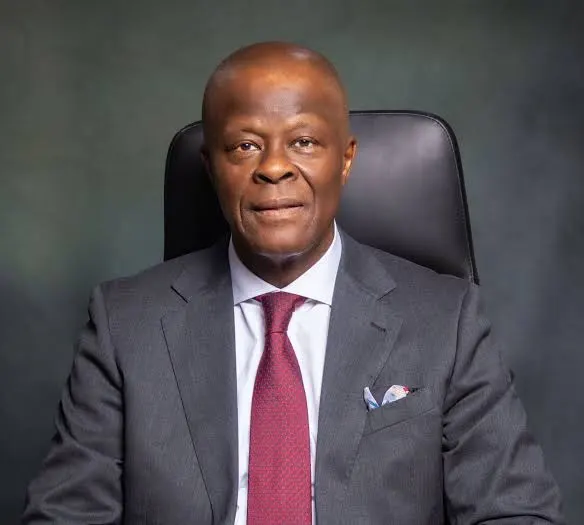
    A file photo of the Minister of Finance and Coordinating Minister of the Economy, Mr. Wale Edun

    • Govt checking all forms of deductions to ensure that every naira collected is well administered.

    The Federal Government has announced plans to eliminate deductions for the cost of revenue collection paid to agencies such as the Federal Inland Revenue Service, the Nigerian Customs Service, and the Nigerian Upstream Petroleum Regulatory Commission, among others.

    The Minister of Finance and Coordinating Minister of the Economy, Wale Edun, disclosed this on Wednesday in Abuja while speaking at a panel session after the launch of the October 2025 edition of the World Bank’s Nigeria Development Update, titled “From Policy to People: Bringing the Reform Gains Home.”

    Edun revealed that following a presidential directive, several layers of deductions previously made before sharing proceeds from the Federation Account Allocation Committee have now been scrapped to improve fiscal transparency and ensure that more resources reach the three tiers of government.

    “Funds have flowed to the Federation Account, but the point is this: efficiency of that spending is critical We have been mandated by His Excellency, President Bola Tinubu to take a look at deductions, not just the deductions for cost of collection, but deductions generally, as we saw, when you look at the gross figure, you see all kinds of deductions before you get to the net distributable figure, which goes to the federal state and local governments. And I must inform that even during the last FAC allocation, most of those deductions have been removed once and for all.”

    According to the minister, the reform is part of the government’s broader effort to strengthen fiscal governance, promote transparency, and ensure that federal and subnational governments have more predictable revenues to fund development projects.

    He added that the government was reviewing all forms of deductions from gross revenues, including refunds and interventions, to ensure that every naira collected is efficiently used for national development.

    “The constitution says that funds should flow from revenue-collecting agencies into the federation account and be distributed according to the then formula, and that is what is now being done. And we can expect it’s a work in progress in terms of the review of the different deductions, but what we can expect is greater transparency, efficiency, funding for development at the federating units, the federal government and the states, and of course, flowing from the states to the local governments. So we are looking at a much stronger fiscal situation. We are going to be looking at much stronger accountability, transparency, and efficacy of spending. We are cleaning that up because efficiency and transparency are key to achieving fiscal sustainability,” Edun explained.

    Under Nigeria’s fiscal structure, the Federal Inland Revenue Service, Nigerian Customs, and other agencies have traditionally retained a percentage of revenues they collect as a “cost of collection.” Critics have long argued that the practice encourages inefficiency, inflates administrative expenses, and reduces the amount distributable to federal, state, and local governments through FAAC.

    Earlier, World Bank Lead Economist for Nigeria, Samer Matta, had observed that while Nigeria’s gross revenue collections had soared sharply in 2025, a significant portion was being lost to various deductions, many of which did not directly contribute to national development.

    Presenting the economic overview, Matta revealed that revenues shared by FAAC had risen from around five per cent of GDP in 2023 to nearly 9.5 per cent in the first eight months of 2025, reflecting stronger oil receipts and non-oil tax collection.

    However, he lamented that “a big component of these deductions goes to revenue-collecting agencies for their own spending, while another chunk flows back as subnational refunds and interventions,” adding that this trend blurs fiscal efficiency.

    “Nigeria’s revenues have increased, but so have deductions,” Matta noted. “The key issue is ensuring that these funds are used for measurable development impact rather than administrative overheads.”

    The World Bank’s analysis also highlighted a sharp contrast in spending priorities between the federal and state governments. While the federal government’s expenditure is dominated by debt service, salaries, and overheads, subnational governments have significantly increased capital investments.

    According to the NDU, the capital expenditure of state and local governments has surged from about one per cent of GDP in 2022 to a projected 2.7 per cent in 2025, accounting for roughly 60 to 65 per cent of their total spending.

    By contrast, at the federal level, interest payments and personnel costs now account for about 70 per cent of expenditure, leaving “very little fiscal space for capital projects,” the report stated.

    The report praised Nigeria’s recent fiscal and monetary reforms, describing them as steps that have boosted revenue mobilisation and reduced the fiscal deficit.

    Between 2024 and 2025, Nigeria’s fiscal deficit fell to about 2.5 per cent of GDP, an improvement from an average of 4.4 per cent recorded between 2021 and 2023. The World Bank described this as evidence of “fiscal resilience,” especially at a time when global oil prices have softened.

    Nevertheless, the Bank warned that translating these macroeconomic gains into real improvements in living standards remains Nigeria’s greatest challenge.

    The World Bank listed three urgent priorities for Nigeria: reducing inflation, especially food inflation; using public funds more efficiently; and expanding social safety nets to cushion the poor.

    Responding to the World Bank’s concerns, Edun said President Tinubu’s administration is already implementing targeted measures to shield vulnerable Nigerians from the effects of ongoing economic adjustments.

    He revealed that the government’s direct cash transfer programme, implemented through biometric and digital verification systems, has reached 10 million households, covering about 50 million Nigerians.

    “We made sure that each person who benefits is biometrically identified,” Edun said. “By the end of October, we would have reached 10 million households, and by year-end, we aim to cover 50 million.”

    He explained that the National Economic Council had approved a ward-based development programme across Nigeria’s 8,809 wards to ensure that “reform gains reach every corner of the country.”

    “That is where the connection will be bringing the gains home and ensuring that all Nigerians participate in a growing and stable economy,” he added.

    The World Bank’s report projects Nigeria’s GDP growth to rise to about 4.4 per cent by 2027, driven by a rebound in agriculture, stronger services, and improved industrial activity. Inflation is expected to ease to 15.8 per cent by 2027, supported by tight monetary policy and easing supply constraints.

    Meanwhile, the Bretton Woods institution noted that Nigeria’s economy is showing signs of resilience and recovery, with the World Bank projecting that the nation’s public debt will fall below 40 per cent of GDP for the first time in more than a decade.

    This improvement comes amid steady economic growth, tighter fiscal management, and ongoing structural reforms.

    According to the latest report, economic growth is expected to rise modestly from 4.2 per cent in 2025 to 4.4 per cent in 2027, buoyed by strong performance in services, non-oil industries, and agriculture. Inflation, though expected to ease gradually, will remain elevated, demonstrating the need for sustained monetary discipline and policy consistency.

    According to the NDU, Nigeria’s economy expanded by 3.9 per cent year-on-year in the first half of 2025, up from 3.5 per cent in the same period of 2024.

    The growth, according to the World Bank, was driven by strong performance in services and non-oil industries, alongside improvements in oil production and agriculture.

    The bank stated, “The country’s external position has strengthened, with foreign reserves exceeding $42 billion and the current account surplus rising to 6.1 per cent of GDP, supported by higher non-oil exports and lower oil imports.

    “On the fiscal side, despite lower oil prices, the federal deficit is projected at 2.6 per cent of GDP in 2025, broadly unchanged from 2024, while public debt is expected to decline for the first time in over a decade, from 42.9 to 39.8 per cent of GDP.”

    Share. Facebook Twitter Pinterest LinkedIn WhatsApp Reddit Tumblr Email
    Previous ArticleBOI presents N2b empowerment loan scheme for NYSC members
    Next Article UI now Nigeria’s best varsity for 2026 rankings
    Ifetayo Adeniyi
    • Website

    Adeniyi Ifetayo Moses is an Entrepreneur, Award winning Celebrity journalist, Luxury and Lifestyle Reporter with Ben tv London and Publisher, Megastar Magazine. He has carved a niche for himself with over 15 years of experience in celebrity Journalism and Media PR.

    Related Posts

    News May 13, 2026

    Ex-Power Minister Saleh Mamman Handed 75-Year Jail Term For ₦33.8bn Fraud

    News May 13, 2026

    Dangote, Niger Partner on Industrialisation, Food Production

    News May 13, 2026

    FCMB, Partners Support $188m Solar Investment Initiative

    News May 12, 2026

    Tinubu, CAF President Discuss On Football Development In Africa During Kenya Visit

    News May 12, 2026

    Lagos Bus Service Records 42,000 Daily Passengers

    News May 12, 2026

    Ojude Oba 2026 To Take Place In The Face Of Vacant Awujale Stool ~ Council Chief 

    Leave A Reply Cancel Reply

    Don't Miss
    News May 13, 2026

    Ex-Power Minister Saleh Mamman Handed 75-Year Jail Term For ₦33.8bn Fraud

    A Federal High Court in Abuja has sentenced former Minister of Power, Saleh Mamman, to…

    Union Bank Recognised by ASBON at Nigeria National SME Business Awards

    May 13, 2026

    See Key Facts About Late Alex Ekubo

    May 13, 2026

    2026 African Cycling Champs: Nigeria Clinch 16 Medals 

    May 13, 2026

    Subscribe to Updates

    Get the latest news as they happen

    Stay In Touch
    • Facebook
    • Twitter
    • Pinterest
    • Instagram
    Our Picks

    17th Edition of Prestigious Honorary African Leadership People’s Heritage Gold Awards

    November 16, 2021

    ACE-COMEDIAN, SHORTCUT HOSTS COMEDY 3.O IN ABUJA.

    November 3, 2021

    Climate Clock World appoints SDG Advocate Chuks Anyaduba as Director for Projects & Partnerships, Climate Clock Nigeria

    December 2, 2021
    New Comments
    • Anozie okolo on Supreme Court Affirms President Tinubu’s Victory As Atiku, Peter Obi Lose
    • Mc richman on Nigeria and South African Music histories
    • Moses Ibrahim on Olu of Warri: Pictorial @ The Ogiame Atuwatse III Economic Summit.
    • Sen Rich Kay on MALARIA ERADICATION: Prince Ned Nwoko & NMEP Meet for joint action.
    Megastar Magazine
    YouTube Facebook WhatsApp Instagram
    • Privacy Policy
    • Terms of Use
    • Contact Us
    © 2026 Megastar Magazine. Designed by MANNDI

    Type above and press Enter to search. Press Esc to cancel.