

Manny Ita
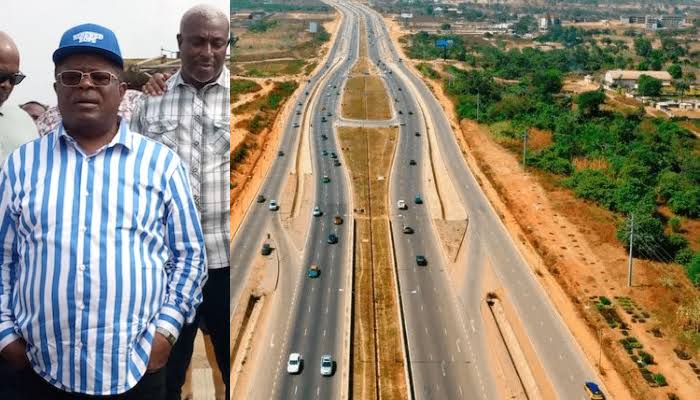
The Federal Ministry of Works has announced a significant milestone in the construction of the Lagos-Calabar Coastal Highway, reporting that Section 1 and a substantial portion of Section 2 are now over 65% complete. During a recent inspection tour on January 10, 2026, the Minister of Works, Senator Dave Umahi, expressed satisfaction with the pace of work, noting that the 47.47-kilometer Section 1, which stretches from Ahmadu Bello Way to the Eleko area, is on track for full commissioning by April 2026. This progress follows the temporary opening of a 30-kilometer stretch of the highway in December 2025 to ease festive season traffic, a move the Minister stated proved the road is “already serving its purpose” and fulfilling a “dream of over 27 years.”
A key factor in the accelerated timeline has been the adoption of Continuously Reinforced Concrete Pavement (CRCP) technology. Minister Umahi emphasized that the use of concrete instead of traditional asphalt binder has provided the structural integrity necessary to navigate the challenging coastal terrain, which includes pits as deep as 25 meters. “We are terribly being challenged because of the realignment that we have encountered,” Umahi remarked, though he praised the contractor, Hitech Construction Company, for their ability to manage complex soil conditions. The Minister also confirmed that the project’s first major bridge—a critical link within the Section 2 corridor—is scheduled to be commissioned by May 2026, marking a pivotal transition into the next phase of the 700-kilometer superhighway.
In addition to construction updates, the Federal Government revealed that the highway will be tolled immediately upon its formal inauguration. The Minister has already directed the contractor to begin the necessary infrastructure for tolling stations, asserting, “I don’t want to open this permanently for traffic and then we begin to talk about tolling.” While the project has faced a budget increment of ₦170 billion due to necessary realignments and shore protection measures, the Ministry has maintained that no further budget increases will be entertained. The project remains a central pillar of the “Renewed Hope” infrastructure agenda, with the National Economic Council recently constituting a special committee to oversee its full actualization.
