

Manny Ita
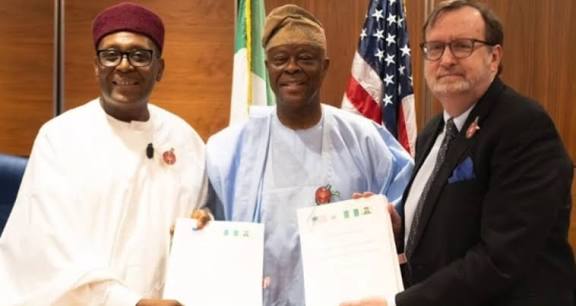
The $5.1 billion Health Memorandum of Understanding (MoU) signed between Nigeria and the United States in late December 2025 has emerged as a major flashpoint for political and social debate this January, as opposition parties and civil society groups raise concerns over its conditions and the manner in which it was presented to the Nigerian public.
The Federal Government has described the agreement as a landmark investment that will strengthen Nigeria’s health system over a five-year period from 2026 to 2030. The MoU is anchored on the United States’ “America First Global Health Strategy” and outlines a co-investment framework focused on combating HIV/AIDS, tuberculosis, malaria, polio, and improving maternal and child health outcomes.
Under the arrangement, the United States is expected to provide approximately $2.1 billion in grant funding, while Nigeria commits about $3.0 billion in domestic health spending, with an ambition to allocate at least six percent of the national budget to health within the period.
However, controversy has arisen following what critics describe as discrepancies between how the deal was framed by Nigerian officials and how it was presented by the U.S. State Department and Embassy. In U.S. communications, the MoU was described as placing a “strong emphasis on Christian faith-based healthcare providers,” with about $200 million reportedly earmarked for such facilities.
Opposition parties, including the African Democratic Congress (ADC), argue that this “identity-based” funding structure undermines the Nigerian Constitution’s provisions on non-discrimination and risks politicising healthcare delivery. Party officials have warned that the approach could inflame religious tensions in a country with deep faith sensitivities.
Nigerian government officials, by contrast, initially characterised the agreement as a “technical and inclusive” partnership, making no public reference to religious targeting when announcing the deal locally.
Further concerns have been raised over clauses in the U.S. version of the MoU that reportedly link continued funding to Nigeria’s progress in protecting Christian populations from extremist violence. According to the U.S. framing, Washington reserves the right to pause or terminate programmes if there is no “measurable progress” in addressing religiously motivated violence.
Critics argue that such provisions amount to an intrusion into Nigeria’s internal security architecture and grant a foreign government excessive leverage over sovereign policy decisions. Civil society groups have questioned how “measurable progress” would be defined and assessed, and who would determine compliance.
There are also growing questions around the economic implications of the deal, particularly whether the $2.1 billion in U.S. assistance will be tied to the purchase of American-made pharmaceuticals and laboratory equipment. Analysts note that while the MoU provides for a “gradual decline” in U.S. funding for health commodities by 2030, Nigeria would eventually be required to fully finance these products.
Critics warn that if the current framework locks Nigeria into American supply chains in the short term, it could undermine efforts to build local pharmaceutical manufacturing capacity and slow the growth of domestic health industries.
In response to the controversy, the ADC and several advocacy groups have formally demanded the immediate publication of the full MoU text, including all annexes. They are seeking clarification on whether the alleged identity-based clauses are legally binding, disclosure of the exact security-linked milestones Nigeria is expected to meet, and assurances that the agreement aligns with the Nigeria Health Sector Renewal Investment Initiative launched in 2023.
As pressure mounts, observers say greater transparency around the agreement may be critical in determining whether the deal is ultimately seen as a transformative health investment or a politically contentious compromise.
