

Manny Ita –
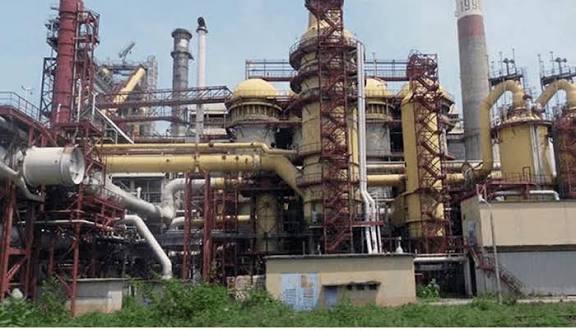
The Federal Government of Nigeria has advanced high-level negotiations with Chinese investors to revive the 42-year-old Ajaokuta Steel Company through a $2 billion investment framework anchored on a production-sharing model. Under this strategic arrangement, the project will not require direct federal funding, shifting the financial burden to private partners while maintaining national ownership of the asset.
Joseph Tegbe, the Director-General and Global Liaison for the Nigeria-China Strategic Partnership, confirmed that the proposed plan aims to restart the existing 1.3 million metric tonne rolling mill within six months of commencement, with a long-term target of scaling annual capacity to 10 million metric tonnes. “They told us that within six months of commencement, a steel rolling mill can begin operations,” Tegbe stated, emphasizing that the partnership is a production-sharing agreement and not an asset sale. “They are not going to own Ajaokuta. Nigeria still owns Ajaokuta. What we are doing is production sharing.”
Under the sliding-scale model currently being negotiated, the Chinese investors may initially take between 60% and 70% of the plant’s output as repayment for their capital injection. This share is expected to decline to zero over a five- to ten-year period, eventually leaving Nigeria with full control of the production and revenue. Tegbe further noted that a key pillar of the deal involves sending hundreds of Nigerian engineers to China for specialized training, asserting, “We must ensure knowledge transfer.”
This development coincides with separate discussions between the Minister of Steel Development, Prince Shuaibu Abubakar Audu, and the Chinese GCL Group regarding a $2 billion primary aluminum plant. Minister Audu recently reaffirmed the administration’s commitment to transitioning from policy reforms to “measurable production outcomes” in 2026. While the 2026 budget still allocates ₦6.04 billion for personnel costs at the dormant plant, the Ministry is pivoting toward these private-sector-led models to break decades of stagnation.
Beyond industrial steel, the government has also moved to repurpose sections of the complex for national security. A landmark Memorandum of Understanding was recently signed with the Ministry of Defence to utilize Ajaokuta’s engineering workshops for the local production of military hardware. “By utilizing the infrastructure at Ajaokuta, we are positioning Nigeria to achieve self-sufficiency in defense production and industrial growth,” Audu remarked during the signing ceremony.
