

Manny Ita –
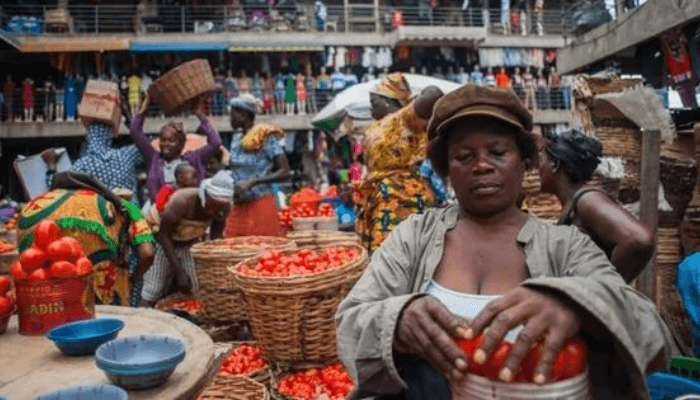
Growing public concern over Nigeria’s worsening cost-of-living crisis has intensified following reports that vulnerable market women in Lagos are grappling with multiple levies imposed by local street collectors, popularly known as agberos.
Traders across several open markets in the commercial hub say the informal collections have compounded the economic pressure they already face due to rising food prices, transportation costs and general inflation. Many of the women, who rely on daily sales to sustain their households, say the frequent demands for payments are cutting deeply into their already shrinking profits.
Some traders alleged that the collectors move through markets and adjoining streets at different intervals during the day demanding payments for activities such as loading, parking, access to stalls and sanitation. “Sometimes they come two or three times in a day asking for different levies. By the time you finish paying them, very little remains from what you sell,” a vegetable trader said.
Another trader who sells food items said the situation has made it increasingly difficult for small-scale vendors to survive in the current economic climate. “Business is already slow because customers are struggling with high prices. When these collectors come again to demand money, it becomes another burden,” she said.
Residents and civil society observers say the issue reflects wider structural challenges affecting informal sector workers, who form a large portion of the urban economy. They argue that the rising cost of goods and services has made small traders particularly vulnerable to informal charges and extortion.
Economic analysts note that the informal sector plays a critical role in Nigeria’s urban markets and that excessive or unregulated levies can worsen financial pressure on traders already coping with inflation and declining purchasing power. “Market women operate on very small margins. Multiple daily levies, whether formal or informal, directly reduce their income and can ultimately push up the prices consumers pay,” an economic observer said.
Public discussions around the issue have continued to grow on community platforms and among traders’ associations, with many calling for stronger oversight and clearer regulation of street collections to protect small-scale vendors.
Market leaders say they hope relevant authorities will address the concerns and ensure that traders can operate in an environment that allows them to sustain their livelihoods despite the broader economic challenges.
