

Manny Ita –
A Federal High Court sitting in Warri, Delta State, has delivered a landmark ruling affirming the constitutional right of Nigerian citizens to record police officers performing their duties in public, declaring that practices of anonymous policing — where officers do not wear visible identification — are unconstitutional and unlawful. The judgment, handed down on 18 March 2026, was the result of a fundamental rights enforcement suit filed against the Inspector‑General of Police, the Nigeria Police Force and other respondents, challenging the legality of stop‑and‑search operations conducted without clear identification.
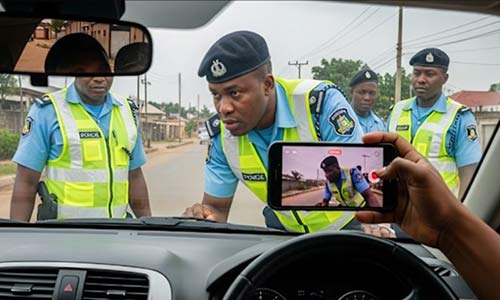
In his judgment, Justice Hyeladzira Nganjiwa held that citizens have the right to record, photograph and document the actions of police officers in public spaces, including during patrols and stop‑and‑search operations. The court declared that “anonymous policing is unconstitutional,” emphasising that officers must wear visible name tags and display force numbers while on duty to ensure transparency and accountability.
The suit was brought by lawyer Maxwell Nosakhare Uwaifo, who recounted an encounter on 10 May 2025 along the Sapele roundabout in Delta State where police operatives stopped and questioned him aggressively without identifying themselves. During the incident, when he attempted to record their conduct on his phone, one operative reportedly threatened to arrest him, a development that formed the basis of the constitutional challenge.
The court’s ruling also outlined broader implications for policing standards, mandating that officers must display their full names and force numbers while performing public duties, a step aimed at strengthening civil liberties and institutional accountability. Justice Nganjiwa’s judgment included several declarations and orders intended to reinforce citizens’ rights and curb arbitrary police conduct.
Civil rights advocates have welcomed the decision as a significant victory for citizen journalism and documentation of public authority actions, noting that it could lead to greater transparency in law enforcement. Legal experts say the ruling establishes an important precedent that balances public interest with constitutional protections for freedom of expression and personal security.
The judgment is expected to reshape interactions between police officers and members of the public, particularly in how law enforcement conducts stop‑and‑search operations and engages with citizens in public spaces.
