

Manny Ita –
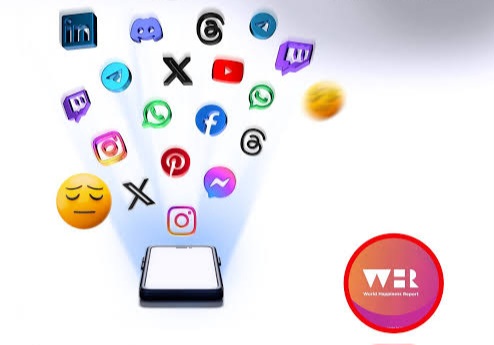
The 2026 World Happiness Report has found that heavy social media use is associated with lower life satisfaction, particularly among people under 25. Released annually in conjunction with the International Day of Happiness on March 20, the report ranks countries based on residents’ assessments of their well-being.
The findings reveal a sharp decline in life satisfaction among young people in English-speaking and Western European nations, including the United States, Canada, Australia, and New Zealand, over the past decade. According to the study, social media platforms have eroded personal well-being among young users, with many feeling pressure to engage online despite negative emotional effects. “Most US college students wish social media platforms did not exist. They use them because others are using them, but they would prefer it if no one did,” the report stated.
“In general, most Western industrial countries are now less happy than they were between 2005 and 2010. Fifteen of them have had significant drops, compared to four with significant increases. In a ranking of happiness changes for under-25s, the United States, Canada, Australia, and New Zealand (the NANZ region) rank between 122 and 133 in the list of 136 countries,” the report added.
The report highlights generational differences in the impact of internet use on well-being. “The estimated relationship between internet use and wellbeing varies sharply across generations, genders, and regions. It is strongly negative for Gen Z, moderately negative for Millennials, near zero for Gen X, and slightly positive for Baby Boomers,” it said. “The generational gradient reflects both greater increases in internet use among younger cohorts (exposure) and more negative estimated coefficients for those same cohorts (susceptibility).”
Based on surveys of roughly 100,000 people across 140 countries, the report offers a comprehensive view of global happiness trends. Rankings consider a three-year average and incorporate indicators such as GDP per capita, social support, life expectancy, freedom, generosity, and perceptions of corruption.
Published by the University of Oxford’s Wellbeing Research Centre in partnership with Gallup and the UN Sustainable Development Solutions Network, the report underscores the complex relationship between modern digital lifestyles and mental health outcomes. Experts said the findings highlight the need for policy interventions and education around social media use, particularly for youth who are most susceptible to its negative psychological impacts.
The 2026 World Happiness Report adds to a growing body of research suggesting that while social media can connect people globally, it also contributes to feelings of isolation, comparison, and dissatisfaction among younger generations. With governments and mental health advocates increasingly weighing restrictions or guidelines for youth usage, the report serves as a warning on the potential societal costs of unchecked digital engagement.
