

To end preventable blindness in Nigeria, FG signs national eye-care MoU
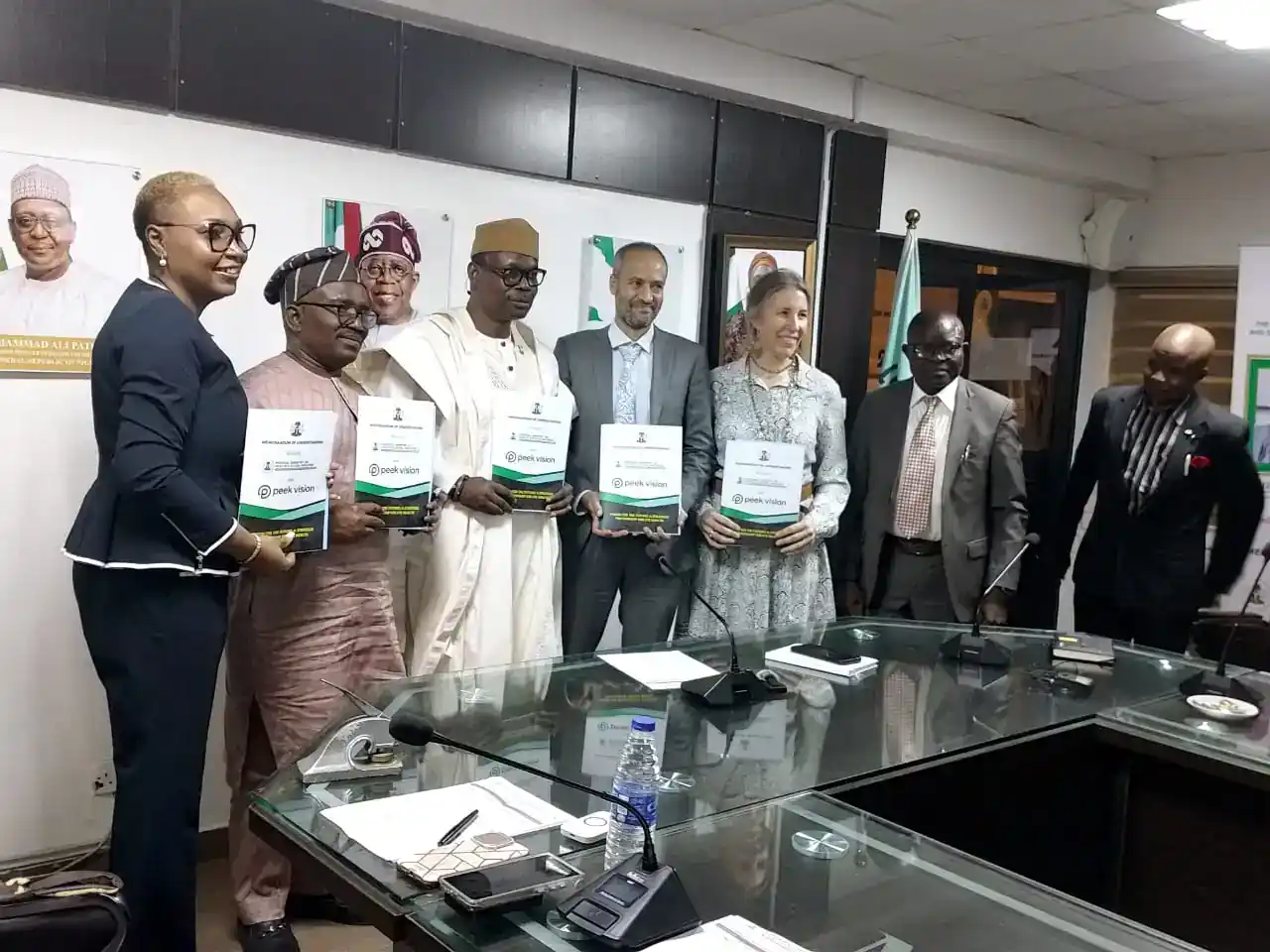
The Federal Government has taken a major step toward ending preventable blindness in Nigeria by signing a national eye-care Memorandum of Understanding (MoU) with global eye-health technology organisation Peek Vision.
The move comes amid reports that more than 23 million Nigerians are living with some form of vision impairment.
The partnership is designed to transform how millions of Nigerians with vision problems are identified, tracked, and connected to care.
The agreement aims to address longstanding gaps in eye-care access, particularly in rural and underserved communities where avoidable blindness is common but screening and treatment remain limited.
The Minister of State for Health and Social Welfare, Dr Adekunle Salako, endorsed the initiative on behalf of the government, saying it would significantly expand Nigeria’s ability to reach people “at the last mile.”
He highlighted the country’s history of innovative eye-care programmes, recalling the popular JigiBola initiative of the early 1990s in Lagos State, which provided glasses to thousands of residents.
“The new digital platform introduced through this MoU builds on that legacy by enabling health workers to identify those in need and connect them directly to services,” Salako said.
He noted that misinformation and fear often prevent early care-seeking but expressed optimism that the partnership will improve communication, screening, and referral systems nationwide.
Salako added that the agreement aligns with the government’s Renewable Health Connect initiative, which focuses on school-based screening, cataract services, and the provision of corrective lenses.
He assured that the Ministry is committed to full implementation, ensuring the technology reaches communities that have historically been left behind.
Prof. Andrew Bastawrous, Founder and CEO of Peek Vision, said the initiative responds to the urgent need to reach millions of Nigerians living with avoidable vision loss who lack access to treatment.
“Most people with vision loss, particularly in rural areas, don’t know that treatment exists, don’t know where to go, and cannot access services,” he explained.
The partnership brings together the Ministry and international NGOs including Sightsavers, CBM, and Hands. Under the programme, trained personnel will use smartphones and tablets to deliver accurate vision screening directly in homes, schools, and workplaces, reducing reliance on health facilities. “Because if you find them and they don’t receive treatment, you’ve solved nothing,” Bastawrous said.
Peek Vision has developed a data platform that monitors each screened individual, tracks referrals, and identifies why people fail to attend appointments. Bastawrous noted that similar data-driven approaches in Kenya have helped address myths, fears, and cost barriers. “The power of data is to point to where the problem is. The power of compassion is to respond,” he said.
The Nigerian rollout begins immediately and involves no direct financial commitment from the Federal Government. Peek Vision will be supported by international partners, while the Ministry retains full ownership of all generated data. A new programme supported by Sightsavers has already screened 5,000 people and aims to reach 1.2 million schoolchildren over the next two years.
Bastawrous emphasised that improved vision goes beyond health. “Something as simple as a pair of magnifying glasses can increase learning potential by 20 to 50 percent, yet remains inaccessible to many,” he said. He added that cataracts, the leading cause of blindness, are fully treatable, warning that most Nigerians with cataracts may die without receiving care unless the system changes.
To date, Peek Vision and its partners have screened 17 million people globally and connected more than 1.5 million to sight-restoring treatment. “Today marks the beginning of that journey to change that story in Nigeria,” Bastawrous said.
