

Manny Ita
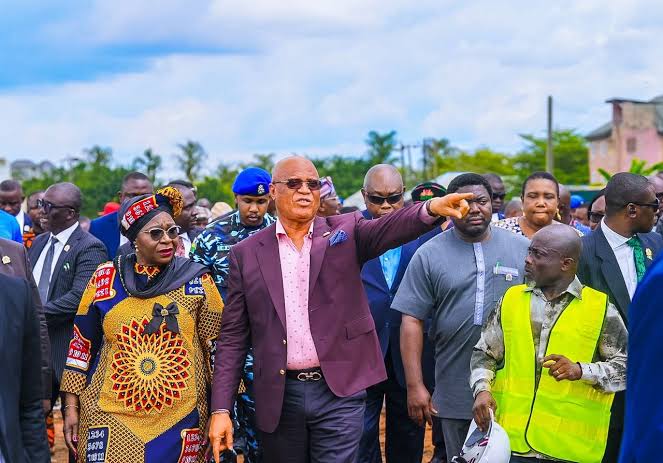
In a major move to revolutionize the transportation sector in Akwa Ibom State, Governor Pastor Umo Eno on Saturday officially performed the groundbreaking ceremony for the Ibom Compressed Natural Gas (CNG) Mass Transit Terminal in Uyo. Situated at Obio Offot and Ikot Akpe communities, the multi-purpose facility serves as a core pillar of the administration’s ARISE Agenda, aimed at mitigating the high cost of transportation through the adoption of cleaner and more affordable energy. The project, which was relocated from its initial proposed site in Odiok Itam to its current location to ensure better accessibility for the state’s 31 local government areas, is designed to be a self-sustaining transport hub.
The terminal is expected to house a specialized gas refilling station, a dedicated maintenance unit for CNG engines, and a technical training school intended to equip local youths with skills in CNG technology. Beyond its core transport functions, the site will feature a three-star hotel, a restaurant, an automated car wash, a loading bay, and a police station, all protected by advanced security surveillance systems. Commissioner for Transport, Anthony Luke, noted that the initiative is projected to create over 500 direct and indirect jobs, providing a significant boost to the local economy while offering a permanent buffer against the volatility of petrol prices.
During the ceremony, Governor Eno revealed that the state has already finalized the procurement of an initial fleet of 50 luxury CNG buses through the Central Bank of Nigeria, with the vehicles expected to arrive in April 2026. These buses are slated for deployment across various routes to link all local government areas to the state capital. Addressing the political landscape during the event, the Governor maintained a focus on his development goals, stating, “Let politicians play politics; we will stay focused on delivering the promises we made.” The project underscores a strategic shift toward sustainable infrastructure as the state prepares for a transition to gas-powered public mobility.
