

By Manny Ita
Recent social media scrutiny of the Registrar-General of the Corporate Affairs Commission (CAC), following the circulation of videos showing a lavish lifestyle that included private jet travel, has reignited a familiar national debate about public office ethics in Nigeria.
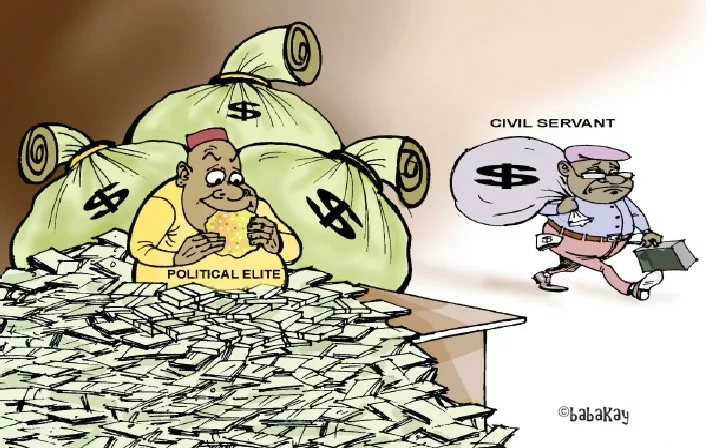
While no court has established wrongdoing, the episode underscores a deeper and more persistent problem: a widening gap between public power and public responsibility, and a culture of weak accountability that has turned the nation’s collective resources into what many citizens describe as a “national cake.”
At the heart of the controversy is not merely the optics of luxury, but the expectations attached to public office. In Nigeria, public service is constitutionally framed as a trust. Officeholders are meant to steward scarce resources on behalf of citizens who, amid inflation, unemployment and failing infrastructure, are asked to endure constant sacrifice.
When displays of opulence by public officials surface—whether verified or perceived—they collide with the lived reality of the majority and erode confidence in institutions that rely on public trust to function effectively.
This erosion is not an isolated incident; it reflects a systemic challenge. Over time, weak enforcement of asset declaration rules, opaque remuneration structures, and limited consequences for ethical breaches have created an environment where power is often mistaken for entitlement. Public office, instead of being a call to service, is frequently viewed as access to privilege.
The result is a normalization of excess, where questions about funding sources or ethical boundaries are dismissed as envy or political mischief rather than legitimate civic inquiry.
The “national cake” metaphor captures this dysfunction with unsettling accuracy. When public resources are perceived as spoils to be shared among the politically connected, responsibility gives way to consumption.
Budgetary allocations become targets for extraction, not instruments for development. Oversight institutions struggle to command respect when those at the top appear insulated from scrutiny, and accountability mechanisms are weakened by selective enforcement or prolonged delays that sap public interest.
This culture has vitiated the sense of patriotism expected of public servants. Patriotism, in its practical sense, is expressed through restraint, transparency and a willingness to be held accountable. Yet, repeated episodes of conspicuous consumption by officials—amid decaying public services—send a contrary message: that the state exists to serve those who control it, not the citizens who fund it.
Over time, this corrodes civic morale and feeds cynicism, making citizens less willing to comply with laws, pay taxes or believe in reform promises.
Social media has emerged as a double-edged response to this accountability gap. On one hand, it amplifies scrutiny, democratizes oversight and gives citizens a voice where formal channels have failed. On the other, it risks trial by outrage, where allegations can outpace evidence.
Still, the persistence of these online debates points to an unmet demand for credible, institutional accountability. When official explanations are slow or absent, speculation fills the vacuum.
Restoring public ethics requires more than rebuttals or personal denials; it demands structural reform. Clearer rules on lifestyle audits, timely publication and verification of asset declarations, transparent disclosure of official entitlements, and swift, impartial investigation of ethical concerns are essential. Just as important is leadership by example—where senior officials consciously align their conduct with the economic realities of the country they serve.
Ultimately, Nigeria’s development challenge is inseparable from its ethics challenge. Nations progress when public power is exercised with restraint and accountability, and when officeholders internalize the idea that authority is borrowed, not owned. Until that shift takes root, episodes of public outrage will continue to surface, not because citizens resent success, but because they demand integrity from those entrusted with the commonwealth
