

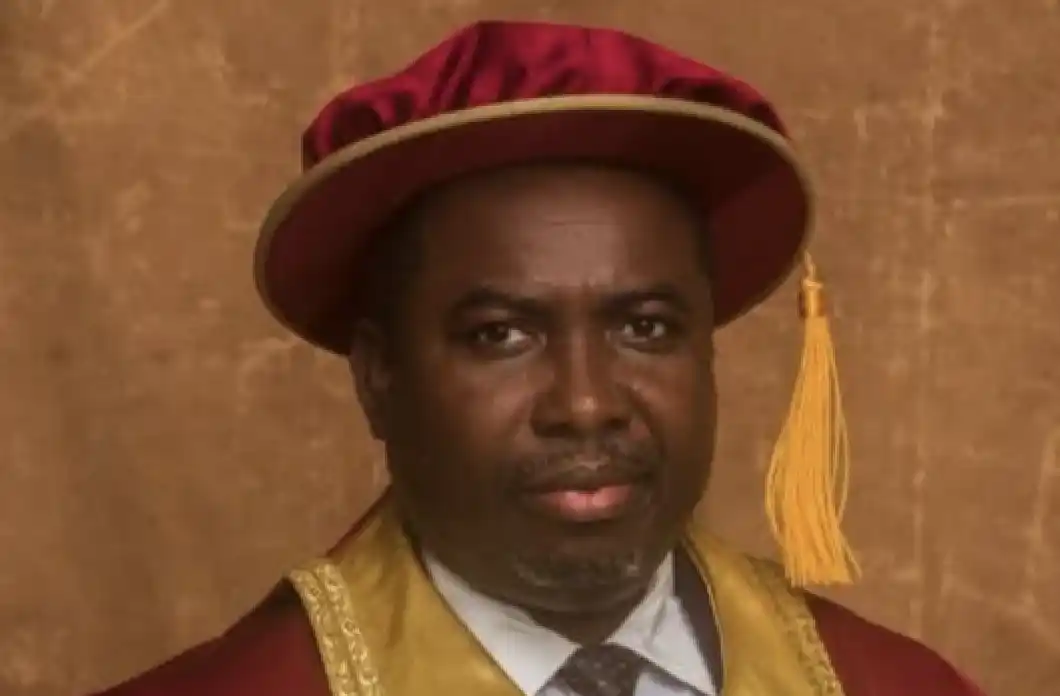
Shari’ah council demands for removal of INEC chairman
Sheikh Bashir Umar, president of the council made the call on Tuesday during the Council’s 2026 Annual Pre-Ramadan Lecture.
The Supreme Council for Shari’ah in Nigeria (SCSN) has renewed its call for the immediate removal of the Chairman of the Independent National Electoral Commission (INEC), Professor Joash Amupitan, insisting that his continued stay in office poses a serious threat to the credibility of Nigeria’s democratic process.
The Council said muslims across the country would not recognise or legitimise any election conducted under the leadership of an INEC chairman whose integrity is under such a cloud.
President of the Council, Sheikh Bashir Umar, made the call on Tuesday during the Council’s 2026 Annual Pre-Ramadan Lecture and General Assembly in Abuja.
Speaking on the theme “Nigeria’s Future: Faith, Justice, and Leadership,” Umar said the Council’s demand was anchored on what he said is the INEC chairman’s questionable antecedents, particularly a legal brief he authored, which alleged the existence of a Christian genocide in Nigeria.
He said the Federal Government has repeatedly dismissed the claim.
“This is not the first time the Council is taking this position. In the legal brief he personally sent, he sought to establish the existence of a Christian genocide in Nigeria, a position that is in direct conflict with the official stance of the Federal Government, which has categorically stated that no such genocide exists”, the cleric said.
Umar said the position taken by the INEC chairman at that time amounted to divisive propaganda and raised serious concerns about his neutrality as the head of Nigeria’s electoral umpire.
“For an umpire in a democratic process, you must have someone whose integrity is not compromised and who is clearly unbiased. As far as we are concerned, his integrity has been compromised. The honourable thing for him to do is to resign. If he does not, the government should dismiss or retire him.
He clarified that while the Council itself is an advocacy body and not directly involved in litigation, it is aware that other groups have approached courts of competent jurisdiction to challenge the chairman’s appointment and continued stay in office.
“The Council must remain resolute in this demand and has clearly stated that the Ummah will not recognise or legitimise any election presided over by a character with questionable integrity, as democratic credibility must never be compromised”, he added.
The council used the forum to express concerns over worsening insecurity, economic hardship, poor budget implementation, alleged imbalance in federal appointments, and attempts to undermine Muslims’ constitutional right to practise Shari’ah in Muslim-majority states.
It also rejected narratives of a Christian genocide in Nigeria, adding that such claims fuel division and threaten national cohesion.
Also speaking, Chairman of the House of Representatives Committee on Ecological Funds and member representing Kaura-Namoda/Birnin Magaji Federal Constituency of Zamfara State, Aminu Sani Jaji, said the timing of the Pre-Ramadan lecture was critical given the country’s security and socio-political challenges.
Jaji said Ramadan remained a period of deep spiritual reflection for Muslims, adding that guidance from religious scholars was essential at a time when Nigeria was facing insecurity and heightened religious and political tensions.
He warned that unverified claims and divisive narratives, including allegations of religious persecution, could worsen national cohesion if not responsibly addressed.
Referring to Nigeria’s designation by the United States as a country of particular concern, Jaji described claims of a “Christian genocide” as misleading, stressing that Nigeria remained a secular state.
On his part, the Madakin Zazzau, Mal. Muhammadu Munir Ja’afaru said that since its establishment, the council has served as a credible, principled, and courageous voice of the Nigerian Muslim Ummah.
“It has consistently demonstrated concern not only for religious matters but also for the broader well-being, unity, and development of our nation.
“The Council has distinguished itself through strategic engagements, providing guidance rooted in the Qur’an and Sunnah, defending constitutional rights, promoting peaceful coexistence, advocating justice, and constructively engaging government and society on critical national issues”, he said.
