

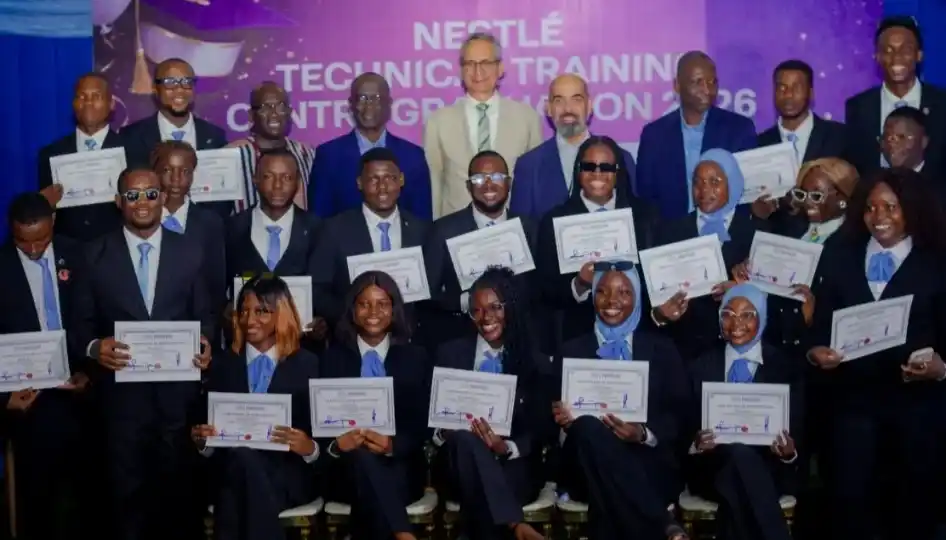
Nestlé Nigeria has concluded a 15-year celebration of its Technical Training Initiative with the graduation of 20 trainees from the Abaji Factory Technical Training Centre, reinforcing the company’s push to equip young Nigerians with industry-ready skills.
The ceremony in Abaji follows a similar event recently held at the Flowergate Factory in Sagamu, and brings the total number of graduates from the programme to 289 since its inception in 2011. The initiative, which began at the Agbara Factory, now operates across three locations: Agbara, Abaji, and Flowergate.
With an investment exceeding ₦6 billion, the programme delivers an intensive 18-month curriculum that blends classroom instruction with hands-on training in food technology, engineering, and manufacturing operations. Trainees graduate with the internationally recognised City & Guilds of London Technicians’ Certification, a credential that aligns Nigerian technical skills with global standards.
Nestlé Nigeria’s Managing Director and Chief Executive Officer, Mr. Wassim Elhusseini, urged the new graduates to carry forward the values of discipline, innovation, and excellence as they enter the workforce.
“As you graduate today, you are stepping into an industry that depends on skill, discipline, innovation, and excellence,” Elhusseini said. “The skills you have gained through this programme provide a strong foundation, but your success will depend on your willingness to keep learning, adapting, and applying yourselves.”
He encouraged the graduates not to be deterred by workplace challenges, noting that “every meaningful career is built step by step, through resilience, curiosity, and consistent performance.” Elhusseini added that the company was confident the cohort would make valuable contributions to Nestlé, the wider manufacturing sector, and Nigeria’s economy.
The company has consistently transitioned 98% of graduates into employment within Nestlé Nigeria. All 20 trainees from the Abaji cohort have been offered roles, continuing the programme’s record as a direct talent pipeline for the business.
Country Human Resource Manager, Shakiru Lawal, said the initiative reflects Nestlé’s long-term commitment to youth development and employability.
“At Nestlé, youth development is not a one-off intervention; it is a long-term commitment to building skills, expanding opportunity, and preparing young people for the future of work,” Lawal said. “Through strong partnerships with ITF, NECA, and the Swiss Embassy, we are giving trainees the exposure, confidence, and workplace readiness they need to succeed.”
The latest graduation stood out for gender balance, with 10 young men and 10 young women completing the programme. His Excellency Mr. Patrick Egloff, Ambassador of Switzerland to Nigeria, described the equal representation as a significant step for inclusion in technical fields.
“One of the most inspiring aspects of today’s ceremony is the clear demonstration that technical excellence belongs equally to young women and young men,” Egloff said. “The equal representation we see among the graduates today is a powerful message about inclusion, opportunity, and the future of technical professionals.”
Industry and government stakeholders present at the event commended the collaborative model behind the training. Mr. Adewale-Smatt Oyerinde, Director-General of the Nigerian Employers’ Consultative Association, reaffirmed NECA’s commitment to sustaining its partnership with Nestlé Nigeria to expand the initiative’s reach. Representatives from City & Guilds also pledged continued support for strengthening technical skills development in Nigeria.
Community leaders from Abaji, led by the Chief of Staff to the traditional ruler, joined officials from the Ministries of Youth and Education in delivering goodwill messages. They praised Nestlé Nigeria for its sustained investment in youth empowerment, technical education, and community development.
The Technical Training Initiative is a core component of _Nestlé Needs YOUth_, the company’s global youth programme launched in 2013 to equip 10 million young people with skills and employment opportunities by 2030. In Nigeria, the programme sits alongside other youth-focused schemes including the Nestlé Nigeria Youth Development Programme, Nesternship, and the Alliance for YOUth.
Nestlé Nigeria, with over 2,300 direct employees, three factories, and seven branch offices, produces brands including MAGGI, MILO, NESCAFÉ, Golden Morn, Nestlé Pure Life, and CERELAC. The company says its skills development programmes are part of a broader strategy to create shared value by linking business growth to community progress.
For the 20 graduates in Abaji, the ceremony marks both an endpoint and a beginning — the culmination of 18 months of technical training and the start of careers in Nigeria’s manufacturing sector.
