

Manny Ita –
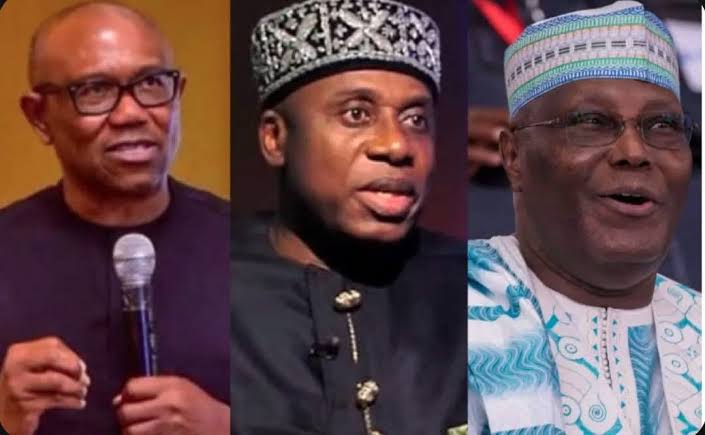
Political discussions around Nigeria’s 2027 general elections intensified on Tuesday following remarks by media entrepreneur and publisher Dele Momodu, who suggested that a coalition ticket involving Atiku Abubakar and Peter Obi, or alternatively Atiku and Rotimi Amaechi, could pose a formidable challenge to the incumbent administration.
Momodu, speaking amid growing opposition realignment talks, argued that “a united front remains the only viable path to unseating the ruling party,” adding that fragmented efforts in previous elections had weakened the opposition’s chances. He maintained that figures like Atiku, Obi, and Amaechi each command significant regional and political followings that, if combined, could alter the electoral landscape.
The proposal, however, drew swift criticism from the Lagos chapter of the All Progressives Congress, which dismissed the speculation as “baseless” and politically unrealistic. Party spokespersons argued that such an alliance would be driven more by ambition than ideology, insisting that “Nigerians are more discerning and will not be swayed by opportunistic coalitions lacking clear direction.”
APC officials further expressed confidence in the strength of the current administration led by President Bola Tinubu, pointing to ongoing economic and policy reforms as evidence of governance that would be difficult for any opposition coalition to displace. “The focus remains on delivering results, not chasing hypothetical alliances,” a party source said.
Despite the dismissal, political observers note that conversations around mergers and strategic partnerships are likely to persist as opposition figures reassess their positions ahead of 2027. Analysts suggest that while such alliances may face internal ideological and structural challenges, the pressure to consolidate may grow stronger if the opposition hopes to mount a competitive campaign against the ruling party.
