

Manny Ita –
Debate over the proposed creation of Anioma State has intensified, exposing fresh political fault lines within Nigeria’s National Assembly and among stakeholders in the South-South and South-East regions.
The renewed momentum follows public backing from Godswill Akpabio, who endorsed the proposal and suggested Asaba as the preferred capital of the new state. His position has added weight to long-standing agitations by Anioma leaders seeking a distinct administrative identity separate from Delta State.
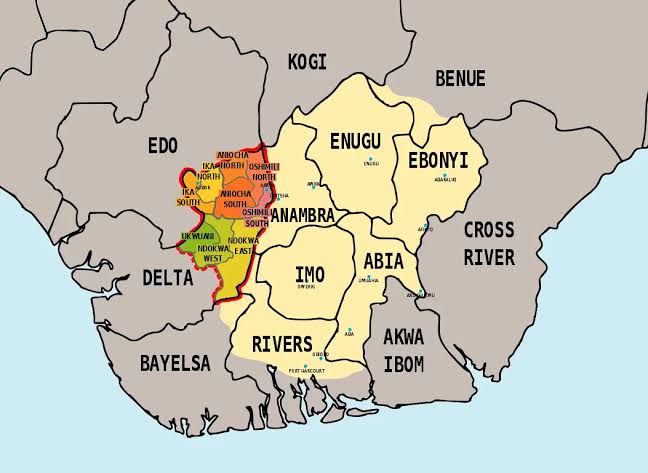
Proponents argue that the creation of Anioma State would address decades of perceived marginalisation of Delta North communities, improve governance, and bring development closer to the people. They also point to cultural and historical ties with the South-East as justification for the demand.
However, the proposal has triggered sharp divisions among federal lawmakers. While some legislators support the move as a step toward equity and federal balance, others have raised concerns over its political implications—particularly regarding regional alignment. A key point of contention is whether the proposed state should remain in the South-South or be reclassified under the South-East, a shift that could alter geopolitical calculations.
The choice of Asaba as capital has also drawn mixed reactions, with some stakeholders advocating alternative locations based on economic centrality, infrastructure, and ethnic considerations.
Constitutionally, state creation in Nigeria is a complex and rigorous process, requiring approval from the National Assembly, state legislatures, and ultimately a national referendum. Analysts warn that beyond political endorsement, the Anioma proposal must overcome significant legislative and consensus-building hurdles.
As discussions deepen, the Anioma State movement is fast becoming a test case for Nigeria’s federal restructuring debate, highlighting enduring questions around representation, identity, and resource control.
