

Manny Ita –
Stakeholders in Nigeria’s investment and development sectors have warned that the country is facing a widening $6.75 billion gender financing gap that continues to limit access to funding for women, youths, and persons living with disabilities.
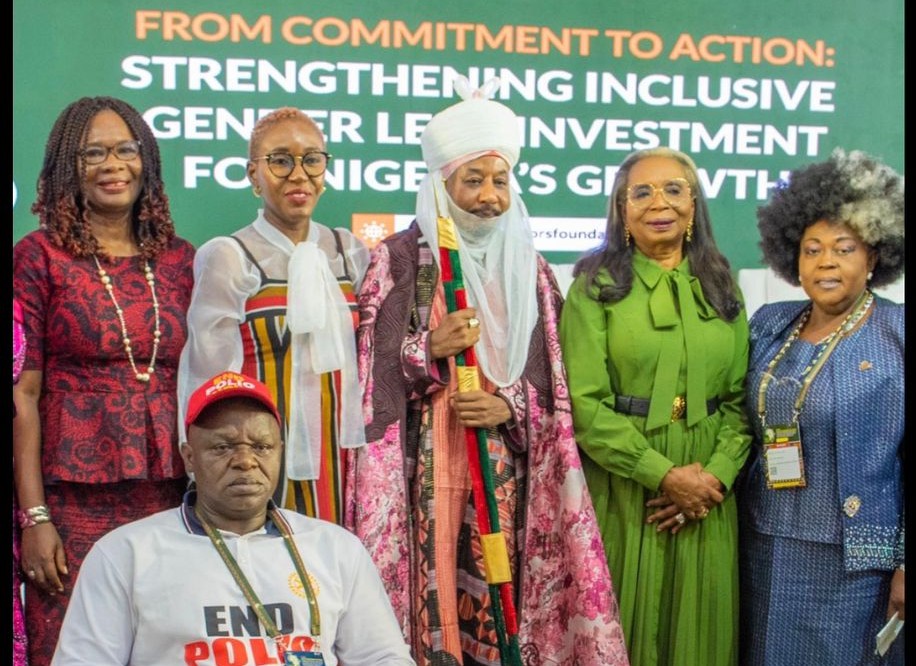
The concern was raised during the 4th Gender Impact Investment Summit held in Lagos, where policymakers, investors, development finance institutions, and private sector leaders gathered to discuss strategies for inclusive economic growth.
The summit, themed “From Commitments to Action: Strengthening Inclusive Gender-Lensed Investment for Nigeria’s Growth,” also featured the unveiling of the Inclusive Capital Scorecard and Gender Equality and Social Inclusion (GESI) Baseline Survey by the Impact Investors Foundation.
Speaking at the event, IIF Chief Executive Officer Etemore Glover said the findings revealed that many vulnerable groups still struggle to access financing despite growing conversations around economic inclusion and equality.
According to her, stakeholders previously committed to mobilizing $8 billion in inclusive capital by 2035, but only $1.25 billion has been deployed so far, leaving a funding shortfall of $6.75 billion.
The report highlighted several structural weaknesses in Nigeria’s inclusion ecosystem. Although 91% of surveyed organizations claimed alignment with gender equality and social inclusion goals, only 41% had formal GESI policies in place, revealing a major gap between public commitments and actual implementation.
It also found that women currently occupy just 22% of leadership positions across surveyed institutions, far below the targeted 40% benchmark. In addition, only 5% of inclusion-focused interventions specifically address the needs of persons living with disabilities.
Stakeholders identified poor policy enforcement, weak accountability systems, and low domestic capital mobilization as some of the key challenges slowing progress in inclusive financing.
The report further revealed that only 12% of domestic capital pools have been aggregated into inclusive investment vehicles, while just two formal GESI policies have so far been adopted across participating institutions.
Vice Chair of the Global Steering Group for Impact Investment, Ibukun Awosika, stressed that gender inclusion should be viewed as a critical economic strategy rather than simply a social issue.
She said Nigeria risks limiting its economic growth potential if it fails to deliberately invest in women, who make up a significant portion of the population and workforce.
Also speaking at the summit, former Central Bank of Nigeria governor and Emir of Kano, Muhammadu Sanusi II, blamed slow progress on weak political commitment and male-dominated policymaking structures.
Sanusi noted that during his time at the central bank, deliberate policies aimed at increasing female representation in the banking sector helped create more opportunities for women to emerge as bank CEOs and senior executives.
He also called for constitutional reforms to strengthen women’s political participation, proposing that one senatorial seat in each state should be reserved exclusively for female candidates on a rotational basis.
The summit follows the launch of the Impact Investors Foundation’s Gender Equity and Social Inclusion Roadmap 2025–2035, which seeks to mobilize $8 billion in inclusive capital over the next decade.
The roadmap outlines ambitious targets including the creation of 40 inclusive financial products, mobilization of $1.5 billion in domestic capital pools, 90% adoption of GESI principles among investment partners, and the introduction of 20 new policy and regulatory measures aimed at promoting gender and social inclusion across Nigeria’s economy.
